There was a packed audience at Abingdon Library this evening for a presentation by contributors to Woodlands – An Anthology of Poetry and Prose. The evening brought together history, natural history and poetry about Radley Large Wood.
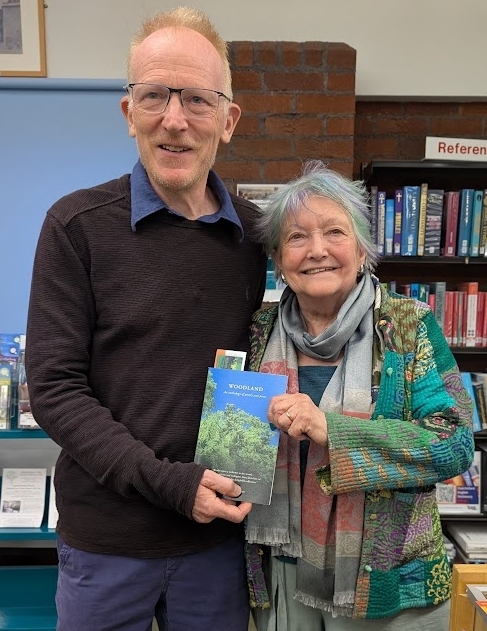
Sylvia Vetta began by telling some of the history of the wood. From at least the mid-13th century, it formed part of a deer park belonging to Abingdon Abbey.
Paul Gamble then shared his enthusiasm for birds such as the chiffchaff, plants including the rare Herb Paris, and butterflies such as the Silver Fritillary. He also read poems from the anthology, including a couple written by children from a local school in Kennington. Other contributors followed with readings of poems, before the audience had an opportunity to ask questions.
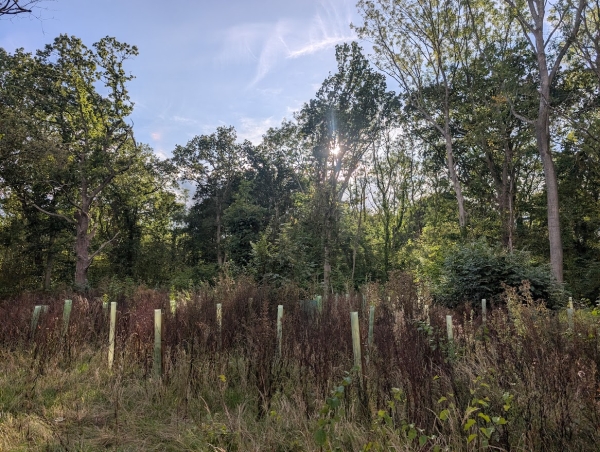
Part of the evening’s discussion concerned the management of the wood since its acquisition by St Hilda’s College in 2022. The college’s management plans include dealing with ash dieback, and a clearing and planting programme which brings in grant funding.
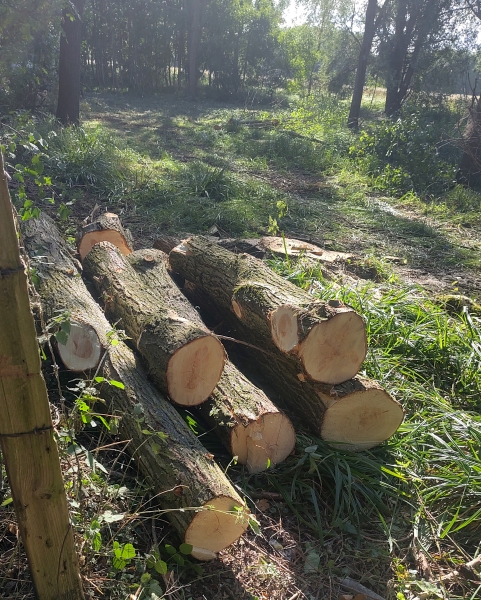
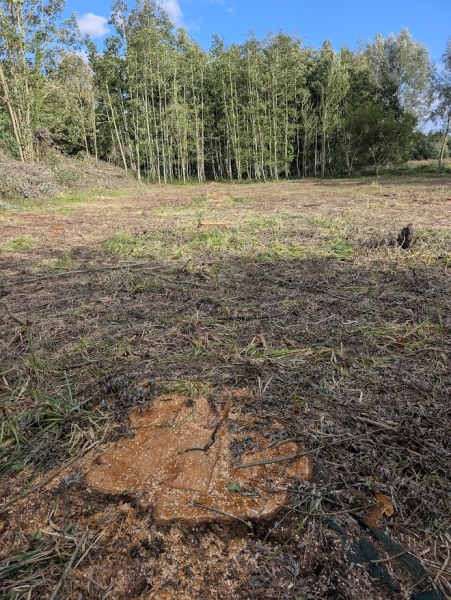
However, the felling of a substantial area of woodland in 2024 caused concern among local residents. The concerns led to the formation of the Friends of Radley Large Wood. A packed meeting at Kennington village hall demonstrated how much the woodland means to local people.
There are now many plastic tree guards around newly planted trees. One of the speakers said that, following two dry summers, the young trees are struggling to establish themselves.
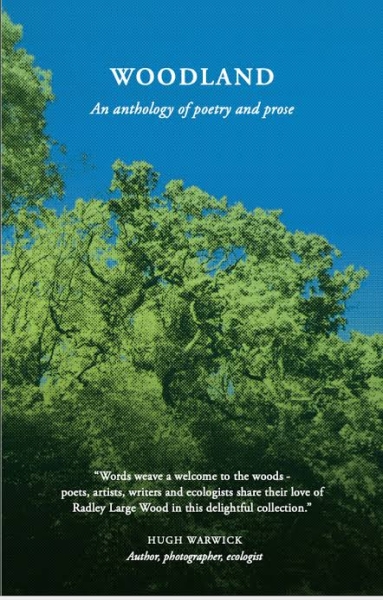
On sale was the book, a well-produced anthology with colourful pictures in support of the Friends of Radley Large Wood.
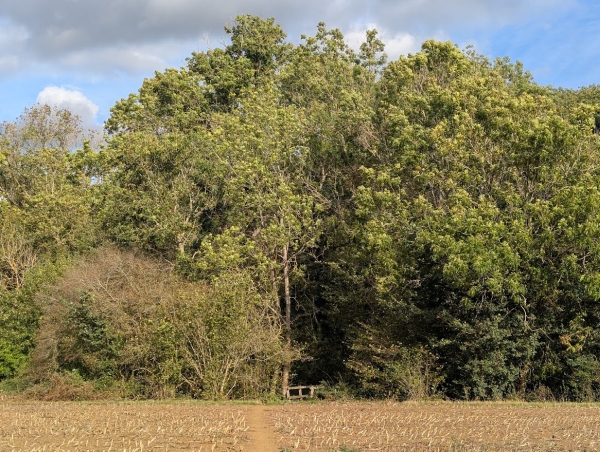
Although known as Radley Large Wood, it is closer to Kennington, with access from Kennington Memorial Field and Sugworth Lane. For more information by the Friends of Radley Large Wood see radleylargewood.org.