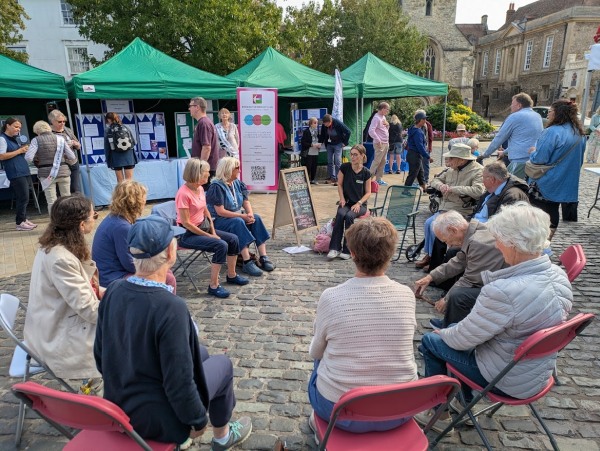
Abingdon Market Place hosted a highly successful Healthfest, organised by Healthy Abingdon. The annual event brought together more than 20 local groups dedicated to improving health and wellbeing. Helped by some sunshine and an interactive programme, it drew a steady stream of visitors from 10 am to 2 pm.
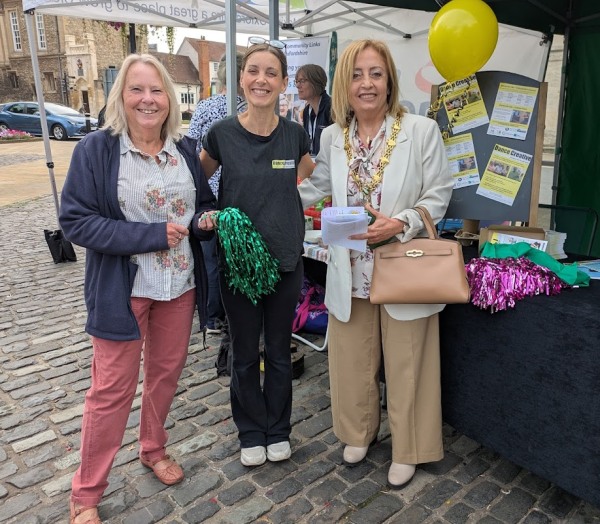
The Mayor of Abingdon, Cllr Rawda Jehanli, toured the stalls and met organisers. Here she joins Dance Creative, who run ‘Dance for Life’, seated dance classes every Tuesday morning at Trinity Church’s Conduit Centre – a gentle, sociable way to stay active that is great fun.
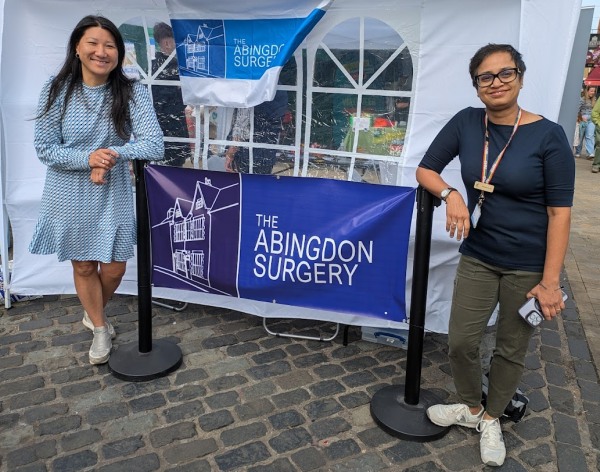
Abingdon Surgery highlighted some of the many services they offer to their patients.

Abingdon Town Amateur Boxing Club invited young people to try their hand at the sport of boxing.
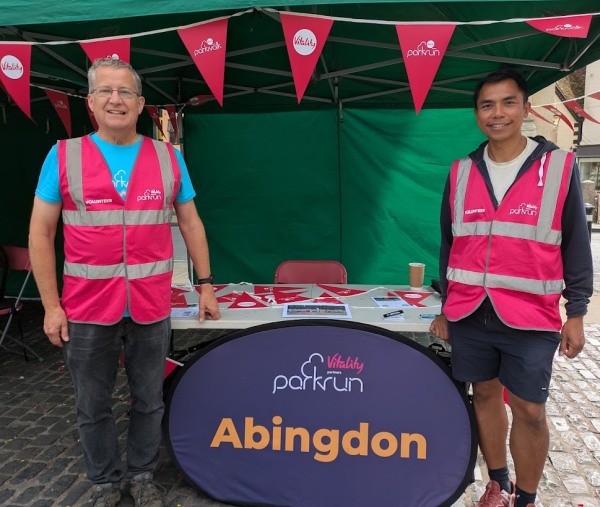
Abingdon Parkrun volunteers, fresh from that morning’s event with 455 participants, were on hand to explain how to get involved.
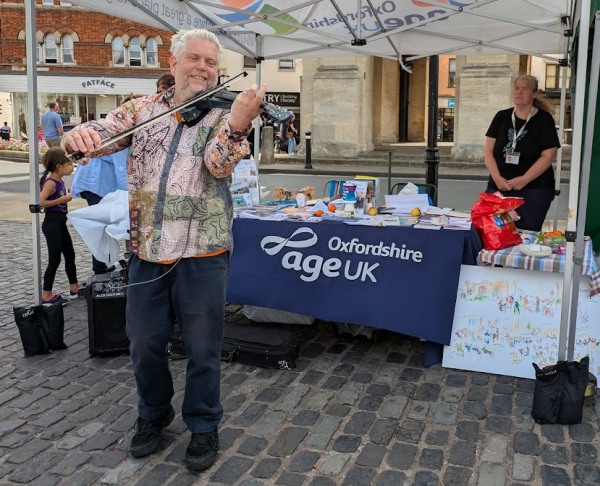
Visitors also enjoyed live music from Abingdon’s own ‘André Rieu,’ Ben Heaney. Ben runs age and dementia friendly Moving Music events in the area. His was one of many talented services promoted through Age UK Oxfordshire.
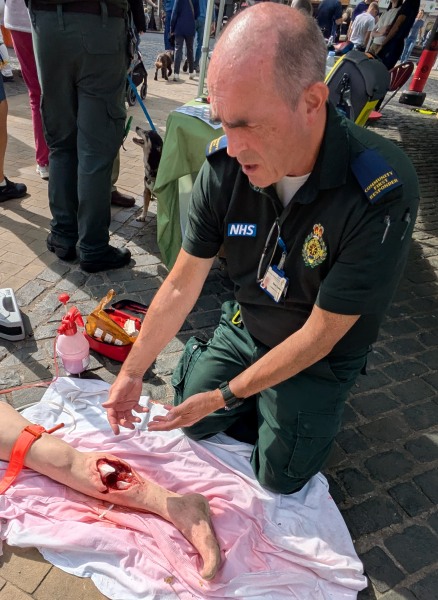
There were some exciting hands-on opportunities. SCAS (South Central Ambulance Service) had an ambulance and were teaching first aid, from practising CPR and the use of an AED (defibrillator), to applying a tourniquet on a nasty looking wound.
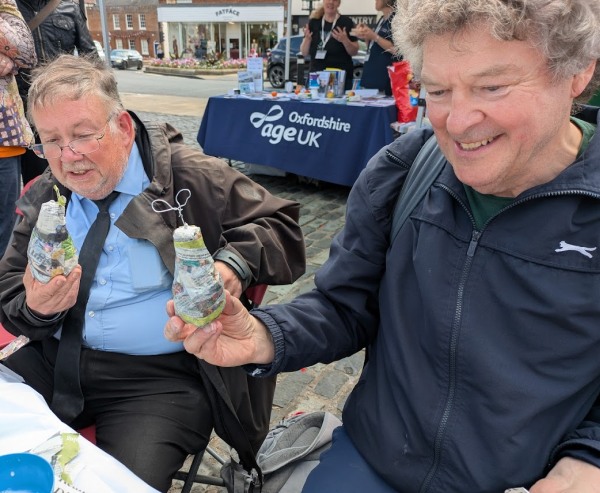
The Muse Art School invited people to have a go at making a papier-mâché pear, to give a flavour of their creative classes in Abingdon.
Alongside the demonstrations were stalls from The Abingdon Bridge (TAB), Reducing the Risk, Abingdon Green Gym, Active Communities, UCARE (urology cancer research), Friends of Abbey Meadow Outdoor Pool, Oxfordshire Mind, Abingdon Good Neighbours, Healthwatch Oxfordshire, Dementia Friendly Abingdon, Kennington Memory Club, Mumby’s Live-in Care, Scottish Country Dancing, and Bellevie Care.