Category Archives: environment

Plastic Free July


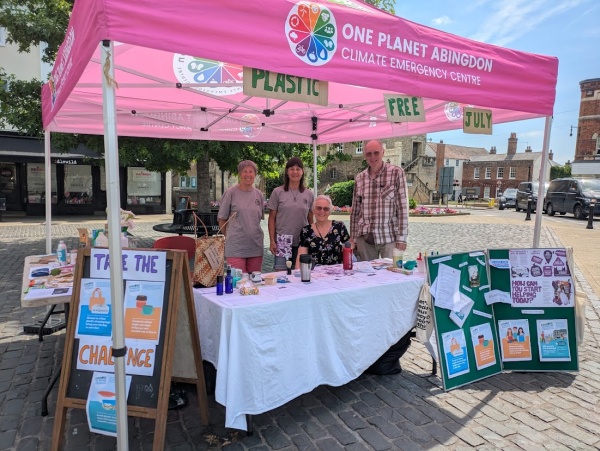
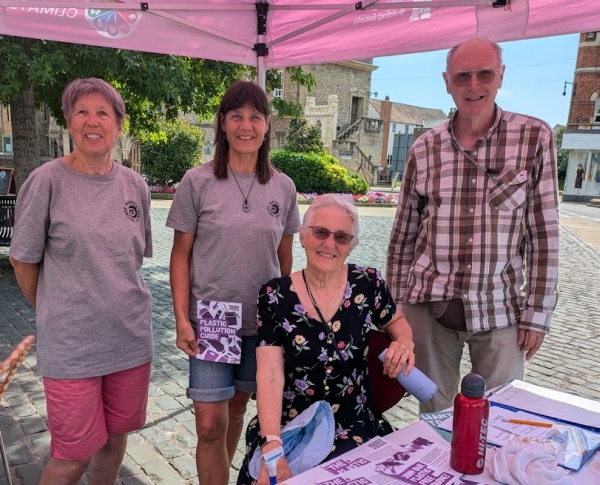
Members of Abingdon Cuts Plastic, part of Abingdon Carbon Cutters, were in the Market Place this Friday encouraging people to take part in Plastic Free July by making a simple pledge to reduce their use of single-use plastics.

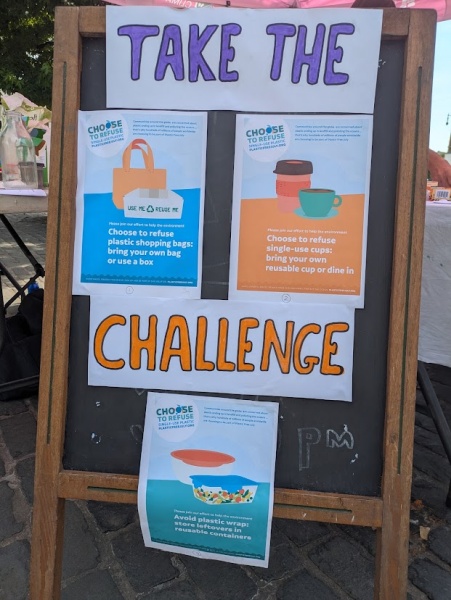
Visitors were invited to choose one small change to make. Suggestions included carrying a reusable water bottle or coffee cup, buying fruit and vegetables loose rather than wrapped in plastic, or swapping cling film for reusable containers.

Other ideas included trying shampoo bars, choosing paper-wrapped toilet rolls, using refill stations for household cleaning products and switching to plastic-free tea bags or loose tea leaves.

The group highlighted that household cleaners such as washing-up liquid, laundry liquid and toilet cleaner can be refilled locally at the refill station at Oxford Wood Recycling.

The aim is to reduce plastic waste and keep unnecessary plastic out of rivers, seas and the wider environment. If you look at the campaign website ( https://abingdoncarboncutters.org.uk/what/abingdon-cuts-plastic/ ) you will see it was first launched in 2018, thanks to Anne Smart, and they are giving it a new push. There is an up to date 2026 Plastics leaflet under the campaign website.

Pre-loved fashion event at the Guildhall


There was a pre-loved fashion event at the Guildhall today put on by One Planet Abingdon.

Outside in Roysse Court were a number of stalls selling pre-loved clothes. There were also rails of pre-loved clothes in the Magistrates Court.

The event included a ‘Wear It Out’ Sustainable Fashion Show in the afternoon, and the Roysse Room was set up for that.

Upstairs in the Abbey Room there were lessons on repairing and patching clothes, how to make and use natural dyes, turning T-shirts into bags, art displays, and other information.

In the Bear Room a group were doing crochet.

In the foyer were displays, including a creative chart titled ‘Why talk about sustainable fashion?’

1. The amount of clothes being produced is increasing
* Fast fashion brands are producing twice the amount of clothes today than in 2000. (Earth.org)
* The average consumer now buys 60% more clothing than they did 15 years ago. (Earth.org)

2. Fast fashion is hurting the planet
* Textile production contributes more to climate change than international aviation and shipping combined. (House of Commons Environmental Audit Committee, 2019)
* The fashion industry is responsible for 10% of annual global carbon emissions. (Morgan McFall-Johnsen (2020))
* Buying just one white cotton shirt produces the same amount of emissions as driving 35 miles in a car. (WRAP)

3. Sustainability isn’t built into the system
* Less than 1% of material used to produce clothing is recycled into new clothing at the end of its life. (House of Commons Environmental Audit Committee, 2019)
* Half a million tons of plastic microfibres are dumped into the ocean every year, the equivalent of 50 billion plastic bottles. (World Economic Forum)
* Of the 100 billion garments produced each year, 92 million tonnes end up in landfills (Earth.org)

4. It’s time for change
* Extending the life of clothes by just 9 months of active use would reduce carbon, water and waste footprints by 20–30% each. (WRAP)
* 75% of consumers believe that sustainability is important and one-third are willing to choose brands that help environmental and social improvement. (Ellen MacArthur Foundation)

What can we do?
* Reduce the number of clothes you buy (love what you have).
* Repair clothes you already own so that they last longer (keep your favourite jeans even after there are holes in them!)
* Find creativity in visible mending (make your repair a personal work of art.)
* Buy quality garments that last (feel good and look good).
* Buy pre-loved (saving clothes from an early exit to landfill).
* Get savvy about synthetic fibres (mixed fibres are hard to recycle, aim for biodegradable).
* Help put pressure on government (support campaigns by Transform Trade, Oxfam and Wrap).

Go Electric Oxfordshire starts at Abingdon Market Place


Abingdon’s Market Place hosted the Go Electric Oxfordshire event yesterday, the first in a county-wide series aimed at helping people explore the shift to electric travel.

The event brought together a mix of car dealers, local enthusiasts, and energy specialists. Among the delaers attending were Waylands from Cumnor Hill with some MG models, and Hartwell in Abingdon, representing newer models to the UK market such as BYD.

Alongside the dealership displays, local EV owners were on hand with their own vehicles, offering advice into what it’s like to live with an electric car and charging.

The event went beyond cars. Exhibitors included companies installing kerbside charging for homes without driveways, as well as those promoting wider low-carbon technologies such as heat pumps.

Oxfordshire County Council is backing the programme as part of its efforts to reduce carbon emissions and improve air quality.

Bringing Blossom Back


In Ladygrove Meadow, off Drayton Road, the 30 fruit trees planted in February 2025 by the town council and community volunteers are in blossom.

Blossom seems to be all around the Ladygrove Meadow playpark — including lots of blackthorn in the nearby hedgerows.

Blossom can also be seen at Boxhill Recreation Ground, where community volunteers planted 20 fruit trees back in November 2020.

Ladygrove Meadow and Boxhill are part of a wider national movement. Across the UK, communities and local councils are planting orchards affter decades of decline. The National Trust estimates that more than half of all orchards in England and Wales have been lost to housing and development.