Remembrance Sunday is the second Sunday of November and ceremonies are held throughout the country in churches, cenotaphs and war memorials.
We had a knock on the door at 8 am, a reminder that our car was parked on the route of the parade and needed moving. It was chilly out.
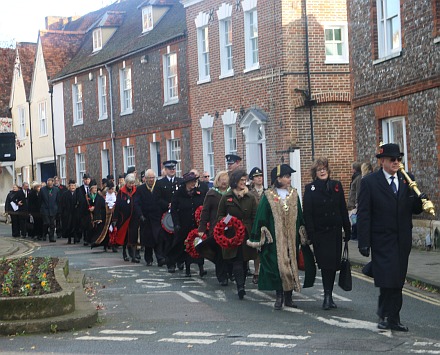
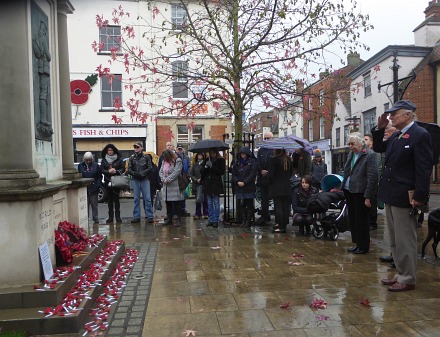
At 10:15 dignitaries paraded from the Guildhall to St Helen’s Church, and after a service inside joined the crowd of people already standing round the war memorial in the Square shortly before 11am.
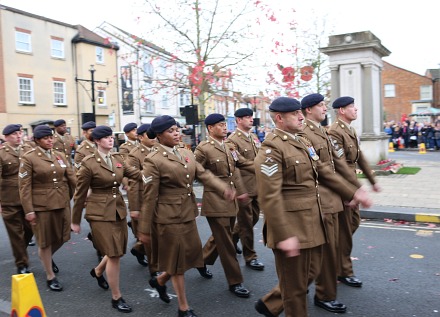
They were joined at both services by soldiers from Dalton Barracks, who not only join the community at Abingdon but send teams to ceremonies round the region.
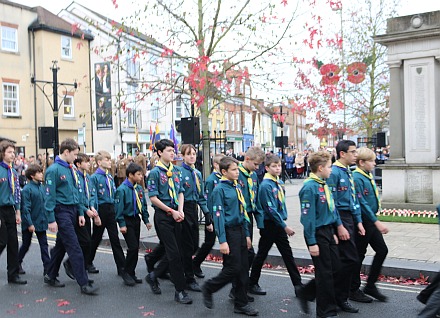
Many different uniformed groups took part. On Remembrance Sunday, Scouts are expected to attend and give the troop priority over their other Sunday sporting activities.
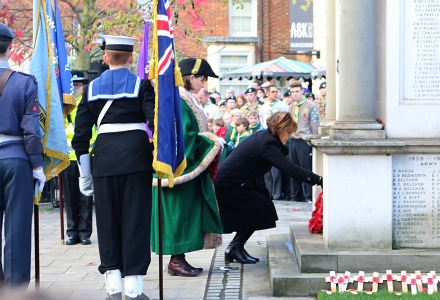
So at 11 Abingdon paused to pay its respects to those who lost their lives in conflict. The ‘Last Post’ was played by Abingdon Town Band member, Alison Rich, to mark the start of the two minute silence at 11. She then sounded the ‘Reveille’. After which The Deputy Lord-Lieutenant, Mrs Felicity Dick; the Mayor of Abingdon, Councillor Jan Morter; MP for Abingdon and Oxford West, Layla Moran, the Royal British Legion and many other organisations laid wreaths of red poppies at the memorial.
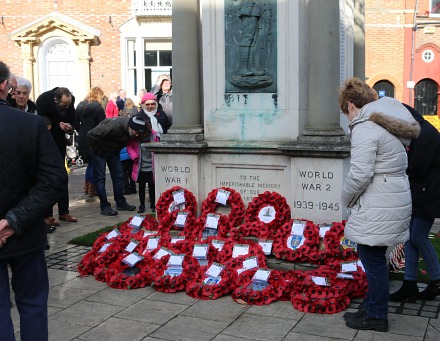
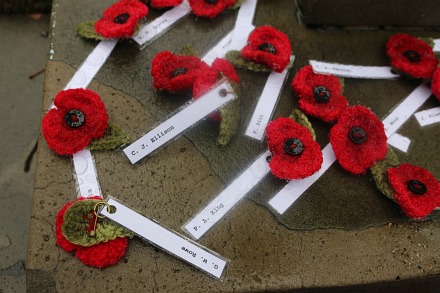
The poppy is the symbol of the Day of Remembrance because many years ago poppies grew from the the choppy earth where troops had fallen.
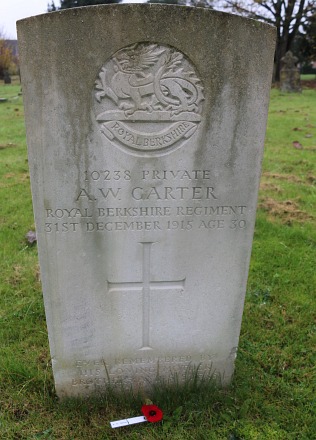
Remembering is the process of ‘Bringing the past into the present’… But who now can remember what it was like to live in the trenches of WWI? Only through war poetry have those memories become part of our collective consciousness …
Do you remember the dark months you held the sector at Mametz–
The nights you watched and wired and dug and piled sandbags on parapets?
Do you remember the rats; and the stench
Of corpses rotting in front of the front-line trench–
And dawn coming, dirty-white, and chill with a hopeless rain?
(lines from a poem by Siegfried Sassoon called Aftermath)
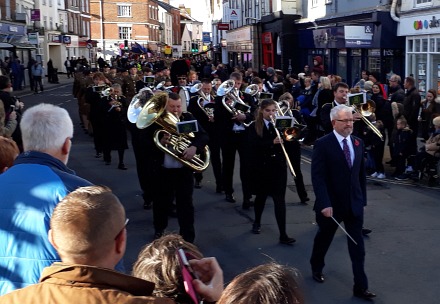
Finally there is a march along the High Street to the County Hall. People, who could not squeeze into the Square,cheered as the band, the troops and uniformed groups marched by.
One innovation this year, and a sign of the times after recent terrorist attacks by vehicles driven into crowds, was that a tractor, and land rover were parked at strategic points – as crash barriers.