Throughout Advent, a number of roads / estates in Abingdon have been revealing Advent windows, one day at a time. This evening I looked in on some of the estates just to the west of Oxford Road, where there is a strong sense of community and creativity on display. On the Workhouse Estate (Abbott Road and Thesiger Road and a bit of Oxford Road) there are a wide variety of Advent windows. These examples were for Day 18

and Day 19. Residents are inviting donations in support of Helen & Douglas House.

Further north, South Avenue and Holland Road have gone even further, often revealing three windows for each day. Shown here are the windows for Day 3

and Day 4, with donations being collected for the Abingdon Bridge charity.

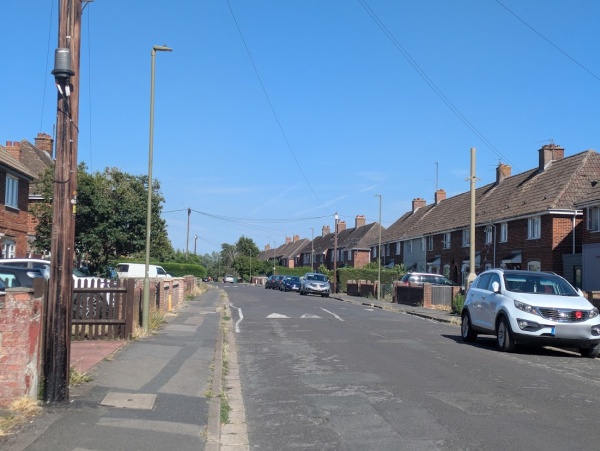
Nearby on Picklers Hill, many trees have been decorated with lights, creating a festive trail along the road. Among them is what could be the biggest decorated tree in Abingdon.

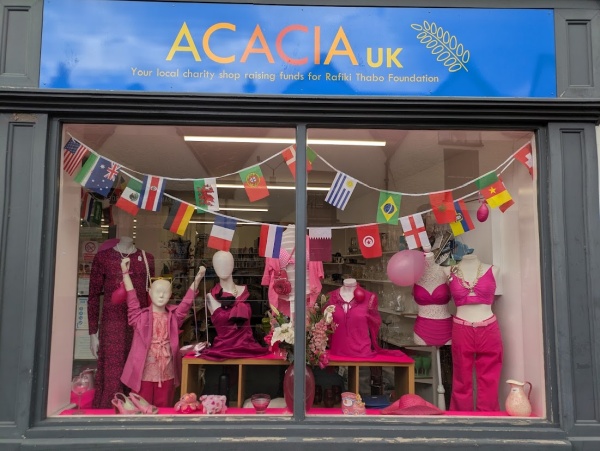
Picklers Hill also features decorated shop windows as part of an Advent calendar. They are collecting for Oxford Wood Recycling.
The Last Sunday before Christmas

The fourth Advent candle was lit on the Advent Crown at Trinity and other churches in Abingdon. Several churches across Abingdon held carol services.

On the Market Place, the Salvation Army band played carols.

A lot of shops were open (for a Sunday) with just four shopping days until Christmas Day. I hear, the Tesco carpark was almost full at 10 am.

Outside Waitrose, Abbey Brass played.

Father Christmas was also there. He has been touring the roads of Abingdon thanks to the Lion Club. This is his final scheduled stop for the Lions this year. It will soon be down to the real thing.
Rock Choir Christmas Concert Brings Music and Charity to Abingdon Market Place

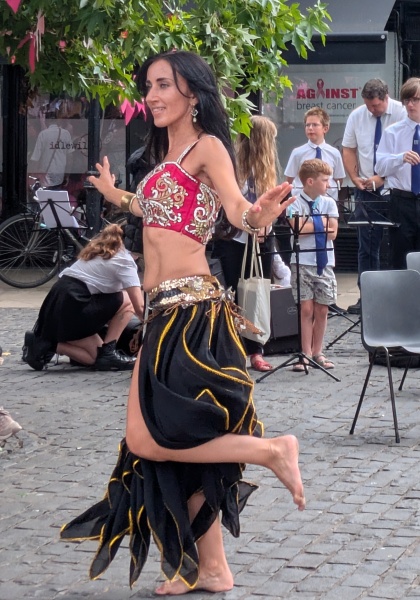
At 4.30pm today, the Abingdon Rock Choir were joined by members of other local Rock Choirs for a Christmas concert in the Market Place. A good crowd gathered despite the cold, stopping to watch, listen, and at times clap and sing along to familiar rock songs.

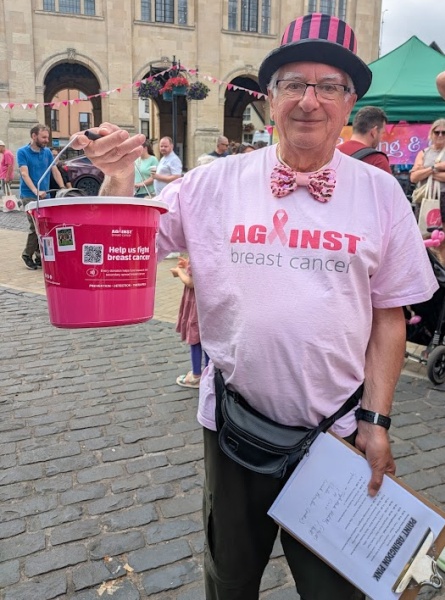
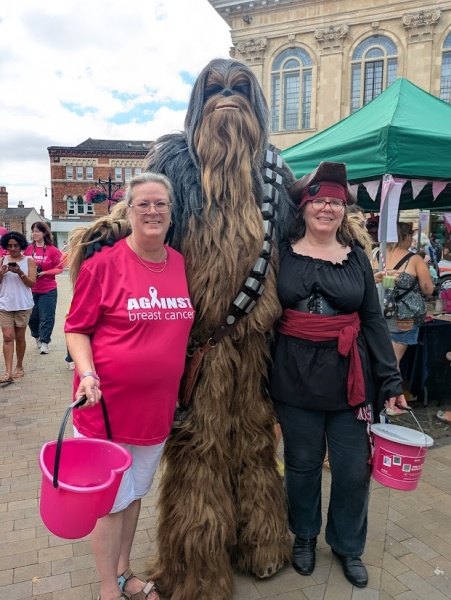
The event raised money for the Abingdon-based charity Against Breast Cancer, which funds research to support life-saving research for people living with secondary spread, the main cause of breast cancer related deaths. Donations were taken throughout the performance. Money was also raised through the sale of mince pies and mulled wine, and the generosity of sponsors.

The Rock Choir have performed at Against Breast Cancer’s summer market place events, but this was their first Christmas concert here. Judging by the success of the event, it may well become the first of many.

Away from the music, nearby stalls added to the atmosphere. On one stall, Arlo attracted plenty of interest by selling swords, axolotls and a range of other articulated objects.

The hour-long concert ended with a rendition of Merry Christmas Everyone, after which the combined choirs gathered in the Market Place for a group photograph.
An Abingdon-to-Abingdon Road Trip Across the USA

I met Harriet and John at the Punch Bowl while the Abingdon Traditional Mummers were performing, and they told me about a recent trip with an Abingdon theme.
In October, Harriet and John set out across the United States, visiting places called Abingdon. Armed with postcards from Abingdon, Oxfordshire, they shared stories of bun-throwing, Morris dancing, pubs, the MG factory and everyday town life, leaving a little of this Abingdon at each stop.

Their first destination was Abingdon, Maryland, now part of Edgewood, south of Philadelphia. Named directly after Abingdon in England, it is notable as the birthplace of William Paca, a signer of the Declaration of Independence. Although the town has since been absorbed into a wider urban area, the name survives on roads and businesses, including the Abingdon Grill, which they made a point of visiting.

Nearby is the site of Abingdon Plantation, now preserved among the car parks of Ronald Reagan Washington National Airport. The plantation was owned by several prominent families, including the Custis family. Daniel Custis, who lived there for a time, was the first husband of Martha Washington, born Martha Dandridge in 1731. Widowed in 1757, Martha married George Washington two years later, bringing with her wealth and influence. Today the plantation site is carefully interpreted with plaques, including those naming enslaved people who lived and worked there.
Martha Washington’s life helps explain why the name Abingdon appears repeatedly in this part of Virginia. She was born and raised in Gloucester County, where there was already an Abingdon Parish, named by settlers after Abingdon in England. This is probably the Abingdon where Martha was born and raised. When new towns were laid out after the American Revolution, familiar and prestigious names were often reused.

The largest Abingdon on the trip was Abingdon, Virginia, incorporated under that name in 1778. Previously known as Black’s Fort or Wolf Hills, it was renamed in the post-Revolutionary period, probably in honour of Martha Washington’s family, reflecting a wider fashion for Washington-related place names at the time.
Finally, Harriet and John visited Abingdon, North Carolina, now little more than a rural crossroads, but still marked on the map and therefore still part of the story. Proof of the visit came in the form of a blue dot on a navigation screen.
The journey became more than a geographical exercise. It was a celebration of small towns and the way place-names travel and endure.
Where the American Abingdons (probably) get their names
Abingdon, Maryland – Named after Abingdon, England.
Abingdon Plantation (VA/MD) – Named within a network of colonial families linked to Abingdon Parish and the Washingtons.
Abingdon Parish, Gloucester County, VA – Named by settlers from Abingdon, England; part of Martha Washington’s local world.
Abingdon, Virginia (VA) – Renamed in 1778, probably in honour of Martha Washington’s family.
Abingdon, North Carolina – Likely an offshoot of Abingdon, Virginia.
Abingdon, Illinois – Named after Abingdon, Maryland, birthplace of its founders.