Category Archives: wildlife

My first clear image of a water vole (or rat)

I have always admired some of the other Abingdon Blogs.

Take Views of the Ock. When that blog started, the blogger was elated after weeks of searching to get anĀ  indistinct blurred image of a water vole (I think they are also called water rats). Images got better and better until now the blogger seems able to find them at will, and has gone on to find other creatures like otters.
Signs
Today I saw my first water vole in the Margaret Brown Gardens, then almost immediately I saw five others. They scurried away, one down the riverside, the other five under the lavender.You can just see one cautiously peeping out to see if it is safe yet.
Signs
He / she then came out a bit further…
Signs
Then finally came into full view. My first clear image of a water vole (or is it a rat?). Just to add “Many people, including pest controllers, builders and developers, mistake the endangered water vole for the brown rat and accidentally poison them”

The almost impossible black swan

Black Swan Outnumbered
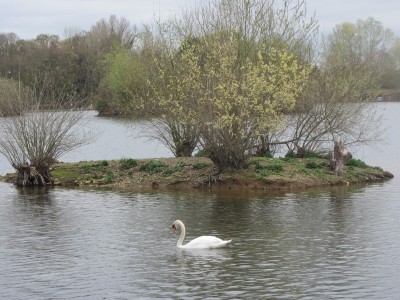
More than the usual number of swans can be found waiting near St Helen’s Wharf.

The Swan Uppers – who normally catch and weigh swans as part of the royal swan census in July – would have their hands full if they arrived right now.

The black swan is still there – probably an escapee from a wildlife park and originally from Australia. The odds may look stacked against it but at one time the very thought of a black swan was a way of saying something was almost impossible.

Ice Breakers

Milder Air
Thanks to Helen P for this picture of swans walking on the river ice
Milder Air
and acting as ice breakers.
Milder Air
And thanks to Bob who sent a picture of coots in an increasingly narrow trench of clear water.
Milder Air
There are signs of milder breezes from the South – as shown by this weather vane down Checker Walk..
Milder Air
It should allow the black swan that has be come a feature near the Margaret Brown Gardens to return to its normal winter feeding ground. It does not seem popular with the white swans.

Geese head North and Steam goes East

Sky as it cools
These geese are heading north. Birds normally migrate south at the start of winter. So this group must be heading back to their overnight roost.
Sky as cools
In the second picture there are two sources of water vapor.

To the west, some newer smaller cooling towers – hardly towers at all really as they are no higher than houses – cool the water from the gas-burning Didcot B power station.

The larger cooling towers are part of the older coal-burning Didcot A power station. It only generates electricity between October and March – a peak demand period when it can run at a profit.

Didcot A will be decommissioned by 2015.