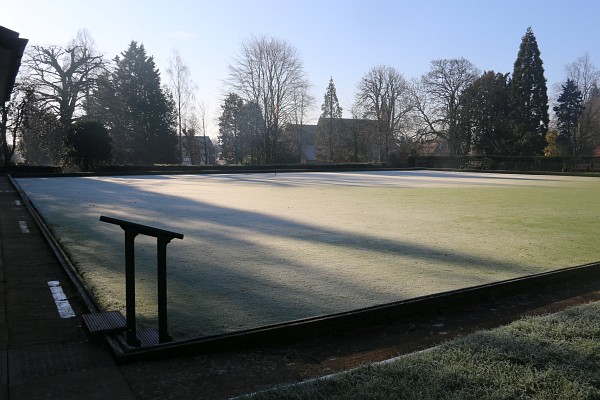
A lot of the frost had melted when I walked round the park, but it did seem to stay longer on the bowling green than other grass. Not sure I can explain that.
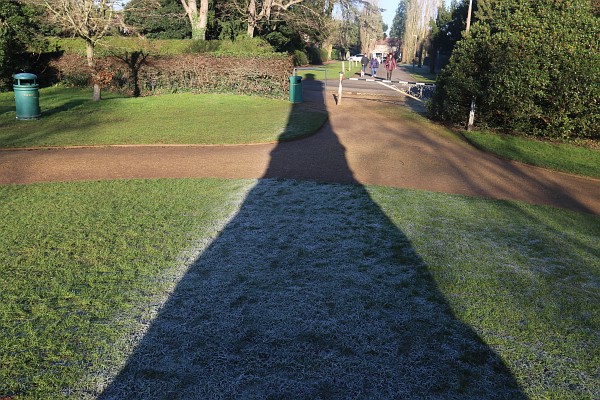
Frost in the long shadow of the Albert Memorial was also taking longer to melt. I should think it is warmer where the sun shines.
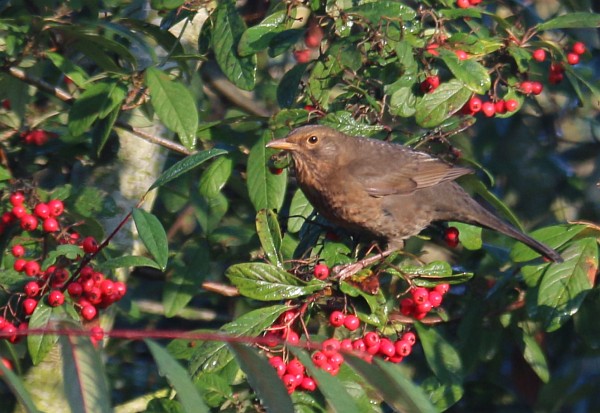
A bush with pink / red berries is popular with all sorts of birds. Somebody might recognise the bush.
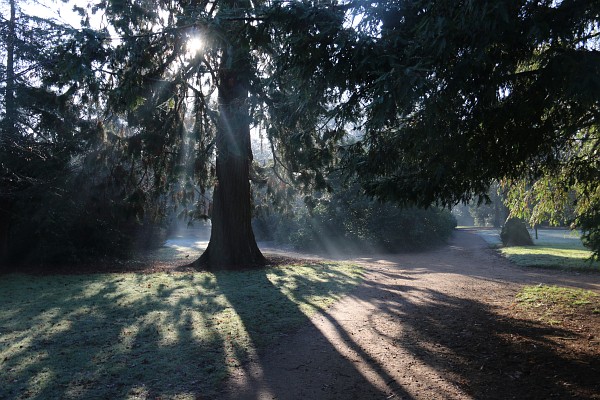
Scattered light through branches is reflected by mist to make shafts of light?
Radley Lakes – January 2022

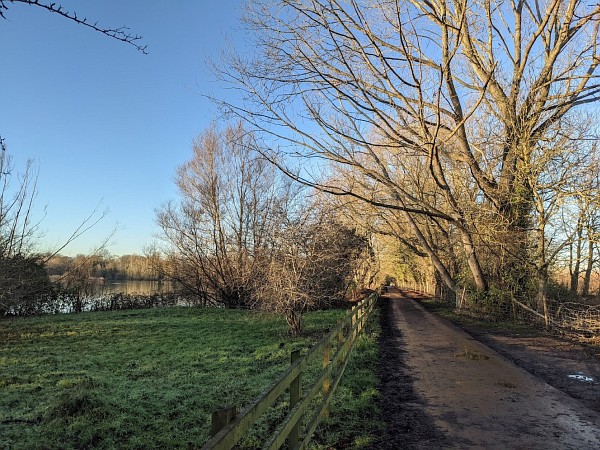
I cycled along the Sustrans Route 5 to Radley Lakes mid afternoon. In this view St David’s Meadow can be seen on the left with Thrupp Lake beyond.

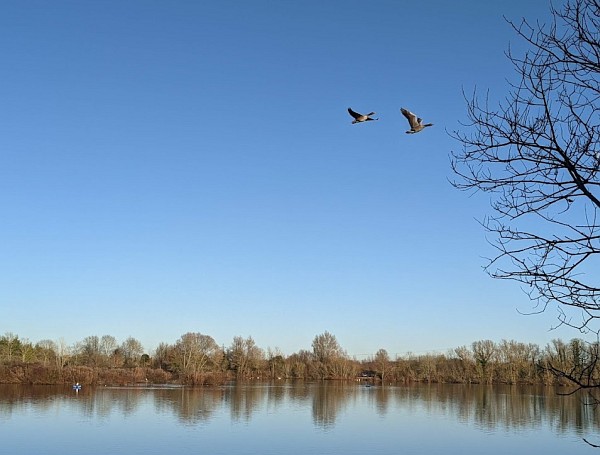
There seemed to be a lot of birds about round Thrupp Lake.

They included ducks, coots, moorhen, gulls,

swans,

grebes,

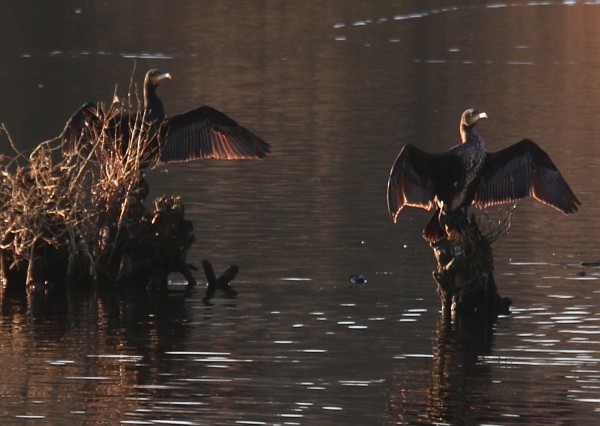
cormorants, and others.

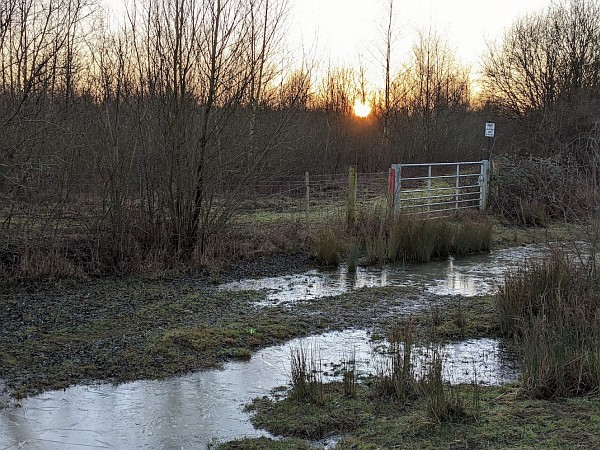
On some smaller areas of water, and on some shallow ponds and lakes, ice had not melted all day.

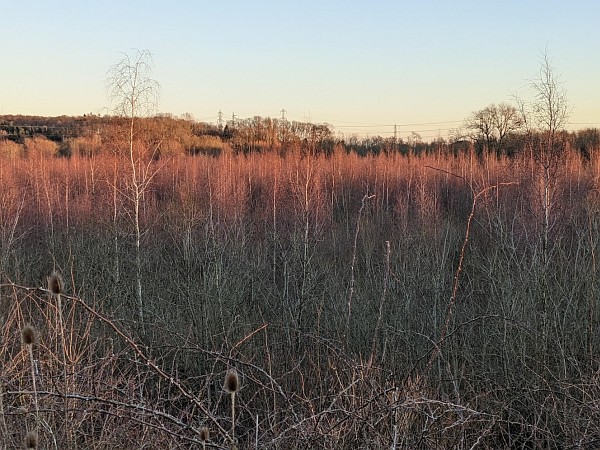
This view is across one of the lakes that was filled with ash from Didcot Power Station where trees have grown. There is a path all the way round and there is still wetland and shallow lakes or ponds at the far side near the railway and River Thames.

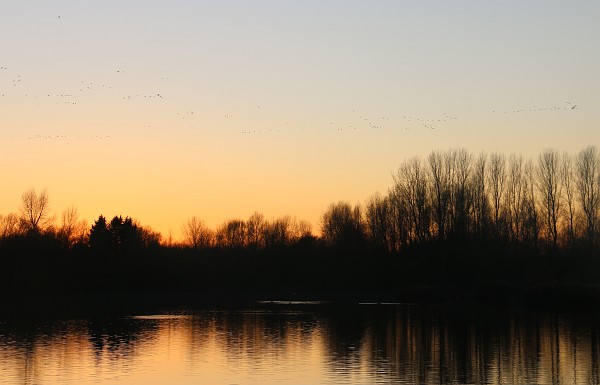
After the sun went down, at 4:20, there were trails of birds in the sky heading north.
A sunny January day
The sun was shining today after a hard frost last night.

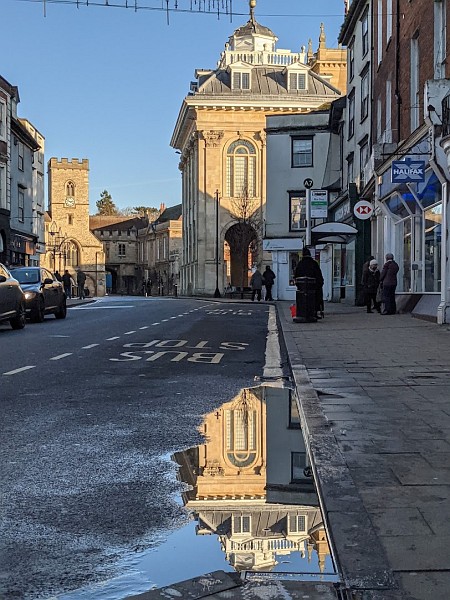
Here is the Old County Hall reflected in yesterday’s rain.

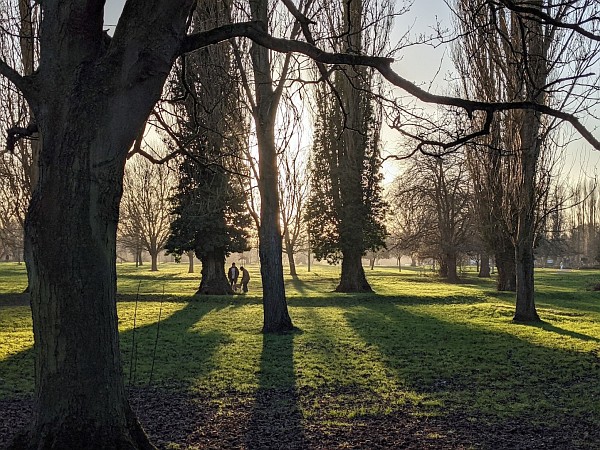
But being January the sun never got very high in the sky. Here are trees with long shadows in the Abbey Meadows.

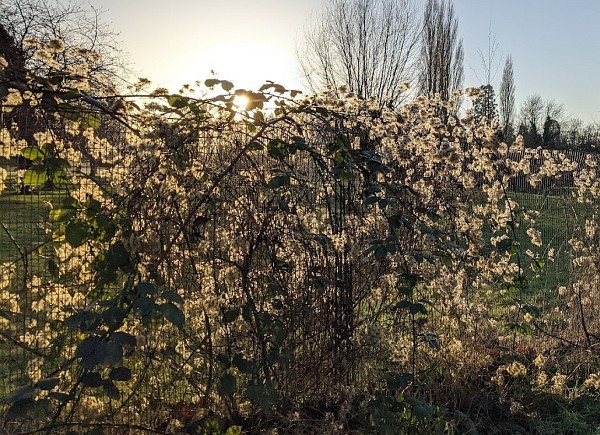
This is some of the old man’s beard nearby.

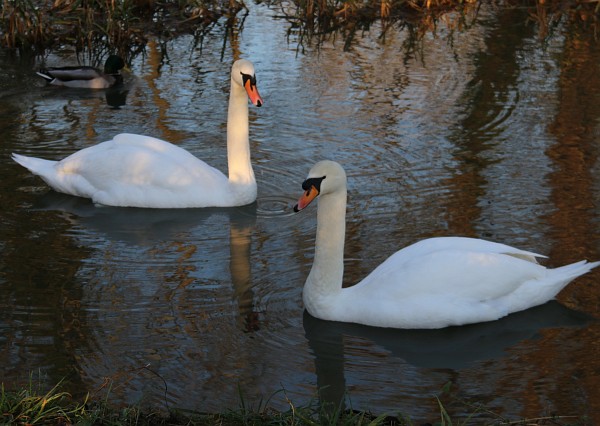
These swans were on the Mill Stream. Somebody was telling me you can tell the male swan by the thicker neck and the bigger black brow.
Abingdon Ichthyosaur

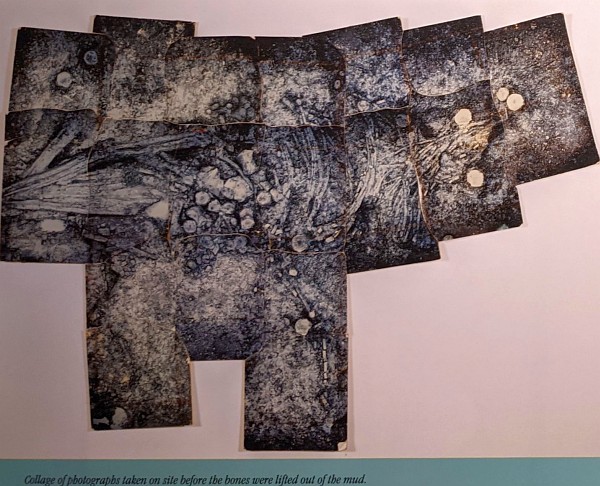
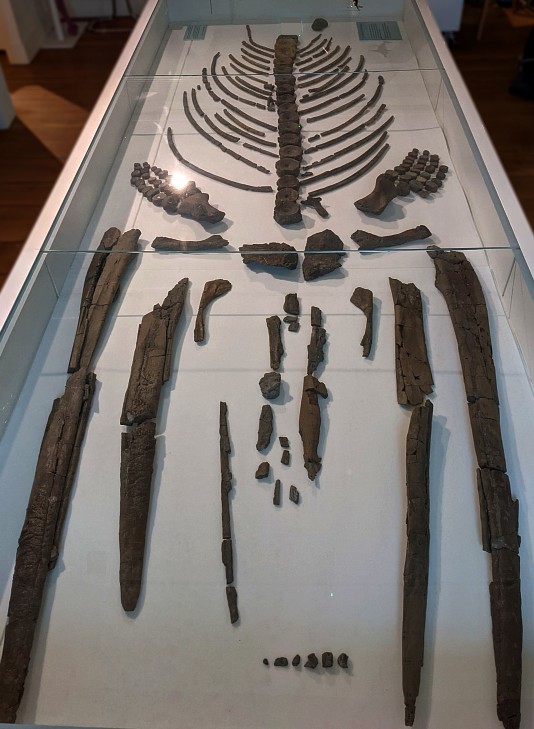
In December 1988 fossil bones were found at a gravel pit at Oday Hill, Abingdon. A small group of archaeologists investigated and identified the front half of a huge ichthyosaur. (The composite picture, above, of the crushed up skeleton is on display in Abingdon Museum).

The bones were put together with the help of staff from Oxford University Natural History Museum and can be viewed in the attic gallery at Abingdon Museum.
The museum blog has more about the Abingdon Ichthyosaur.

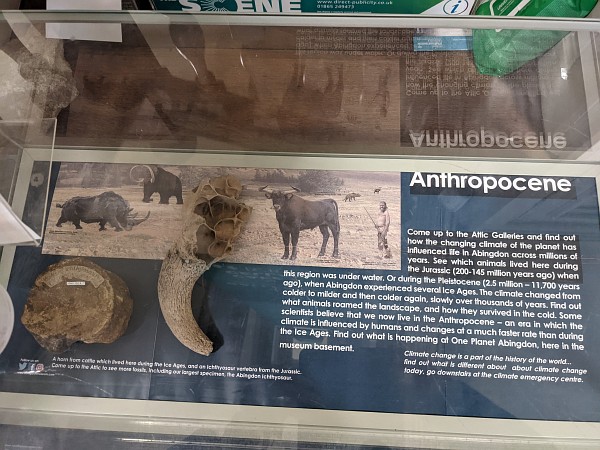
The attic gallery has other fossils showing how the changing climate has influenced life in Abingdon. The ichthyosaur ((Ancient Greek for “fish lizard” ) lived here during the Jurassic period when this region was under water. In the museum basement you can find out about how humans have influenced the changing climate in recent times in what some are calling the Anthropocene epoch (proposed geological epoch where human impact on Earth’s geology and ecosystems has become significant).