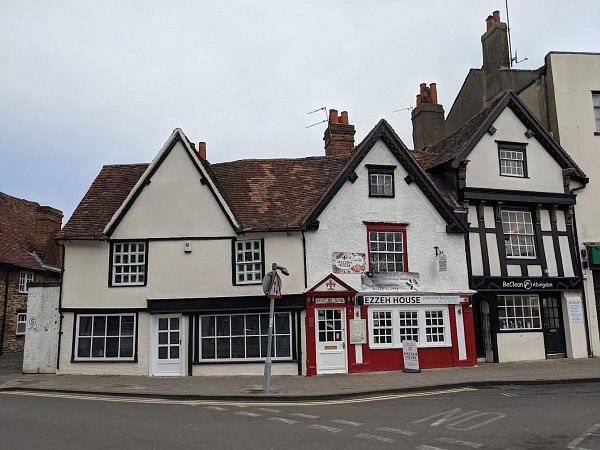
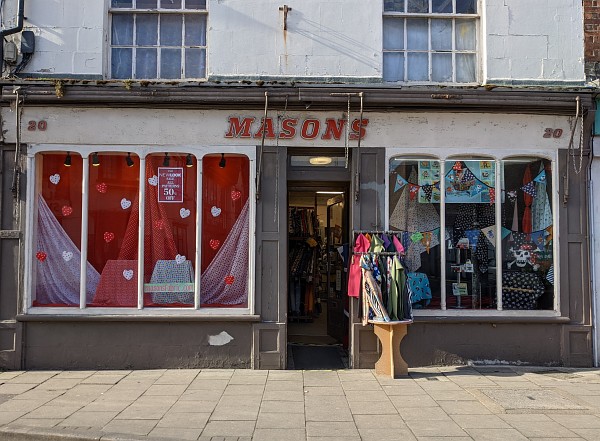
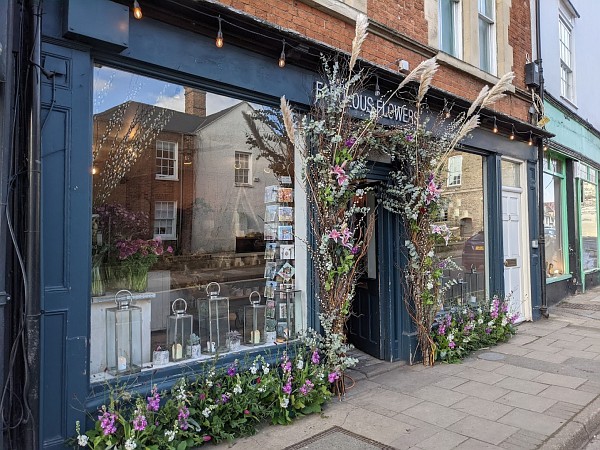
If St Valentine was to look down at Abingdon’s Shop windows and see all the hearts and love greetings he would be surprised that this is all carried out in his name.
Looking on Wikipedia there are one or two St Valentines whose feast day is the 14th February. One was the martyr – St Valentine of Rome. One story I read is that there were pagan feasts where the names of young women were put into a box, from which they were drawn by the men by chance. The church was said to have appropriated the custom and associated it with 14th February, St Valentine’s Day. Maybe? Maybe not?
Another story has Geoffrey Chaucer’s as the founder. In the 14th century poem the Parliament of Fowls, a group of birds get together on ‘seynt valentynes day’ – to choose their mates.

Now the practice is a good commercial opportunity for shop keepers between Christmas and Mothers Day, and gives people the chance to show off their love.
Music to start a marriage
At St Helen’s Church this morning, the organist was demonstrating music, for use during a church marriage ceremony, to a group of people soon to be married.
I was sitting in The Lady Chapel during this piece, intended for the end of the marriage ceremony. This is where the bridge and groom walk arm in arm, smiling this way and that at friends and family, then out of the church for some photographs, followed by a reception.
It is the start of a marriage. There may be some trouble ahead but where there is love and romance and adventure the music can keep on playing. Happy Valentine’s Day on Monday.
New earth fusion energy record

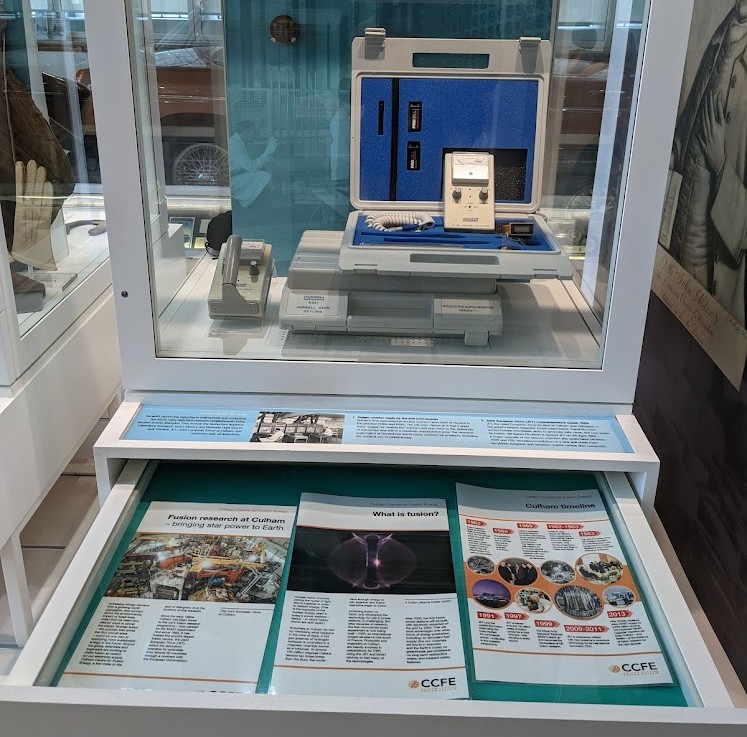
It was announced two days ago that the JET tokamak, at Culham near Abingdon, produced two and a half times the amount of fusion energy obtained during a previous trial in 1997. It provides test evidence that the more advanced tokamak, called ITER, being built in the South of France, is worthwhile.
JET’s tokamak reactor has atoms of deuterium and tritium at the center. These isotopes of hydrogen (having one and two additional neutrons respectively), are heated to temperatures (10 x the Sun’s centre) to fuse them into helium atoms. This reaction releases a huge amount of energy.
There is more information with videos at https://ccfe.ukaea.uk/fusion-energy-record-demonstrates-powerplant-future/.
The picture from Abingdon Museum has some information about atomic research happening at Harwell and Culham.
Where eight gables face eleven dormer windows

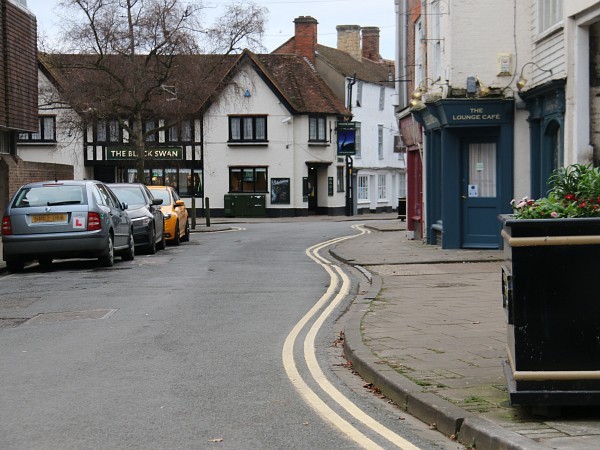
Follow the double yellow line down Bath Street past The Lounge Cafe

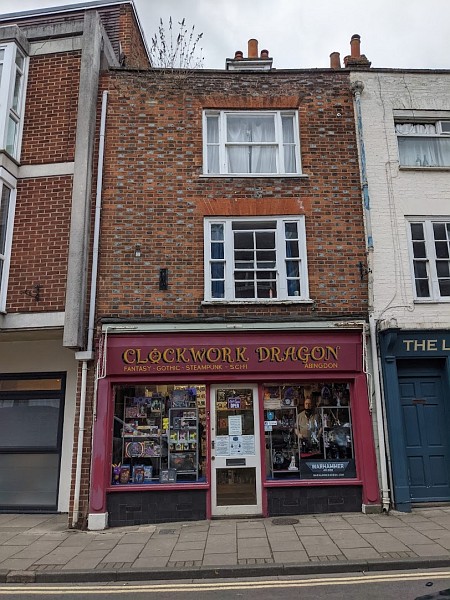
and the Clockwork Dragon

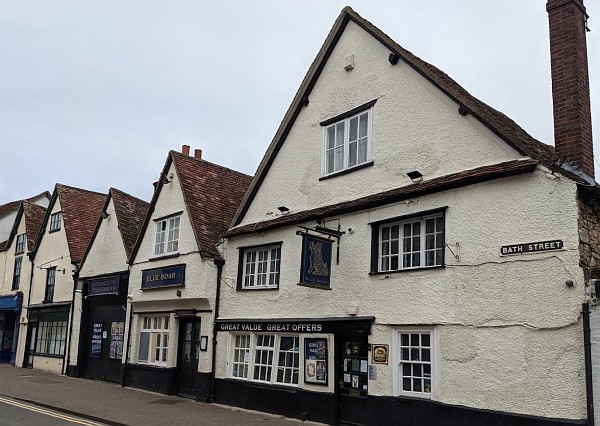
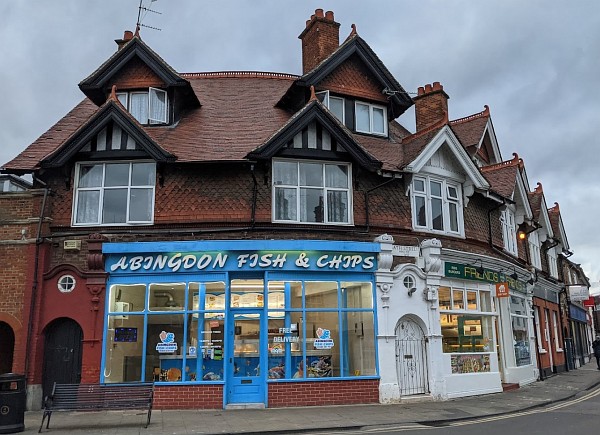
Here are five of the gables,

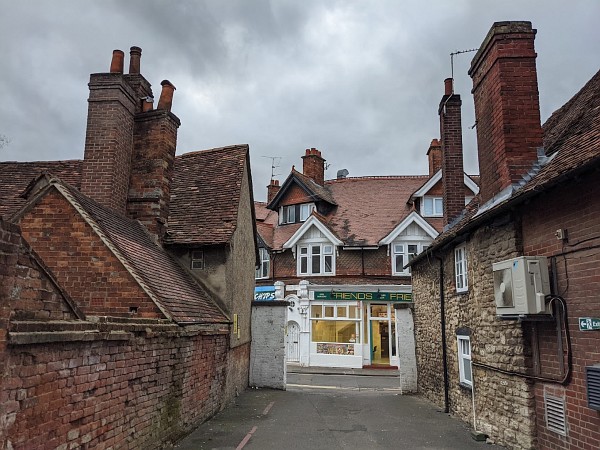
and three more gables after a driveway. That is eight old-style Abingdon gables in a row.

Looked at from the driveway there is a view of dormer windows

There are eleven, possibly twelve.