Abingdon Lock Goats: Crowd-Pleasers get Crowdfunding


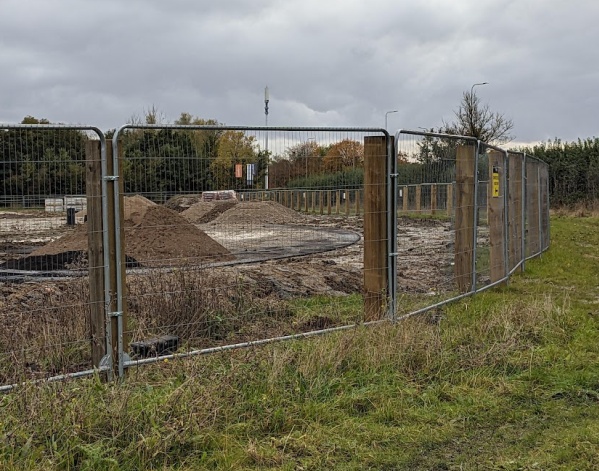
Pygmy goats Boomer, Dingle, Tootle, and Tumble have been meeting and greeting locals and visitors on Abingdon Lock Island since the start of August. Their current fencing is made from upside-down crowd control barriers, which didn’t stop one of them from escaping yesterday for a short while.

Thankfully, the goat was quickly recaptured, and the crowdfunding campaign to buy new fencing has succeeded. With the £572 raised, the goats will soon have 15 Galvanised 6ft Interlocking Sheep Hurdles to keep them safe and secure.

The goats are a source of joy for visitors and locals alike. They are such crowd-pleasers!

Arch of Sunshine


The doorway arch at Fabulous Flowers is often a sight to behold, but it is even more spectacular this week. The current display results from flowers left after a wedding and spreads sunshine to passers-by in Bridge Street, Abingdon.

The arch overflows with flowers that continue along the front of the shop on both sides and is a testament to the skill and artistry of the florists at Fabulous Flowers.

Dorothea Pickering: The Visionary who shaped St Ethelwold’s House


As part of the regular Tea and Cakes at St Ethelwold’s House, Anne Dodd gave a talk on the history of the house and the people who have shaped it, mentioning, in particular, Dorothy Pickering and Father Bede Griffiths.

St Ethelwold’s House is a historic building with a long history. It was originally built in the 13th century. It has been used as a brewery, and by a coal merchant and an antique shop. In 1964, it was purchased by Dorothea Pickering. She first used the house for her prep school, moved from the Vineyard and called The Vineyard School. It was only used as a school until 1967, and then became her retirement home.

During the 1970s, Dorothea believed it could be the base for a traditional Benedictine Community. She named it St Ethelwold’s after the reforming Abbot of Abingdon Abbey, who was a major figure in the Benedictine revival in England. She was then inspired by the Benedictine monk Bede Griffiths, who had an Ashram in India, to create a spiritual centre where people of all faiths could learn from each other and find peace and inspiration. He visited and wrote to her about the plans.

Under Pickering’s leadership, St Ethelwold’s House became a popular destination for spiritual seekers. It hosted various events and workshops, including meditation sessions, and interfaith dialogues.

Pickering died in 1997, but St Ethelwold’s Trust continues to operate St Ethelwold’s House as a spiritual centre. Initially there was an attempt to form a Benedictine Community like an Ashram. More recently, it has become an open spiritual / community centre and unique to Abingdon. It is a popular destination for people of all faiths, and none, who are looking for peace, inspiration, and community. The garden is also a popular place for local people to enjoy, and the events such as tea and cakes are a great way to connect with the community. There are groups in the house doing art, poetry, yoga and meditation. It has also been used to welcome refugees and host get togethers to celebrate what unites people.

(Jill Gant wrote a short history of The Fellowship of Saint Ethelwold available for £1 in the house.)

Roger Baker’s 54 Years of Volunteering with Oxfam


Roger Baker has been volunteering for 54 Years at Abingdon’s Oxfam Shop. He is probably the charity’s longest-serving volunteer.

Roger first started volunteering in May 1969, when he was inspired by a talk given by Joe Mitty, the manager of the first Oxfam shop. Mitty had secured the use of the former Boots premises in Abingdon’s high street rent-free and wanted to start a shop there. Baker was one of the first volunteers to sign up.

Over the years, Roger has seen many changes at the Abingdon Oxfam shop. The shop moved to Stert Street in 1971 and to its larger premises in 30-32 Stert Street in 1986. At the start everybody was a volunteer, but now there is a paid manager.

His particular job is treasurer, but being on the end of the phone and being retired – he was a Physics teacher, he will go down and do anything if he is free. He can work on the till, sort new Oxfam goods, do the washing up, or anything.

“It’s still a great place to volunteer, and very varied” he says. “It’s a chance to make a difference to the lives of others.”