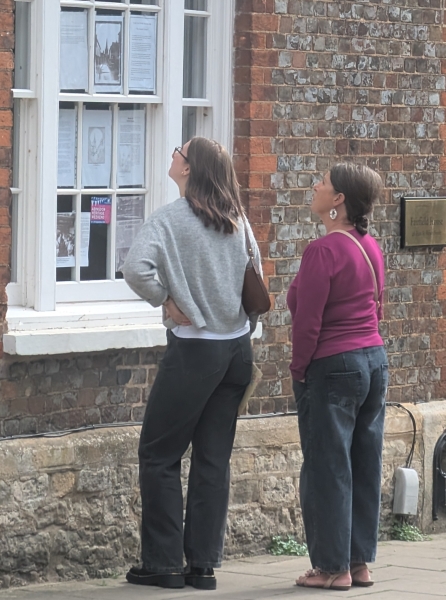
Heritage Open Weekend on Sunday offered nearly as much as Saturday. A lot of the properties in East St Helen Street had their histories in their windows as well as information on the working life of their inhabitants.
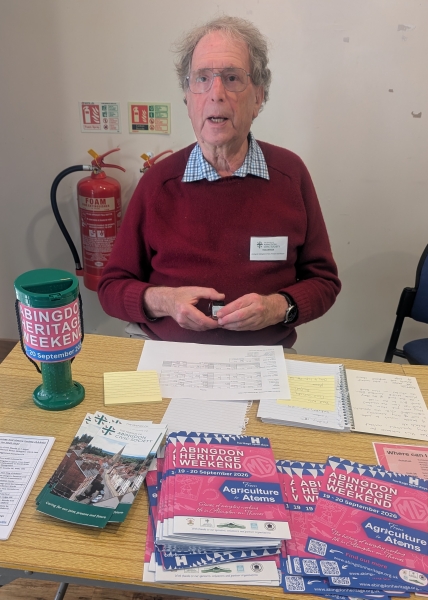
At 25 Bury Street, the downstairs exhibition explored the working lives of Abingdon people in earlier centuries. Michael was working hard, clicking visitors in.
Among the displays was a reference to our house number in West St Helen Street. In the late nineteenth century, a taxidermist named H. Keates operated from a house with our house number.
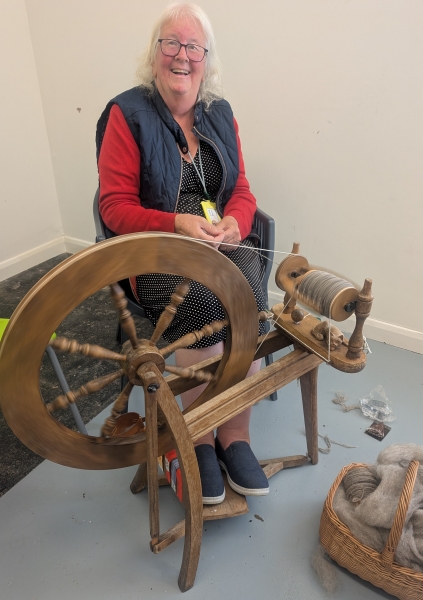
An arrow pointed upstairs with the message: ‘Spinning.’ Up there, the exhibition had more information boards, demonstrations of spinning (and weaving too). Two short films were playing, including one contrasting the arrival of hi-tech atomic energy research in this rural area with scenes of local folk still using horse and cart.
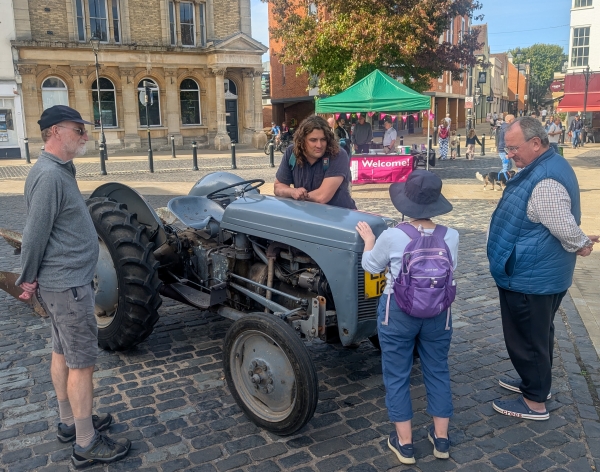
Out on the Market Place, a Ferguson tractor was attracting attention. It was originally bought in 1948 by the convent, and when they upgraded their tractor it was purchased in 1975 by Brian Ford, who ran Radley Road Nurseries for over 30 years. His grandson was driving it today.
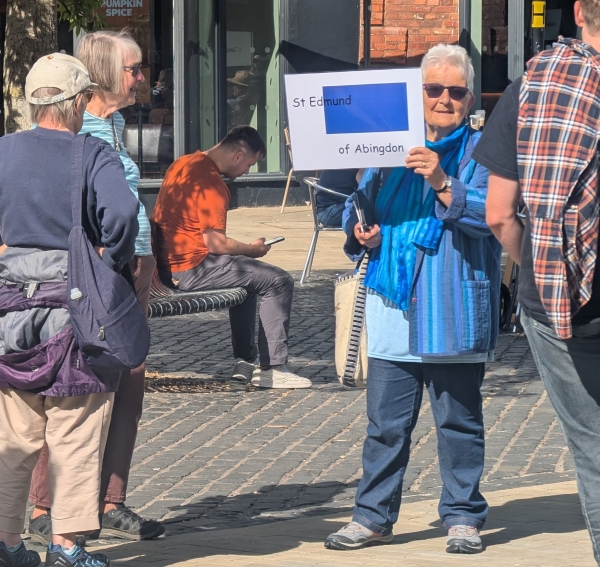
Guided walks set off from the Market Place in the morning and afternoon, and almost all were fully booked. Anne Dodd can be seen here at 2 pm preparing to lead the St Edmund’s Tour, while other afternoon groups headed out on the John Mason Tour and the Abingdon Arts Walk.
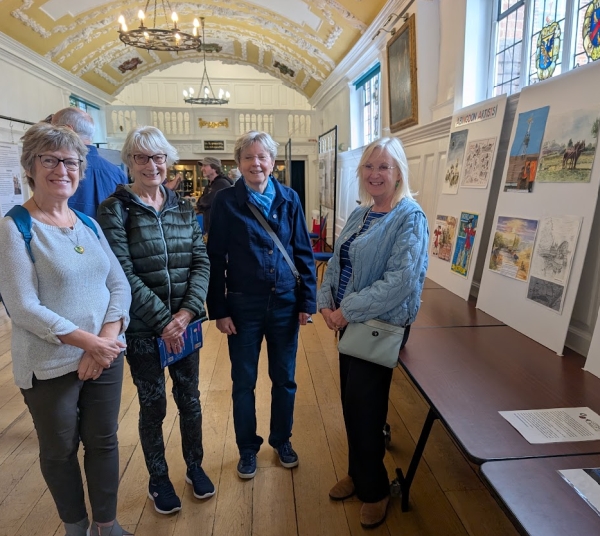
Downstairs in the Guildhall, the Roysse Room hosted artwork by Abingdon artists, many pieces depicting local industries and trades. Here are some of the artists.
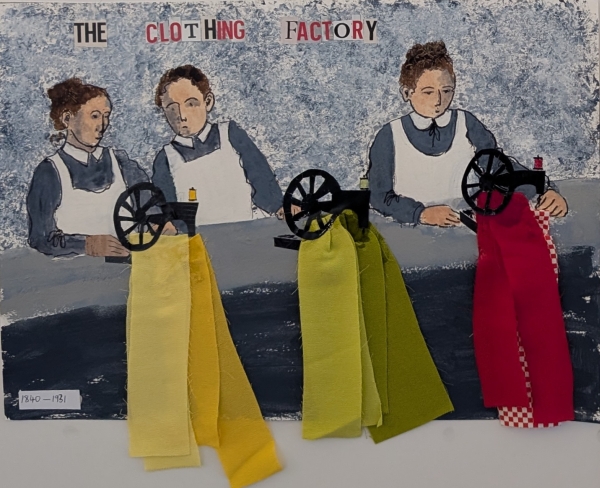
Here is one sample of the work showing Abingdon Clothing Factory.
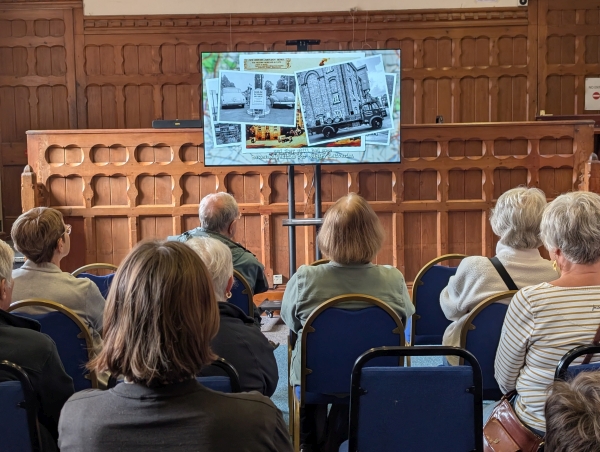
The Roysse Room also contained more information about workplaces in Abingdon. During the morning, lively evangelical music from the Lighthouse Church filled the building, but by the afternoon the atmosphere had quietened. In the Magistrates’ Court, visitors could watch a series of films, including one created by pairing old Abingdon oral‑history recordings with newly added visuals.
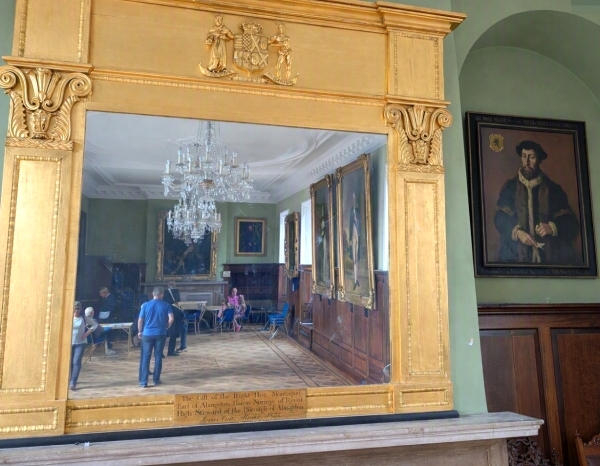
The upstairs rooms of the Guildhall were also open for viewing, giving visitors a chance to explore parts of the building not normally accessible.