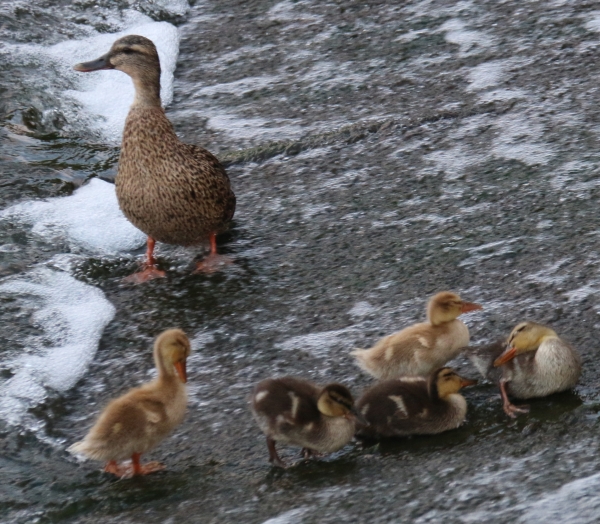
July is a good month for spotting young waterfowl along the Mill Stream, although many of the youngsters are well hidden. These ducklings were out in the open below the weir.
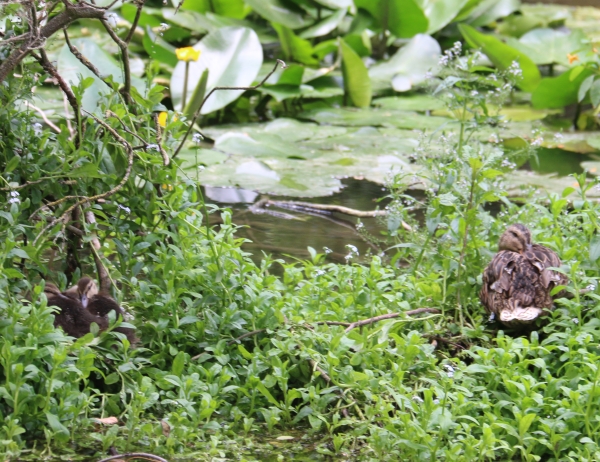
There seem to be plenty of ducklings about, but the thick summer growth along the banks provides plenty of places for them to shelter, making them difficult to spot.
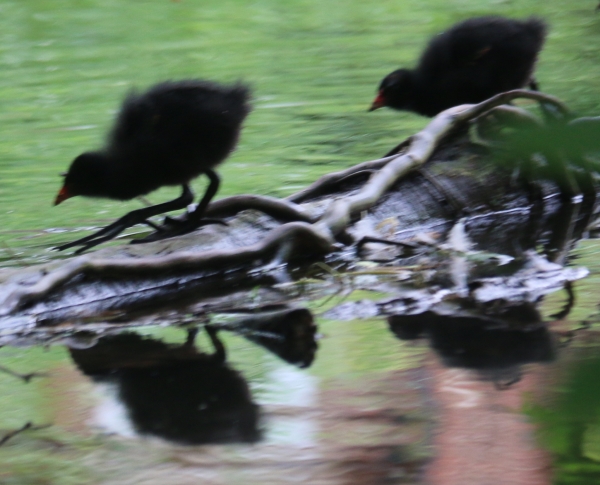
Moorhen chicks are often easier to find because of their high-pitched cheeping, which gives them away before they can be seen. Apart from the ducklings and moorhen chicks, I haven’t noticed many other young birds this month.
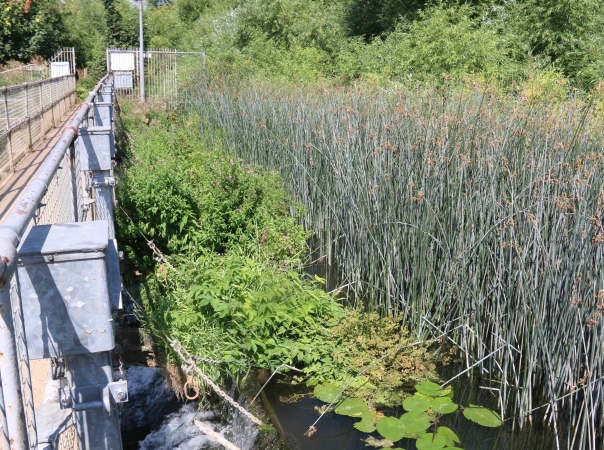
Around the weir, the reeds provide dense cover for wildlife. They protect not only birds but also large numbers of small fish.
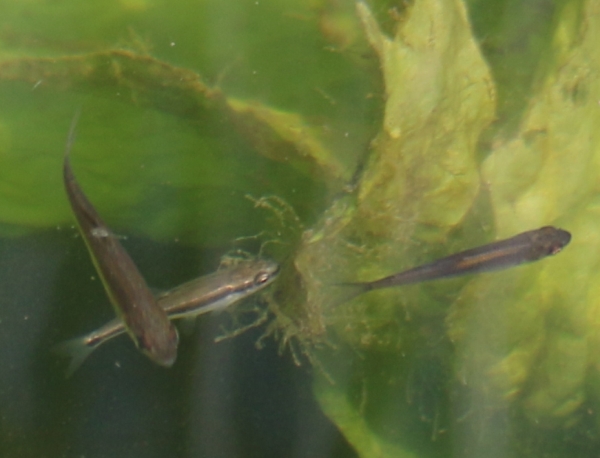
The fish are easiest to see in the shallower water, or where bright green floating plants provide a contrast.
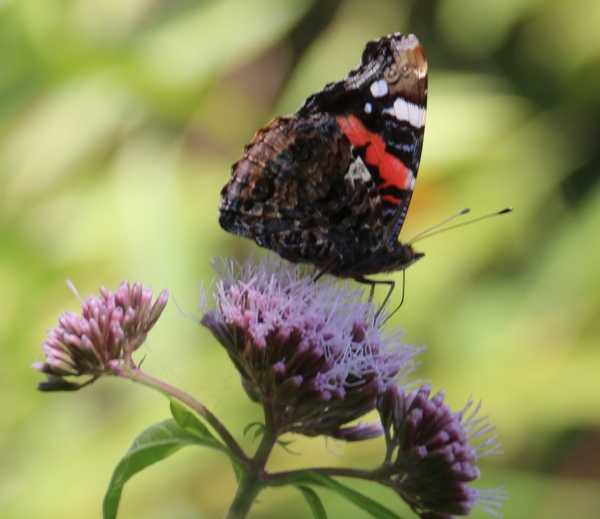
I found large numbers of Red Admirals feeding on a pink flowering plant beside the water’s edge.
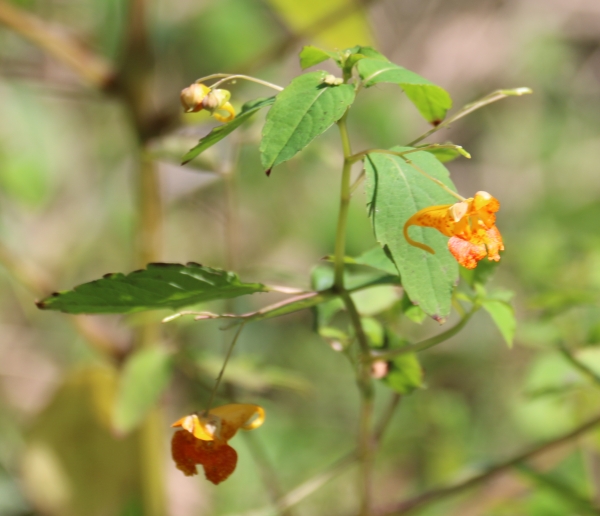
Another interesting plant growing beside the stream has orange flowers that look rather like tiny jugs. It may be Orange Balsam.
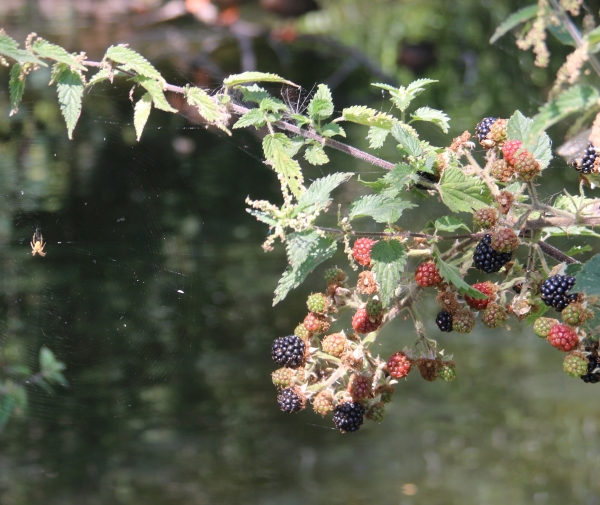
The brambles beside the Mill Stream and the larger bramble bushes in the Abbey Meadows have produced a good crop of blackberries throughout July.
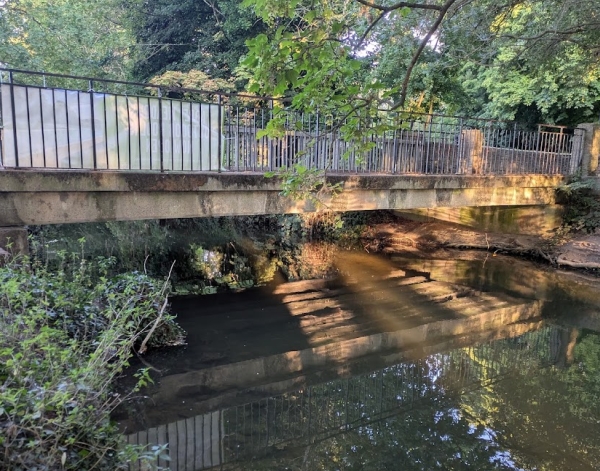
I met a couple using a 30-year-old walking guide who were puzzled by Abingdon’s Sword Bridge (the green iron footbridge, opened in 2007, with decorative motifs based on the ceremonial sword). It wasn’t shown in their guide. They were looking for the Abbey Gardens, so I pointed them towards the next bridge. That bridge, built by Cowley Concrete, looks striking in the early morning sunlight, with its underside reflected in the water.
Abbey Millstream Through the Year: July 2026
Leave a reply