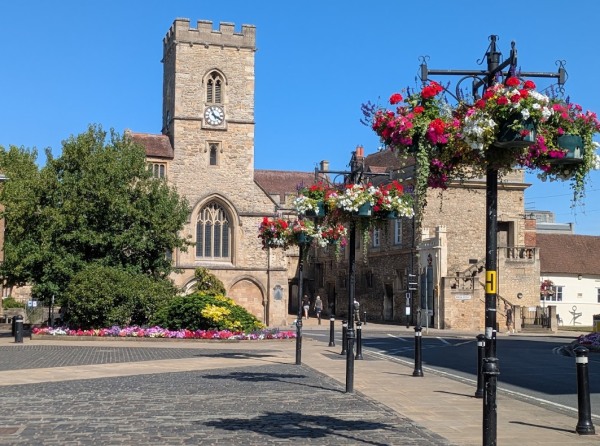
Abbey Hall Roof Repairs & Cinema Update


An update from Abingdon-on-Thames Town Council has been issued at https://www.abingdon.gov.uk/news/update-on-the-abbey-hall

Work to fix the roof of the Abbey Hall will start in early February to ensure the building’s safety. It has been closed with Asbestos and Reinforced autoclaved aerated concrete (RAAC) issues since 2nd October 2024. The Asbestos has already been made safe and so the RAAC work needs doing.

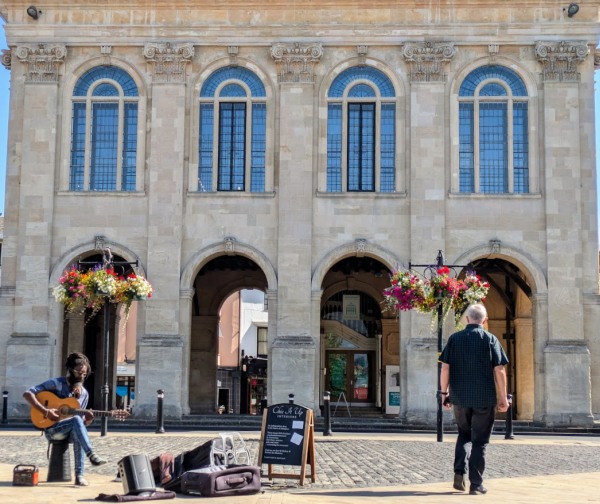
The Abbey Cinema can continue operating rent-free from the Old Magistrate’s Court until 31st March 2025. This is a smaller venue with cheaper tickets.

After the roof is fixed, the auditorium will be ‘decorated to make good’ and the town council says, ‘It is hoped that the Abbey Cinema will then be back in the auditorium and that their normal service will be resumed.’

It was said before Christmas, ‘The cost of the measures so far has been £180,000 and
the Council has been advised that the cost of a full renovation of Abbey Hall would be £2,500,000, which is beyond the Council’s financial resources.’

Copenhagen Drive Care Home Decision


The plans for a care home on Copenhagen Drive, along with outline planning permission for homes to be built later, came to the vote this evening.

The planning application was brought before the Vale of White Horse District Council (VWHDC) planning committee this evening because Abingdon Town Council objected. Otherwise it would have been approved behind closed doors.

Two councillors and a local resident spoke against the plans, and the developer spoke for the plans. The resident expressed concerns about potential flooding. He cited the recent flooding at Larkmead School which he had traced back to the ditch nearby the development.

Concerns were also raised about the availability of GPs and dental services in the area. The Long Furlong Medical Centre had objected to the plans, but the local commissioning board did not.

Noise from the nearby A34 was another worry. However, the care home would have noise-reducing glass.

One councillor questioned the suitability of putting a care home in a place that he described as ‘out on a limb,’ away from local facilities.

There was also debate about whether a new care home was necessary, given the number of care homes in Abingdon. One councillor tried to argue that the local plan intended residential development and didn’t intend more care homes, but the council officer said the a care home counted as residential.

Some Abingdon councillors voted against the proposal, but the planning application was approved by a majority vote.

Tuesday: Abingdon Provides Refuge


A midday talk at St. Nicolas Church highlighted the ongoing efforts of the Abingdon churches and community to provide support for refugees. Rev. Keith Dunnett of Christ Church introduced the session. About 40 people attended.

Sue explained how the Host Abingdon initiative began nine years ago in response to a call from St. Ethelwold’s House (pictured above) to assist families fleeing war and persecution. The initial focus was on resettling Syrian families, with eight families arriving in Oxfordshire, as part of a government scheme. Host Abingdon provided support with language classes and advice on navigating unfamiliar systems, bureaucracy, and housing. They recognised the challenges of learning a new language after experiencing the trauma of war. These families have now integrated well into the community, many are now British citizens and 2 children attend university.

When the war in Ukraine began, Host Abingdon initially felt overwhelmed. Christ Church stepped forward to provide assistance and volunteers.

Host Abingdon also supports refugees residing in a Home Office hostel in the area and has built relationships with the women and children there, who have fled war zones in Eritrea, Afghanistan, Sudan, and Syria. One of the women shared her experiences and the help she has received both emotional and practical.

Janice, Chair of Host Abingdon, and from the International Welcome Café at Christ Church described their work. The café provides a welcoming space where people can improve their English and meet others. Typically, 20–30 people attend each week, including visitors and children, volunteers, and representatives from agencies. The café, which began in 2022 in response to the arrival of Ukrainian refugees, is open to people of all nationalities and operates free of charge.

Keith highlighted the global scale of the refugee crisis, noting that 103 million people were forcibly displaced in 2023, a number likely to increase in 2024 due to the conflict in Gaza. A relatively small number of these individuals come to Abingdon.

The churches and community in Abingdon have a commitment to supporting those in need, whether at home through the food bank or those fleeing conflict zones though Host Abingdon, and the International Welcome Café.

Tomorrows midday talk and prayers at St Nicolas are about supporting looked-after children.

Monday: Abingdon Food Bank


At a lunchtime gathering at St. Nicholas Church today, Reverend Paul Smith introduced a talk by Philip Bingham, the Abingdon Food Bank manager. (Paul can be seen in front of a monument to the Blacknall Family who bequeathed money for bread to be given for the poor.)

Mr Bingham said the food bank began out of a cupboard at Christ Church 15 years ago. It has grown, and with the support of The Vineyard Church, who set up an outlet at Preston Road Community Centre 6 years ago, serves North and South Abingdon and villages.

The Food Bank operates twice weekly at Christ Church and once weekly at Preston Road. Last year, it provided support to 616 families, representing approximately 4-5% of the local population.

Mr. Bingham spoke of the ongoing need for the Food Bank, which is part of the Trussell Trust, a national network with over 400 food banks. Referrals come from various sources, such as Social Services, Citizens’ Advice, and schools. The Food Bank provides a range of essential items, from tinned and fresh food and toiletries to baby supplies.

Tim, a volunteer, spoke of the Food Bank’s role in supporting refugees and those facing difficult circumstances such as family break ups. Most need it for a short time, perhaps while waiting benefits, but some use it for longer.

The Food Bank also collaborates with other local initiatives, such as the Abingdon Larder at Trinity Church and Abingdon Fridge on Hadland Road Community Centre, to minimise food waste. (The Larder gets food from SOFEA in Didcot and the three organisations transfer surplus fresh food between themselves.)

The Food Bank relies on both direct food donations (over 50%) and food bought from money donations (over 40%). Local businesses also contribute.

A clothing bank operates three Fridays a month.

The talk was followed by a Q&A session, prayers for the foodbank (the talk was part of The Week of Prayer for Christian Unity) and refreshments. Tomorrow’s talk, the second of five, is on refugees.