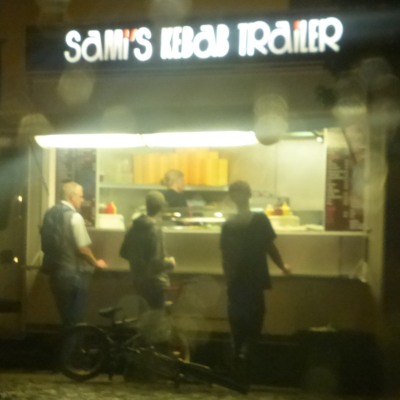
Sami’s Kebab Takeaway

An entry for City Daily Photo’s Theme of Takeaways.
Kebabs
Abingdon has a number of takeaways selling kebabs. The grandfather of them all may be Sami’s Kebab Van on the Market Place (recently upgraded to a Trailer).

I read in the district council’s Street Trading Policy that “Sami’s kebab van trades in the Abingdon Market Place under a permission granted by the town council dating back to the 1970’s. It appears that when the street trading guidance was introduced in 1996 a decision was taken to grant the business grandfather rights.

See Steve King’s comments for a fuller explanation …
Crayfish

Crayfish
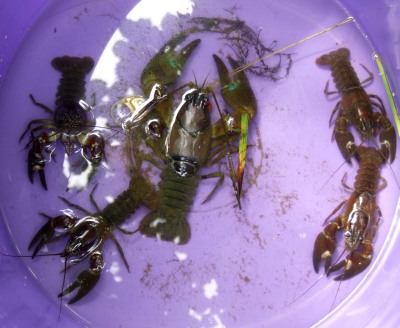
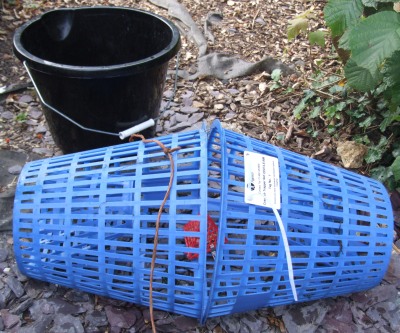
One unwelcome invader to our rivers is the North American Signal Crayfish, a ferocious cannibal that will eat anything that comes its way, fish eggs, ducklings, young Moorhens and has all but finished off our indigenous species. Apart from doing harm to our wildlife they can collapse a river bank by their constant burrowing. The River Ock has its share of this monster and Steve has been doing his best to control them (over 100 in 3 days from a 10 meter stretch) You have to be licensed by the E.A to catch them and putting them back is forbidden, (failure to comply carries a hefty fine) but they do make for good eating!
Crayfish

St Ethelwold of Winchester (and Abingdon)

St Ethelwold
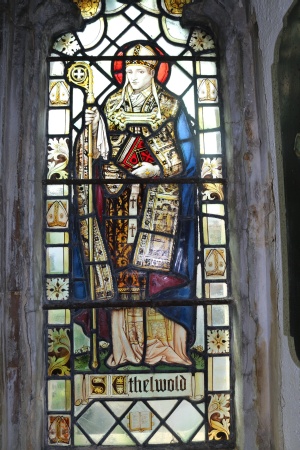
On a recent visit to Winchester we saw a stain glass window in a chapel showing St Ethelwold. Ethelwold was Abbot at Abingdon Abbey before becoming Bishop at Winchester in 963.
St Ethelwold
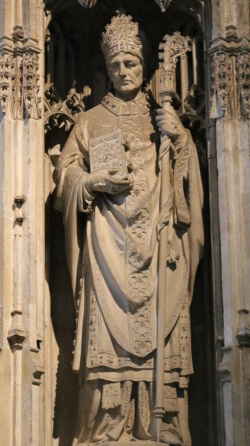
There was also an image of Ethelwold on the large Cathedral Screen.

He would have been Bishop before the current Cathedral was built and so we could not find his tomb. Even if St Ethelwold was buried at Winchester his bones would not be easy to find. During the time of King Henry VIII all the bones and relics from saints and others had been dug up and dumped in a pit.
St Ethelwold Jigsaw
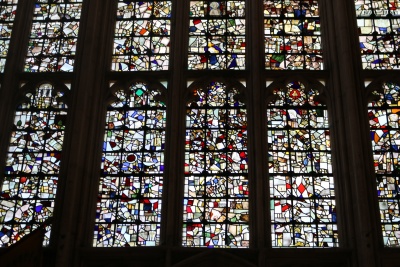
The large stain glass windows at Winchester Cathedral were deliberately smashed by Cromwell’s forces, some time later, during the Civil War. After the restoration of the monarchy in 1660, the broken glass was gathered up and assembled randomly, and now looks like a modern art window. A guide told us that historians are still trying to identify some of the old bones using DNA.