Category Archives: wildlife

River Ock in Abingdon – May 2023


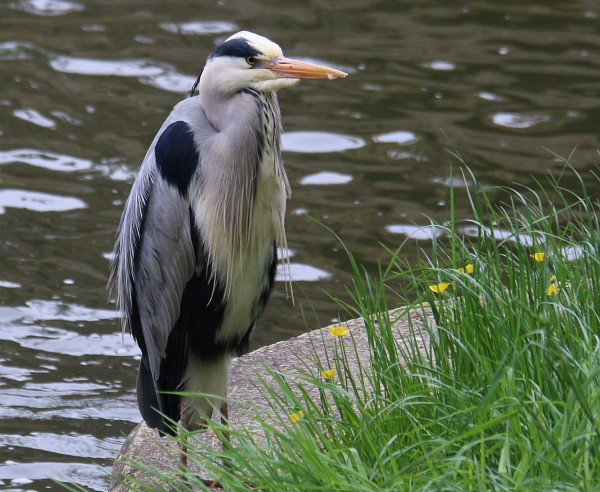
A Kingfisher can sometimes be seen as a blue flash, but then is hidden by all the foliage that has grown in May. A heron is much easier to see.
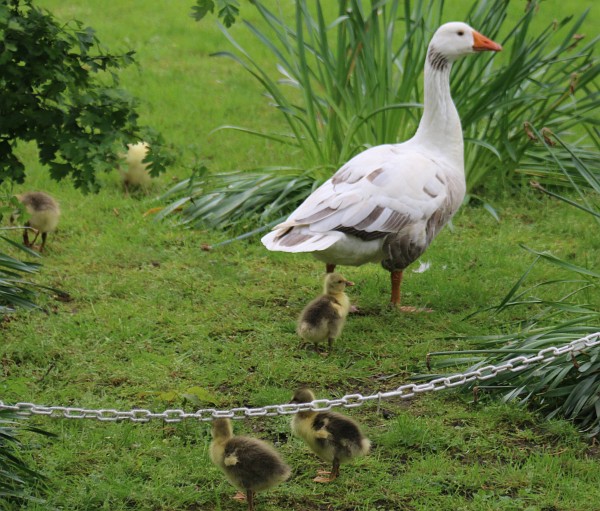
I have not seen any ducklings on the River Ock, but a goose and goslings grazed on the grass in front of Mill Stream Court, beside the Ock.
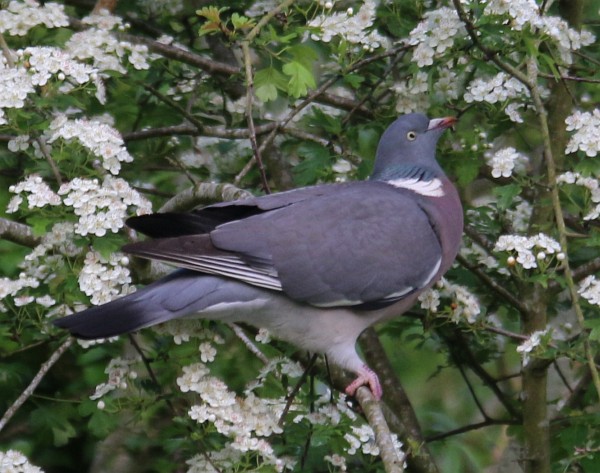
Falls of white hawthorn blossom are alongside the River Ock. This wood pigeon was eating the little flowers.
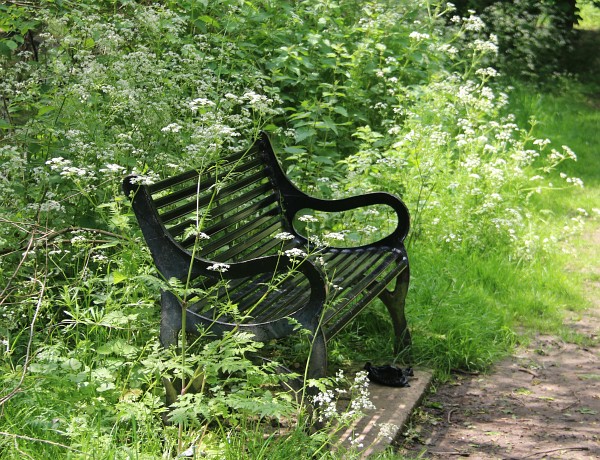
Somebody asked me if there was a bench on the walk, and I told them there were three. Cow parsley had surrounded two of the benches but a mower then cut back the path borders.
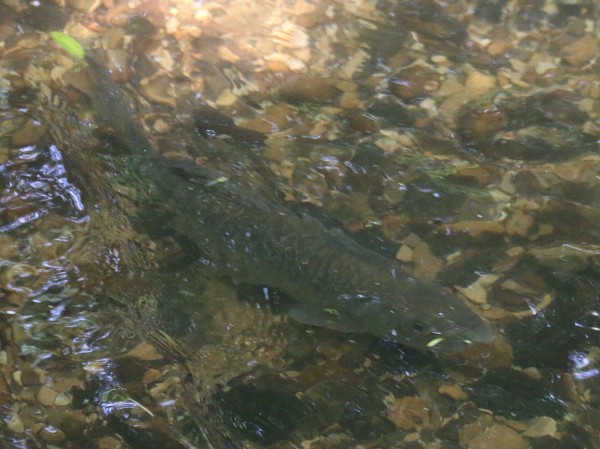
I am beginning to notice fish in the River Ock during May. That could because fish are most likely to spawn in May.
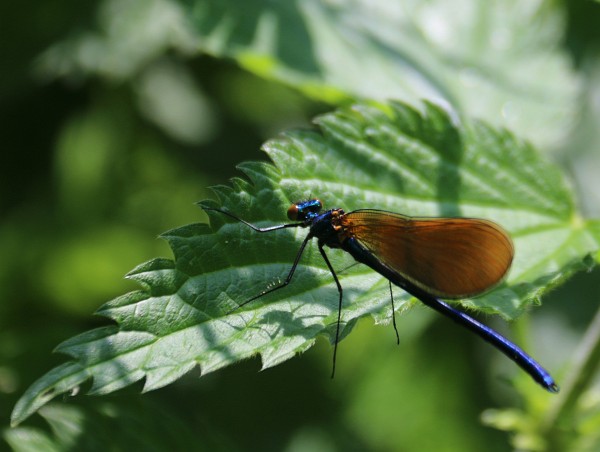
Damson flies, and butterflies fly about among the many nettles that now border the River Ock.
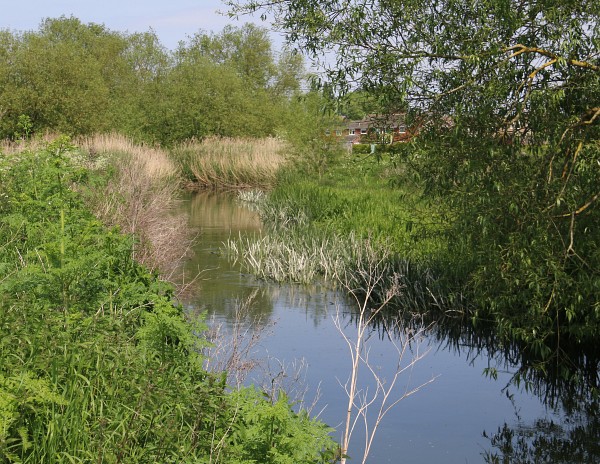
Further out of town, where the River Ock meanders through fields,
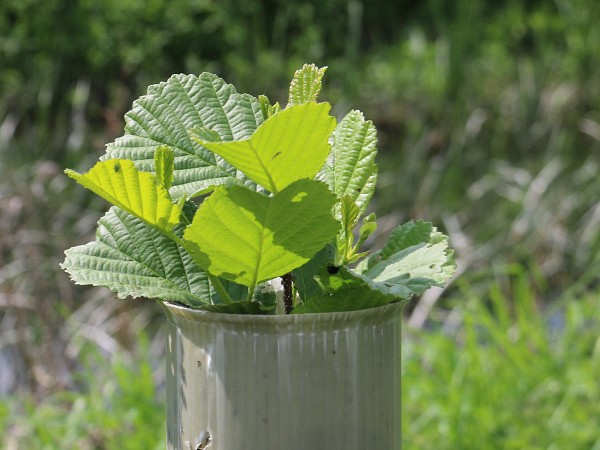
ten alder trees were planted by Abingdon Carbon Cutters last October as part of a church twinning eco event. Seven of the ten alders are still alive this May.

River Ock – February 2023

 River Ock - Feb 2023
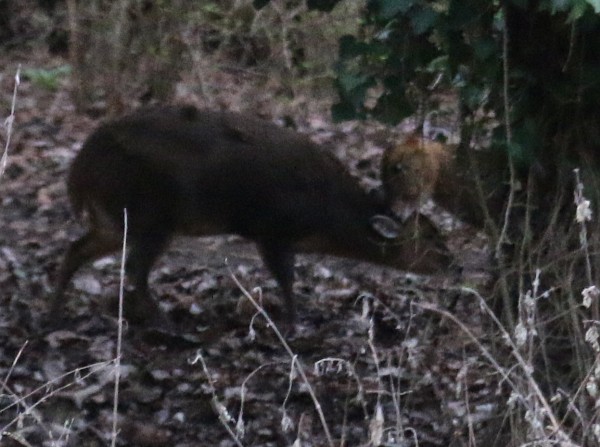
The best time to see Muntjac deer is in the early morning when they are less likely to be disturbed. These two were in one of the extended gardens that stretch from St Amand Drive and Bailie Close towards the River Ock.
 River Ock - Feb 2023
A heron was wading as I walked along the Ock Valley Walk. Its long sharp beak can spear through the water without warning.
 River Ock - Feb 2023
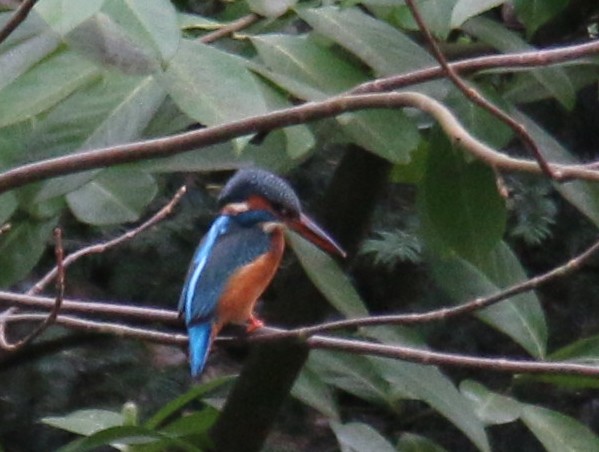
Kingfishers can sometimes be seen flying fast and low along the River Ock. I was lucky to see this one perched halfway along the Ock Vally Walk. The blue body just showed in front of the green leaves. Like the heron, it has a long sharp beak, but in the case of the Kingfisher, that beak is half the length of its body and just as spear-like.
 River Ock - Feb 2023
Robins can be heard throughout the winter at regular intervals along the Ock Valley Walk. They are singing a delightful song to humans. But to rival Robins, the territorial song says, something different.
 River Ock - Feb 2023
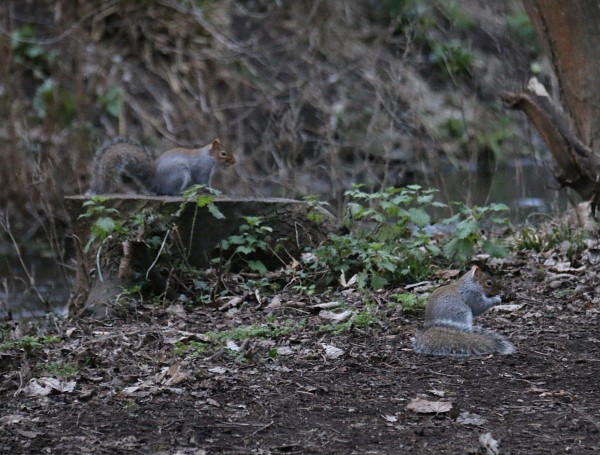
Many grey squirrels live on the Ock Valley Walk. I remember seeing a grey squirrel in a park in Boston, North America. Grey squirrels originated in North America and were introduced to England in the late 19th century.

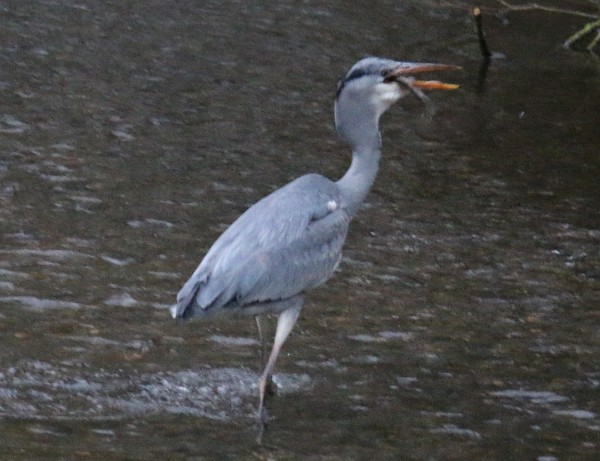
On the way back, the heron was swallowing a fish. The heron’s neck looks like a python. It swallows fish whole.

Radley Lakes – December 2022


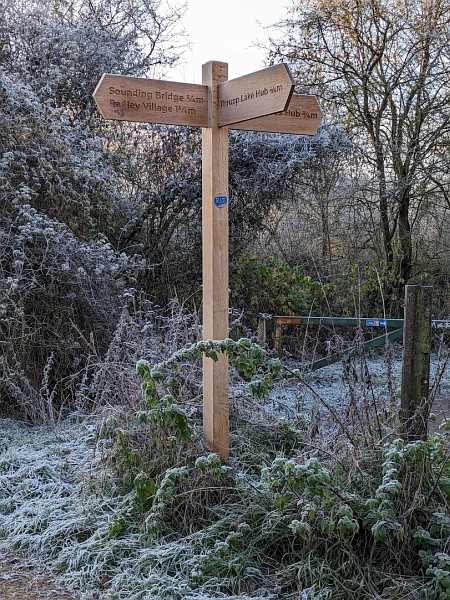
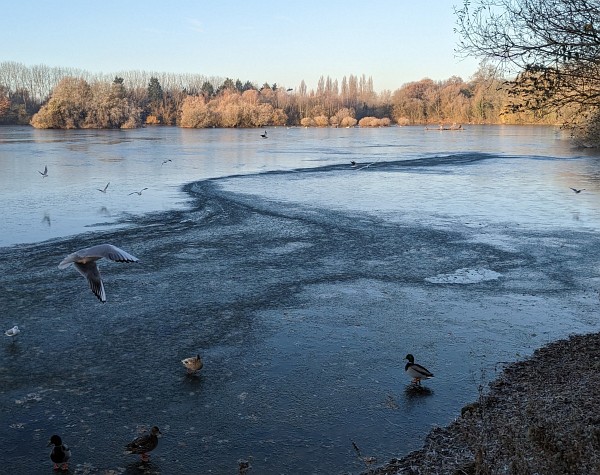
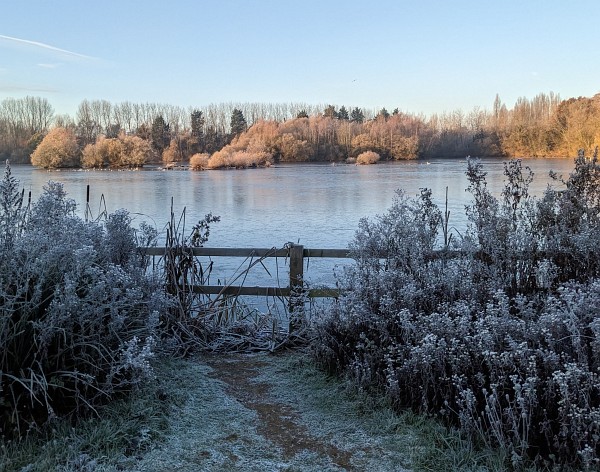
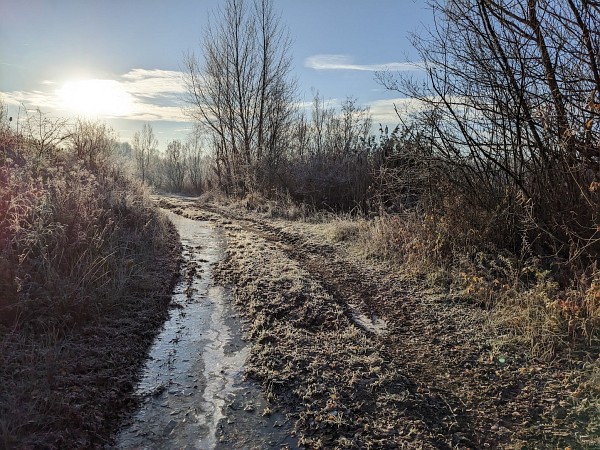
The twelfth and final monthly visit to Radley Lakes was just after sunrise on a frosty morning with temperatures of minus 4.

The surface of Thrupp Lake was frozen near the road and in sheltered corners on the far side. The ice sheet had a blue-grey edge between grey ice and water.

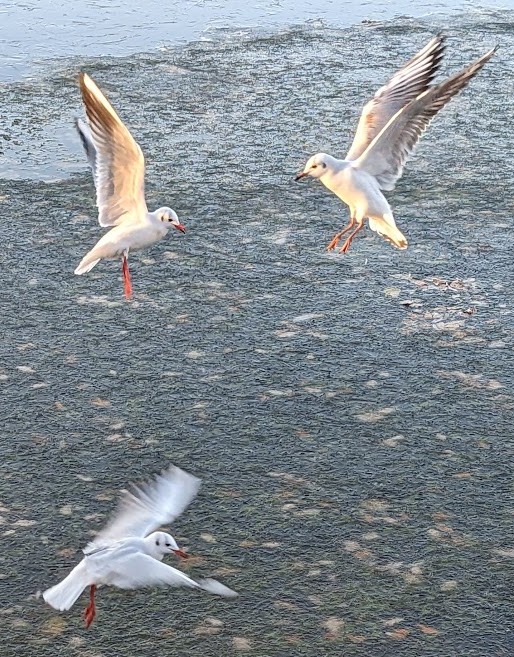
Somebody had left some food, and gulls and ducks were hovering and squabbling there near a lookout area like a seaside promenade.

The hoar frost coated all the plants and grass at that early hour.

Puddles were frozen, as were the smaller lakes.

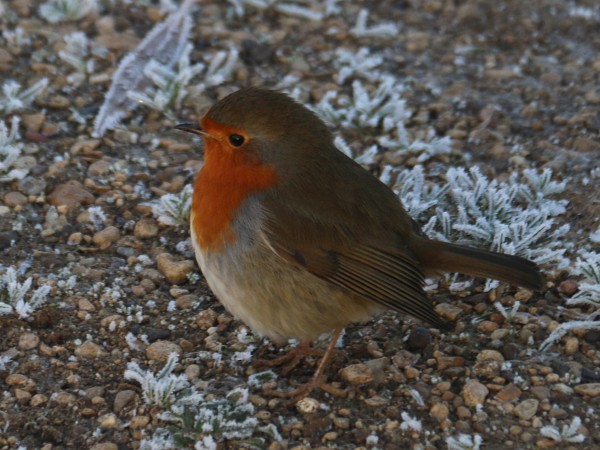
A Robin came and hopped around near me with feathers all puffed out.

Next year where shall I go for a monthly visit? So far, I have done Barton Fields, Abbey Fishponds and Radley Lakes.

Radley Lakes – November 2022


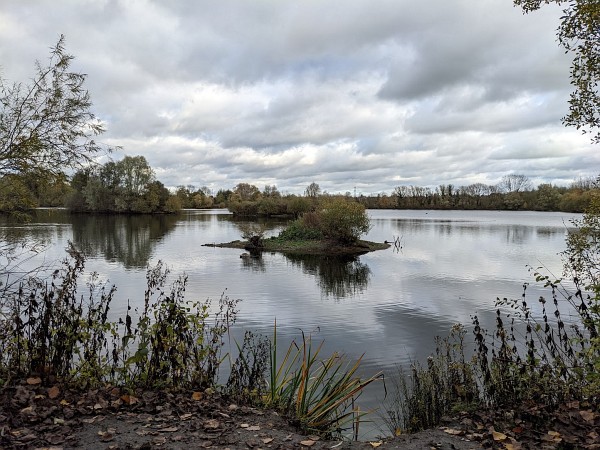
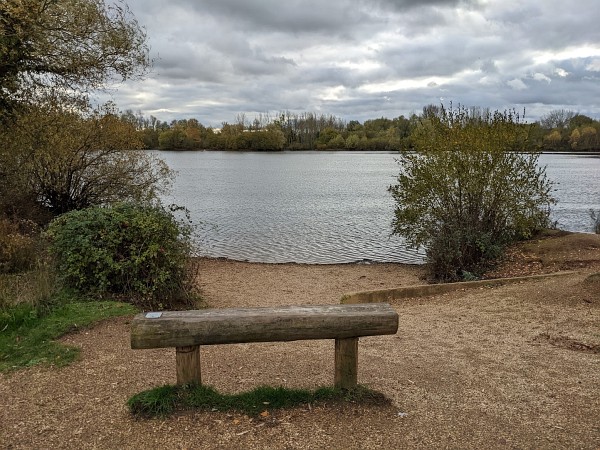
Here is the view across Thrupp Lake from the far side. The Michaelmas daisies are now fluffy seedheads, and their stalks and leaves turn black.

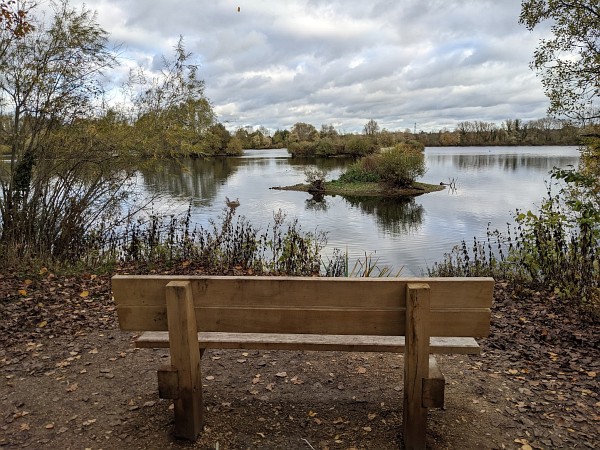
Here is a similar view from behind the bench dedicated to Basil  Crowley  – Chairman of Save Radley Lakes from 2005 -2010. He used to take photographs around the lakes that appeared on the cards sold to raise funds for Save Radley Lakes.

Another seat has a plaque to James Culling of the Earth Trust, who currently runs the Radley Lakes wildlife area with the support of the Radley Lakes Trust.

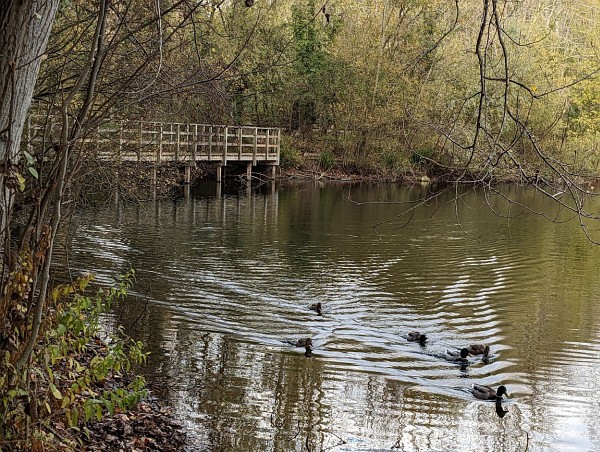
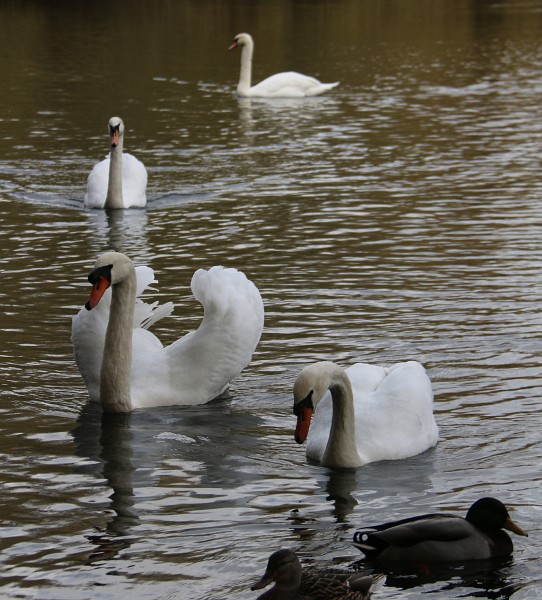
There seemed to be more ducks on Thrupp Lake on my monthly walk today. Ducks included mallards and black and white ducks too far away for me to identify.

There were also half a dozen swans.
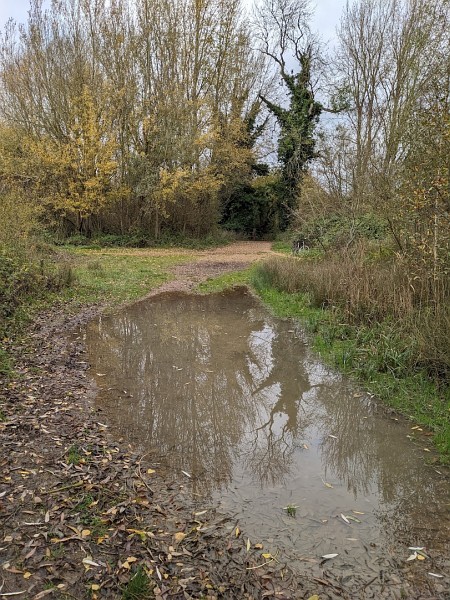
November has brought rain. The smaller lakes that seemed to be drying up have filled with water, and even the paths in places have filled with water.