Author Archives: Backstreeter

Graffiti Cleaned from Historical Mural


The mural in the Stratton Way underpass — depicting episodes from Abingdon’s history — has been defaced with black spray paint for some time. Today, the underpass was closed off for cleaning.

This evening the black spray paint had been removed. The mural was re-painted in 2007 with an anti-vandal coating, which helps make graffiti easier to clean off without damaging the artwork beneath.

Thanks are due to the Town Council for arranging the removal. One curiosity remains: a patchy white accretion, like hard foam, still clings to parts of the mural. It’s also been there for a while — possibly the result of vandalism or another phenomena.

For now, though, the figures of Abingdon’s past are again clearly visible.

Update on Reservoir Near Abingdon


There’s a proposal to build a huge reservoir near Abingdon. It would cover farmland, roads and buildings between Drayton, Steventon, East Hanney and Marcham. The road from Steventon to East Hanney would be diverted and farmland and wildlife habitats lost.

This week, campaign groups (CPRE and Safer Waters) who tried to challenge the plan in court were unsuccessful. They are now hoping to take their case to the Court of Appeal.

The reservoir is being promoted as part of the solution to future water shortages. The reservoir would store enough water to supply 15 million people across the South East. But some local people and campaign groups are concerned it will damage wildlife, take away farmland, and change the local landscape and cause flooding.

Earlier this year, after years of local opposition to this and earlier proposals for a reservoir, the rules changed when Steve Reed, the UK’s Environment Secretary, approved the project and made it a Nationally Significant Infrastructure Project. That means local councils no longer have the final say. Instead, Thames Water can submit its plans to the Planning Inspectorate. After a public review, a government minister would then decide whether the project can go ahead.

The full planning application is likely to go to the Planning Inspectorate in 2026. If approved, construction could begin in 2029, and the reservoir could be ready from around 2040.

The wild side of the Abbey Meadow


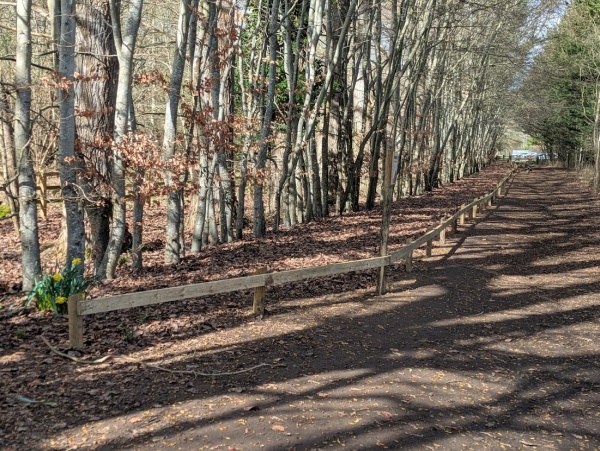
This morning, along the wilder edges of the Abbey Meadow, blackberries were ripening. On one side of a bramble bush, beside the cycle path, people were picking and tasting as they went — “That one’s lovely!” “Ooh, that’s sour!” “We’ll need a stepladder to get those.”

Across the other side of the brambles, near the long grass, there were plenty of juicy blackberries. Wasps flew past the firmer ones, drawn to fruit that had gone soft and squishy.

Ladybirds were also out in numbers on the berries (I though they ate aphids). Bluebottles and other flies landed on blackberries, and blackbirds flew to pick off the ripe fruit.

Where wild clematis threaded through the brambles, a Gatekeeper butterfly rested, its wings frayed at the edges.

And in the wildflower circle, bumblebees were busy on the scabious, bumbling from flower to flower in search of nectar.

Children played in the playground nearby.

Abingdon in Roman Times


A new exhibition at Abingdon Museum called ‘Romans, Britons & Abingdon – After the Oppidum (AD 43 to AD 410)’ takes us back to Roman Britain. Following on from last year’s Iron Age display, this year’s focus is on how life changed when the Roman Empire arrived in our part of the world, but also includes some Iron Age displays. The exhibition runs until September 28th 2025.


The exhibition includes display boards exploring:
* Food and cookery,
* Religion,
* Roads and travel,
* Burial customs,
* Pottery, clothing, and jewellery
* What a typical Roman town looked like,
* Maps and place names in Roman Britain.

One board tells how places like Calleva (modern-day Silchester) began as an Iron Age settlements and were transformed into full Roman towns. Something similar might have happened in Abingdon. Plenty of Roman artefacts have been found here — but no sign (yet) of large buildings in the current town centre. However, there were Roman villas at Barton Court and villas and a temple near Marcham.

Abingdon was well-placed in Roman times. It stood near key Roman roads linking Dorchester-on-Thames, Alchester, and Silchester — all important Roman towns. The River Thames could also have played an important role.

There’s also a short film about an Iron Age to Roman excavation at Little Wittenham in 2025, where a large barn has been found.

The exhibition includes a few objects, but Abingdon Museum already has a permanent Roman display which offers more objects, including:
* a wooden plough,
* two hobnail leather shoes, including one from a child,
* many pots and a large bowl for grinding cooking ingredients,
* a flask for perfume
* broaches and tools
* bits of mosaic flooring (tesserae) and tiles from Barton Court.

These small objects help us imagine the everyday lives of people who lived here nearly two millennia ago. For a closer look, the museum’s own blog has a piece called A Day in the Life of a Roman in Abingdon.

Admission is free, and the museum is run by Abingdon Town Council.