Saturday 02 April 1921
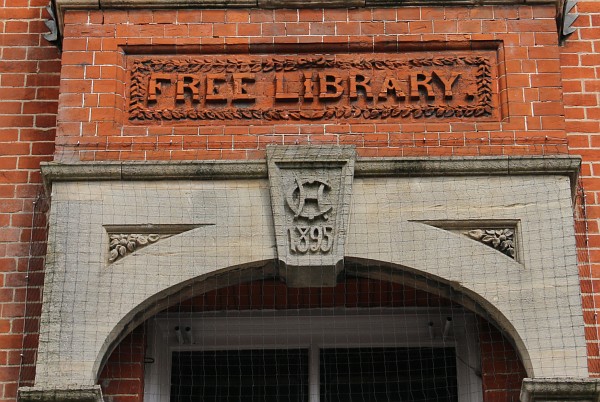
The Abingdon Free Library Committee have appointed M. A. T. Rhodes, who was chief assistant at the Oxford City Library for several years, to be librarian for the Abingdon Free Library.
The “Three Hours’ Service ” at St. Helen’s, Abingdon, Good Friday was conducted by the Rev. F. J. C. Gilmor, vicar of St. Giles’, Reading.
The offertories throughout Easter Day were given to the Vicar as an Easter gift for his personal use, and were as follows: St Helen’s, £66 11s. 7d.; St. Michael’s, £43 2s. 3d.; and St. Nicholas’, £19 10s 2d.
The Abingdon Rural District Council have decided to practice strict economy in connection with the Surveyor’s estimate for the maintenance of the district roads. The Surveyor’s estimates for the coming year were given, and equaled a rate of 2s. 3d. in the £. The Council ordered a rate of 2s. in the £, being of opinion that many of the roads could be patched up instead of being metalled. This would save nearly £2,000.
In connection with the Abingdon Y.M.C.A. two recitals by Mr. Alec C. Glassey, A.G.S.M., were given on Wednesday in the Roysse Room, Abingdon.
Saturday 09 April 1921
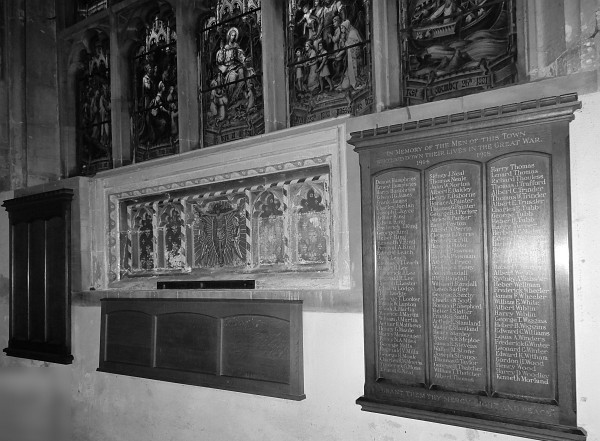
Memorial tablets, inscribed with the names of Abingdon men who fell in the War were unveiled at a dedication service held in St. Helens’ Church on Sunday afternoon last.
At the County Bench Frederick Inneas, Shippon, was fined 5s each for riding a bicycle without lights and assaulting the police, at Shippon on March 23rd. Defendant in defense said he had suffered from shell shock and was a patient at the Radcliffe Infirmary, and that had had a drop of beer on the night in question and did not know what he was doing.
At the Abingdon Police Court on Wednesday, Charles John Parker, labourer, Abingdon, was sentenced to 14 days hard labour for being drunk and flourishing a sword bayonet, and threatening people, the previous evening.
The late Mr W. J. Sedgefield, who died at his residence, Bath Street, Abingdon, last December, at the age of 82 years, a retired solicitor and for many years Registrar of the Abingdon County Court, left an estate valued at £9,790 1s l½d, the net personality being £9,547 11s 5d.
Saturday 16 April 1921
The cattle market was well attended on Monday last, when prices had no inclination of falling. Three heifers reached £42 10s each, whilst a fat sow made £18. The stock penned included 174 sheep and lambs, over 100 fat and store pigs, 36 calves, and 22 fat beasts.
The returns of births and deaths in Abingdon and several neighbouring villages for the past quarter shows that there were 58 births (34 males and 24 females) and 36 deaths, four deaths occurring in the local Sanatorium, eight in the Workhouse, and two in the Isolation Hospital. The population of this district at the last census was 9,439. the corresponding quarter last year there were 70 births and 35 deaths.
In order to raise funds for the help of the Radcliffe Infirmary and the Abingdon Cottage Hospital a scheme for house to house collection in Abingdon for weekly subscriptions has been organised, the town being divided into four districts, with a hon. sec. for each.
The proceeds of the Cinema performance at the Corn Exchange on Warriors’ Day, in aid of Earl Haig’s Fund, amounted to £11 17s 3d, and the comic football match at Abingdon the same day and for the same object, realised £13 10s 3d.
At the Borough Bench, Tuesday, Mr Ernest Sedger, St. Aldate’s. Oxford, Allen Dodd, dealer, of Castle Street, Wallingford, and Charles Lay, of Church Farm, Long Wittenham, were each fined 10s for having a cart at Abingdon Cattle Market without name thereon.
Saturday 23 April 1921
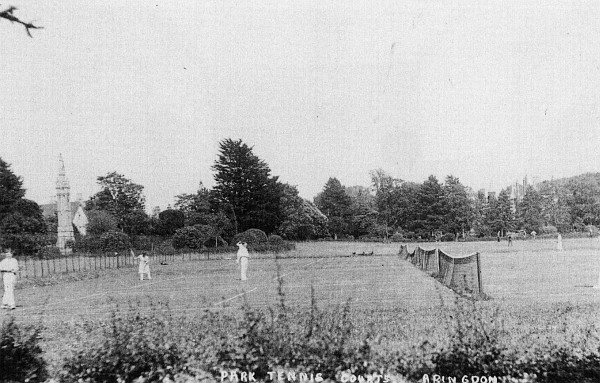
The Abingdon “Crescent’ Lawn Tennis Club, who are permitted to have their courts in the Abingdon Park, held a whist drive in the Roysse Boom, on Thursday evening in last week, in aid of the funds, the prizes being given by local tradesmen.
The illness of the Vicar of Abingdon (Rev. H. Kennedy), has necessitated his going under a serious operation at the Acland Home, Oxford. He is stated to be progressing favourably.
The Abingdon Boy Scouts intend celebrating St. George’s Day on Sunday next, by a rally in the park in the afternoon, followed by service in St. Nicolas Church, the Market Place.
The Abingdon Y.M.C.A. held a social rally in the Roysse Booms, Municipal Buildings, on Wednesday evening in last week, when there was a large company present including many of the members of the Abingdon Girls Club. The programme consisted of music, games, dances, refreshments, etc., and a thoroughly enjoyable evening was spent.
The Abingdon Branch of the National Farmers’ Union held a meeting last week at the Lion Hotel. Abingdon, Mr F. A. May presiding, at which there was a good attendance of farmers. The object of the meeting was to discuss the cost of the cultivation of various crops for the use of the Berkshire Costings Committee in giving evidence in the Government Commission on the subject. The conclusion come to as regards wheat was that it could not be grown at under £l7 per acre.
At the Abingdon Borough Police Court Tuesday last, William Harvey, of East Hendred, and Charles Wheeler. 84, Vineyard. Abingdon, were each fined 7s 6d for riding a bicycle without lights, the former in Faringdon Road and the latter in East St Helen Street, Abingdon.
Saturday 30 April 1921
A rick of barley straw, standing in a field on the Oday Road, Abingdon, was totally destroyed by fire on Thursday in last week. The rick contained about 28 tons, and was the property of T. A. May, farmer. Although the river was only a few yards off the fire raged too furiously for the rick to be saved.
An inquest was held at Abingdon Monday on the death of Albert Mason, a painter, aged 64, of Ock Street, who fell from a ladder whilst at work on Friday afternoon last. It appears the deceased was painting some spouting at the Pavlova leather factory in Spring Road, near an electric crane, which, on moving, came in contact with the deceased, whereby he fell to the ground, obtaining a fractured skull, from which he died a few minutes after the accident. A verdict of accidental death was returned.
Thank you for the extracts to the Faringdon Advertiser and Vale of the White Horse Gazette on the British Newspaper Archive. Pictures of tennis an old postcard.