Author Archives: Backstreeter

Abingdon This Week – Talks, Walks, Market & Downton at The Abbey

Almost too late to publicise these first two events:

Thursday 18 September 6:00 pm
Abingdon Library Author Talk – local author Eve Smith discusses her latest speculative thriller The Cure, recently named one of The Times’ best thrillers of 2025. Tickets £2 from Abingdon Library.

Thursday 18 September 7:45 pm
Architectural Talk – historian David Clark explores lesser-known historic buildings and features behind Abingdon’s everyday façades. Preceded by a short AGM of the Abingdon Area Archaeological and Historical Society at The Northcourt Centre. A donation from non-members is suggested.


Saturday 20 September 10:00 am – 4:00 pm
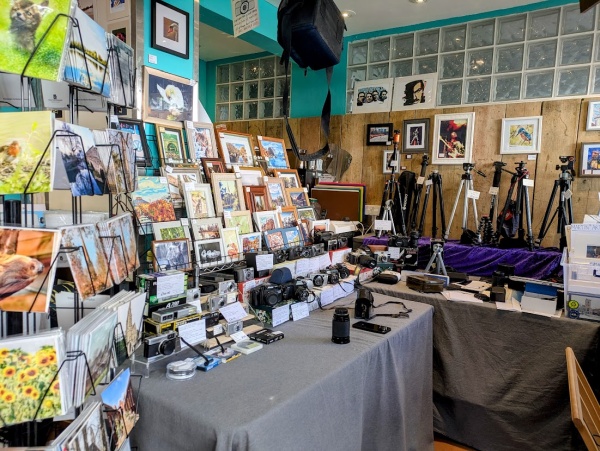
Craft & Gift Market – browse a wide range of crafts and gifts while enjoying the historic setting of Abingdon Guildhall.

Saturday 20 September 10:30 am – 1:00 pm
Repair Café – bring your broken household, electrical or mechanical items, as well as knives, scissors and garden tools, to be repaired by volunteers at Unit 25, Bury Street.
Free Bike Checks are also available 10:30 am – 1:00 pm under the County Hall arches.


Saturday 20 September 2:00 – 3:00 pm
Biodiversity Walk at St Ethelwold’s House. Botanist John Killick (co-author of Flora of Oxfordshire) leads a walk exploring the rich plant life of St Ethelwold’s garden. Free, but donations to the St Ethelwold’s building appeal are welcome.

Saturday 20 September 7:30 pm
Ocean Film Festival World Tour 2025 at the Amey Theatre, Abingdon School – a curated selection of short films celebrating the ocean, featuring marine life, adventure and environmental themes.

Sunday 21 September 11:00 am – 3:00 pm
At One Planet Abingdon in the museum basement – a drop-in event for young people featuring crafting, painting, board games, baking and other creative activities.


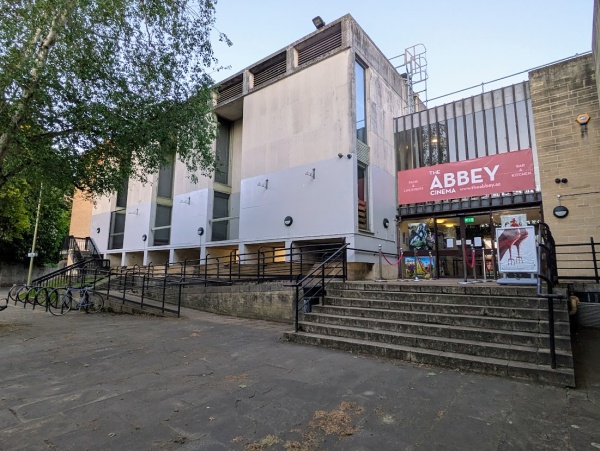
Downton Abbey – The Grand Finale is showing all week at the Abbey Cinema and follows the Crawley family and their staff during the 1930s. See times and book at theabbey.ac.
.
(The image above suggests a 1930s atmosphere – brought to life with a little help from ChatGPT’s image tools, complete with a tiny mistake only an AI could make.)

Evergreens Welcome Abingdon Fire Service


The Abingdon Fire Service dropped in on the Evergreen Club this Monday to give a talk on fire safety at home. The Evergreens is a social group for older members of the community that meet at Trinity Church, Abingdon. Founded in 1980, they’ve been going for 45 years and are now led by Tricia — pictured between the two firefighters who gave the talk.

Their fire engine was parked outside to give a sense of drama to the occassion.

Members found the talk both entertaining and practical. Key reminders included: have a smoke alarm on every floor, test them regularly, replace batteries as soon as they beep, and agree an escape plan with a meeting point. That last tip can save firefighters from rushing into a house looking for someone who’s already safely in the garden.

For more advice, visit Oxfordshire Fire and Rescue’s home safety page
https://www.oxfordshire.gov.uk/fire-and-community-safety/community-safety/safety-home — or invite them to speak to your club. Just be aware they may have to dash off if an emergency call comes in.

Abingdon Flower Club displays last weekend


Last weekend in Abingdon was a mix of old and new, of history and creativity. Among the creativity were flower displays.

Abingdon Flower Club had floral displays across some of Abingdon’s open venues. Their arrangements could be seen in the Roysse Room at the Guildhall, under the County Hall, in Unit 25 on Bury Street among others.

On the Market Place, members invited passers-by to make hats decorated with flowers.

Abingdon Flower Club marked their 65th anniversary earlier this year. They have more than 60 members and meet on the first Tuesday of each month (except January) at the Northcourt Centre, where members take part in demonstrations, flower arranging, and social time together.

60 years of fusion research at Culham


During Heritage Open Weekend there was an exhibition upstairs in Unit 25 Bury Street about 60 years of fusion research at Culham, near Abingdon. This is my simplified understanding …

In the early 1960s the UK Atomic Energy Authority put all its fusion research on the site at Culham. It opened in 1965 with scientists trying out different ideas to make fusion work.

Nuclear fusion is the process that powers the Sun. It works by heating and forcing together atoms so they fuse into a heavier atoms, releasing energy. To make fusion happen on Earth, the fuel must be heated to extremely high temperatures so that it becomes a state of matter called plasma. Plasma is like a gas whose atoms have been split into charged particles. Because plasma is charged, it can be held and shaped by magnetic fields which keep it away from walls long enough for fusion to happen.

In the 1970s, experiments in the USSR showed that a doughnut-shaped magnetic machine called a tokamak could hold very hot plasma better than other designs. Culham scientists built equipment to test and check these results.

In the 1980s, Culham was chosen for Europe’s biggest fusion experiment: the Joint European Torus (JET). Work started in 1978 and the first plasma was formed in 1983.

In the 1990s, Culham scientists developed a more compact form of tokamak, called the spherical tokamak. Their test device, START, ran from 1991 to 1998, and showed that this shape gave better performance for a smaller size.

In the 2000s, Culham scientists built MAST (Mega Amp Spherical Tokamak) – a bigger spherical tokamak machine. That machine, and its later upgrade were used to find out how to handle extreme heat and control plasma.

In the 2010s–2020s, JET broke records. In 2022 it produced 59 megajoules of fusion energy in 5 seconds using a fuel mix of deuterium-tritium (two types of hydrogen). They fuse to form helium and release energy.

JET ended experimentation in December 2023 and is now being decommissioned.

Meanwhile the UK is planning its first prototype fusion power station, STEP (Spherical Tokamak for Energy Production), to be built at West Burton, Nottinghamshire, a former coal-fired power station. Meanwhile, ITER, a European tokamak reactor is being built in France. Both are based on the research done and still being done at Culham.