Minister’s Farewell
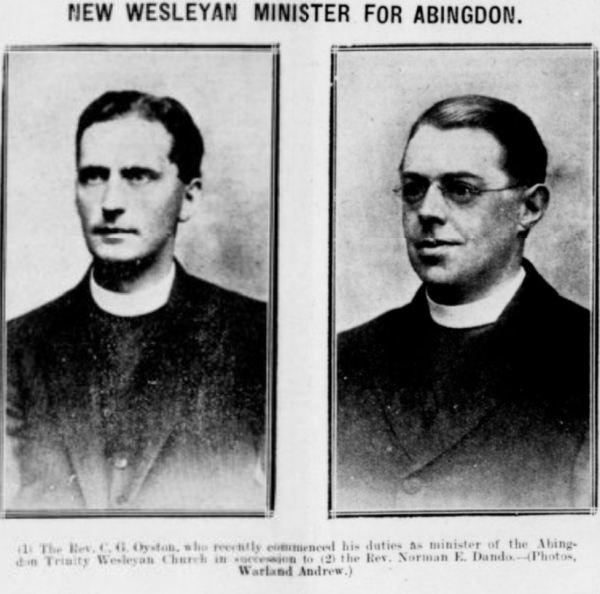
The Rev. Norman E. Dando brought his four years’ ministry at Trinity Wesleyan Church to a finish on Sunday evening. After the service, the congregation adjourned to the schoolroom, where he was presented with a cheque from members and friends of the Abingdon section, amid expressions of regret at his departure and appreciation of his work.
The Rev. Dando is going to Stockport, near Manchester. His successor, the Rev. Charles G. Oyston, from Longton, Stoke-on-Trent, enters upon his duties in Abingdon on the first Sunday in September.
At a meeting of the Wesley Guild the previous Thursday, the Rev. Dando was also presented with a pair of pictures.
Hospital Sunday
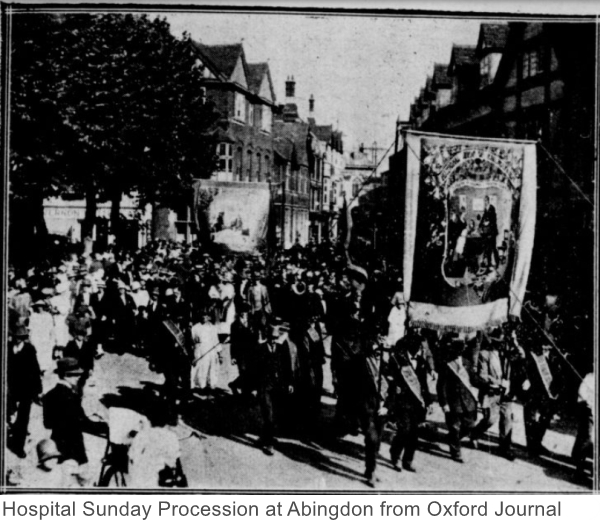
Sunday was “Hospital Sunday” in Abingdon, with a church parade of friendly societies and other organisations. The Mayor and Corporation joined the procession at the Market Place, which proceeded to St. Helen’s Church for a special service. The Vicar, the Rev. C. S. Fleet, preached.
The collection boxes were opened on Monday and the gross receipts amounted to just over £50, a decrease of £7 on the previous year.
The programme was carried through without a hitch. Two doctors made appeals on behalf of the Radcliffe Infirmary and Oxford Eye Hospital in the Abbey House Grounds, where a large crowd had gathered. The musical programme was greatly appreciated.
Rusty Nail Causes Death
Three-year-old Roland John Ovenden, of Ock-street, Abingdon, died after scratching his leg on a nail while playing in his father’s garden.
The injury on August 29 was only a small scratch, but the child’s condition worsened. He was taken to Abingdon Cottage Hospital and later referred to the Radcliffe Infirmary. He died while being taken to Oxford.
Dr. Robert Strong said the cause of death was tetanus, which could have been caused by the rusty nail. A verdict in accordance with the medical evidence was returned.
Excessive Speed
Albert Edward Pullen, of Mountpleasant, Littlemore, was summoned for driving a heavy locomotive at excessive speed at the St. Nicolas corner. The steam wagon and tender knocked a piece from the kerbing as it went round the corner.
The defendant said he was avoiding a motor cyclist and was travelling at only two to three miles per hour.
The case followed evidence from three members of the public, who had also drawn the police’s attention to the way the vehicle negotiated the narrow bend from the Market Place into Stert Street. The regulation speed was five miles per hour.
He was fined £5 and 10s. costs.
Town Sports Club
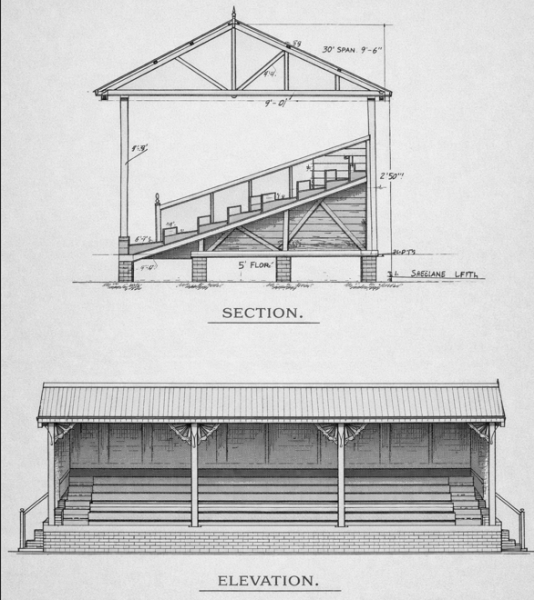
Though the attendance at a meeting of the Town Sports Club was small, those present showed considerable enthusiasm.
It was unanimously agreed to invite people to take up debenture shares of at least £1 each towards the erection of a stand on the Culham-road ground. Before the meeting ended, £70 towards the estimated £200 cost had been promised.
Visit of Bostock’s Menagerie
Bostock and Wombwell’s menagerie was due to visit Abingdon on Tuesday, with the show staged on the Corporation Meadow at Caldecott. Lectures and performances were to be given at 2.30 and 8.30 p.m.
The collection included lions, tigers, bears and leopards, as well as “Bonzo”, a performing sea lion, and “Dempsey”, described as the only boxing kangaroo in Europe.
Admission was 1s. 3d. for adults and 9d. for children.
Choir Boys’ Outing
The annual outing of the choir boys of St. Helen’s, St. Michael’s and St. Nicolas’ Churches took place on Tuesday. The party left the Market Place at about 7.15 a.m. in two motor-coaches bound for Southsea.
At Southsea the boys split up, with some taking trips round the harbour while others bathed and paddled. Tea was served on Southsea Common before the party left at 5 p.m.
They stopped at Winchester for about half an hour and arrived back in Abingdon at 10 p.m.
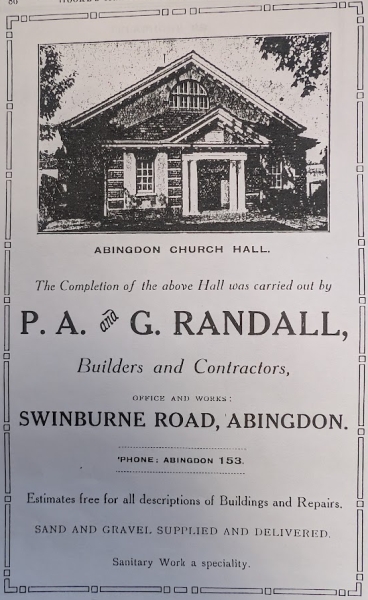
Opening of Abingdon Church Hall
The new Abingdon Church Hall was officially opened by Mrs M. T. Tatham, who was welcomed by the Vicar. The Mayor and Mayoress and other guests were present.
The hall was built in a classic style with a Doric porch. The main hall has oak flooring and electric lighting, with the proportions and general appearance of the building particularly pleasing.
The Vicar spoke of its value for parish work, youth activities and general community use, while the Mayor congratulated the parish on the new building.
Abingdon County Police Court
Arthur Fisher, of Cothill Farm, summoned four men for wilful damage to a hedge at Cothill on August 21, valued at 2s. He also summoned two of them for assault and battery.
The assault case was dismissed, while the four defendants were each fined one shilling for the damage and ordered to pay 6d. each towards the cost.
In a separate Children’s Court case, a 15-year-old boy from Wytham was charged with obtaining a Berkshire County Council driving licence while disqualified because of his age. He was fined £1.
Rick Fire
On Sunday morning the Fire Brigade was called to a fire at Sunningwell. The engine left within four minutes and found a rick belonging to Mr F. C. Taylor alight on both sides.
Water was obtained from a pond about 600 yards away, and part of the rick was saved. The brigade returned to Abingdon about 9 p.m.
The cause of the fire, which had broken out on the exterior of the rick, was unknown.
Acknowledgements
Thanks are due to the British Newspaper Archive for access to the Faringdon Advertiser and Vale of the White Horse Gazette for some stories; to the North Berks Herald microfilm at Abingdon Library for additional stories and the picture of the proposed sports stand and underwear advert; and to the Oxford Journal at Oxford Library for the photographs of the Trinity Ministers and Hospital Sunday; and the Abingdon Directory 1927 for the advert for Randalls which included a picture of the Church Hall.