Making Apple Juice at St Ethelwold’s House


This week, the Abingdon Carbon Cutters have been pressing apple juice at St Ethelwold’s House.

The process begins by washing the apples, cutting out any damaged parts, and chopping them. This is the most sociable part, with groups working together and chatting.

Next, the apples are put through a ‘scratter,’ which crushes them into a pulp.

The pulp is then transferred to a press, wrapped in muslin and squeezed, with the juice running out into buckets. The leftover pulp is collected for composting.

Finally, the juice is strained as it is poured into bottles – which are donated by visitors, just like the apples.

Bottles are £2 each. Fresh, unpasteurised juice was available straight from the press, while pasteurised juice, which keeps longer, could be purchased later.

While I was there two visitors brought their own fruit, and kept it separate throughout the process.

Abingdon Residents’ Parking Schemes Rejected


Cabinet Member for Transport Cllr Andrew Gant, of Oxfordshire County Council, has dropped two proposed residents’ parking schemes – Abingdon Centre North and the Ock Street area – after overwhelming public opposition.

An informal consultation last November was followed by a formal one over the summer, which drew a heavily negative response. Officers compiled the feedback into a record-breaking 2,500-page agenda document – 1,393 pages on the Abingdon schemes alone, two-thirds from Ock Street.

At the meeting, four people spoke against the proposals in person and two via the internet including the owner of Reeves’s (correction sorry) Fish and Chip Shop, who warned the restrictions would pose the greatest threat to the business in its 100-year history. (Other potential objectors knew officers were already recommending rejection; otherwise many more might have addressed the meeting.)

Cllr Andrew Gant asked few questions about the schemes themselves but asked on behalf of one resident about some double yellow lines that had not been dropped. He also asked about the contrast between informal and formal consultation results.

In the end, he backed officers’ recommendations to scrap both schemes, apart from a few minor details that will go ahead. For many residents the decision will come as a relief – though it leaves open whether months of work and worry have been a worthwhile exercise. Officers do deserve credit for including every response in that record breaking document. It shows democracy in action. Only one print was made.

‘Wonderful news’ – Work Starts on A34 Lodge Hill Interchange


The main construction work on the long-awaited A34 Lodge Hill interchange started today (Wednesday 3rd September).

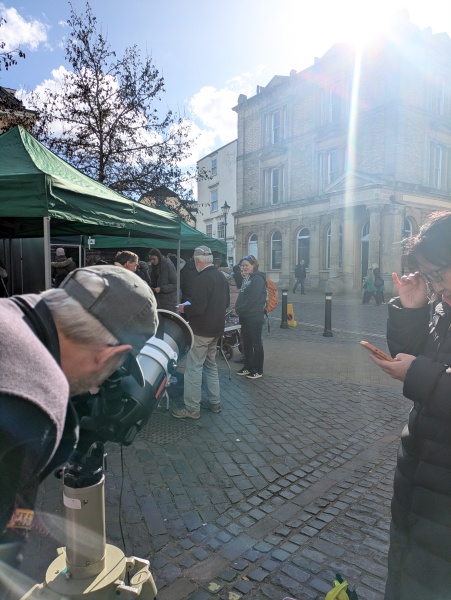
During the day, surveyors could been on site with their theodolites, aimed at the splitter island at the A34 southbound off-slip junction. This island will be the first thing to go, creating more space for construction vehicles to move in and out.

Traffic management is already in place. On the A34, lanes have been narrowed and drivers are being asked to slow down near the works to keep everyone safe. Overnight temporary traffic lights are also running between 9 pm and 5 am on the A4183 and the A34 southbound off-slip while the islands are removed.

Cllr Judy Roberts, Oxfordshire County Council’s Cabinet Member for Place, Environment and Climate Action, said: “We have all campaigned for this for so long and it is wonderful news that construction has begun.”

The project, being delivered by Balfour Beatty with support from Homes England, is expected to finish by the end of 2026. When complete, it should reduce through-traffic in Abingdon. A condition for the new homes being built to the north of Abingdon was that the Lodge Hill interchange improvements were funded and built.

You can find more details about the A34 Lodge Hill scheme and traffic management plans on Oxfordshire County Council’s website:

The End of an Era for Our Lady’s Abingdon


For the first time in over 160 years, there are no Our Lady’s Abingdon pupils to be seen. The school closed suddenly over the summer, leaving families to seek new places – some already starting in local state schools, others still searching.

The closure also leaves behind a large site close to the town centre, including Barton Field, the school playing fields. With so many new houses being built nearby, there may well be debate about whether part of the grounds could still serve an educational purpose.

Our Lady’s Convent history stretches back to January 1860, when Sister Mary Elizabeth Rigby and two nuns from the Sisters of Mercy in Bermondsey came to Abingdon at the invitation of parish priest Revd Dr John Paul O’Toole. They were supported by Reverend Mother Clare Moore, recently returned from work with Florence Nightingale in the Crimea. The Sisters began in a Northcourt cottage, Joymount, then moved into villas on the current site in 1862. The first pupil enrolled in 1865, and in 1867 Sir George Bowyer gave land to allow the school to expand. By 1877, classrooms, music rooms, a dining hall and dormitories were in place.

For many years the convent was run by the Sisters of Mercy, remembered today in the churchyard of Our Lady and St Edmund Church.

In 2007 Our Lady’s Convent became a charitable company limited by guarantee and changed its name to Our Lady’s Abingdon School. Two years later, boys were admitted to the Senior School.

Now, as the new term begins without OLA, its long story has reached an abrupt halt.