Category Archives: heritage

Two Commemorative Plaques on the Fitzharry’s Estate

Hugh Fitzharry
Just off Bath Street, up Fitzharry’s Road, can be found a large green space in the centre of a 1950s estate. The estate was developed as housing for workers at the atomic energy research establishment in nearby Harwell.
Hugh Fitzharry
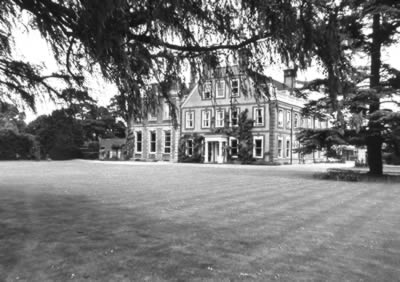
The green space with the plaque is what reamins of Fitzharry’s House – a large historic house demolished in the 1950s. It had a long history and The Friends of Abingdon tried to save it – but in vain.
Hugh Fitzharry
Nearby, close to the River Stert, is a similarly framed plaque. It describes the mound beyond –  which is the remaining half of what was once a Motte and Bailey. This fortification was constructed in  the years after the Norman Conquest when the new overlords could not always sleep soundly in their beds after fining and taxing locals above the odds
Hugh Fitzharry
The top of the Motte is ten to twelve strides across, and about ten strides deep. It is still surrounded by a ditch which was once the moat. The Bailey that stood on the Motte would not have withstood an attack by a visting army but would presumably have kept a marauding mob of locals at bay on a Friday night.

The Ftitzharry name comes from a 13th knight, Hugh FitzHarry, who sold this estate to Abingdon Abbey before going off to the crusades. He probably got bored of  fining locals whose pigs had strayed onto his estate, and got fired up by something really really worth fighting about – the Holy Land.  Nothing much has changed.

Abingdon links in London – 2. Abingdon Green

Abingdon Green
According to The Virtual London website … “Opposite ‘The Houses of Parliament’ …  is a green and grassy area where news crews conduct interviews with politicians. This is known variously as ‘Abingdon Green’, ‘College Green’ and ‘St Stephen’s Green’. The official line though, from the Head of Public Information at the Palace of Westminster, is that it’s just called ‘The Green’
Abingdon Green
The name for Abingdon Green may be officially ‘The Green’, but the street alongside is Abingdon Street.

The Earl of Abingdon once owned a residence on this site around 1700. He was well thought of and so the name Abingdon was used when the road was widened – and his old house demolished –  in 1750.

E R – in Abingdon

E R

At the back of the old post office there is the E R plaque.
E R
The ER letters also appear on most of our old post boxes – like this one pictured on Bath Street.
E R
ER (for Elizabeth Regina, Latin for “Queen Elizabeth”) also appeared regularly on stamps.

ER may not be used quite so regularly nowadays but 60 years have gone by since  Queen Elizabeth II came to the throne.

Abbey Mill Stream

Abbey Mill Stream
In the library I got one of the new leaflets describing the Abingdon Abbey information trail. The leaflet has a map, and descriptions of the locations of the 9 information boards.
Abbey Mill Stream
There is so much on each board that I find it better to visit one or two at a time to appreciate what they say. Part of the board near the bridge near the Abbey Gardens tells of the Abbey Fulling Mill – interesting to me at least as it makes a connection to a village I lived during my teenage years, where there was a fuller’s earth quarry.  Beating cloth in a solution of fuller’s earth ( a kind of clay) and urine removed natural greases so that the cloth could absorb coloured dyes
Abbey Mill Stream
The information board by Abingdon bridge also says that the millstream was constructed by Abbot Ethelwold in the 10th Century, and it led to arguments with other mill owners as it affected their flow. (Information on the boards was researched and compiled by Abingdon Area Archaeological and Historical Society.)
Abbey Mill Stream
Nowadays the channel is quite overgrown near where it flows from the Thames.
Abbey Mill Stream
There are a number of bridges across the stream, some well know…
Abbey Mill Stream
, and some off the main thoroughfare and less well known – like the one you cross to get to Cosener’s House..
Abbey Mill Stream
The mill stream emerges energetically from under the buildings near the Upper Reaches Hotel – who have restored a mill wheel to working order.
Abbey Mill Stream
The stream is joined by the River Stert, as it emerges from its culvert, at Abingdon Bridge before rejoining the River Thames.