At the end of October I walked round Barton Fields with David Guyoncourt from the Abingdon Naturalist Society and he told me about some of the work they are doing this autumn, and pointed out some plants.
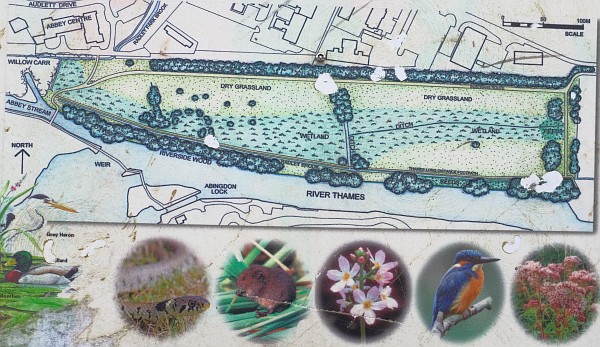
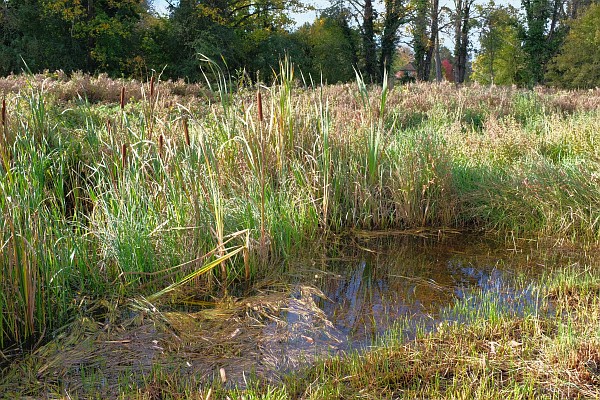
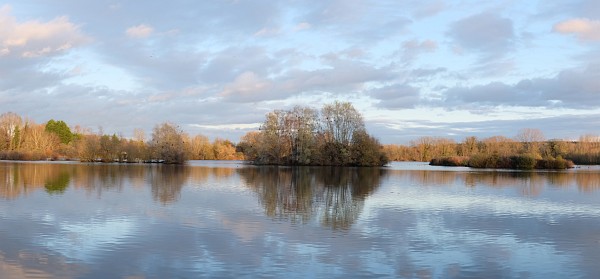
There is a wetland area down the centre, and dry grassland at the top. Round the wetland area is tall herbage. This is good habitat for Water Rail (winter), Sedge Warbler, Reed Warbler, Whitethroat & Reed Bunting (summer). It is also good habitat for Harvest Mice, whose nests they find frequently.
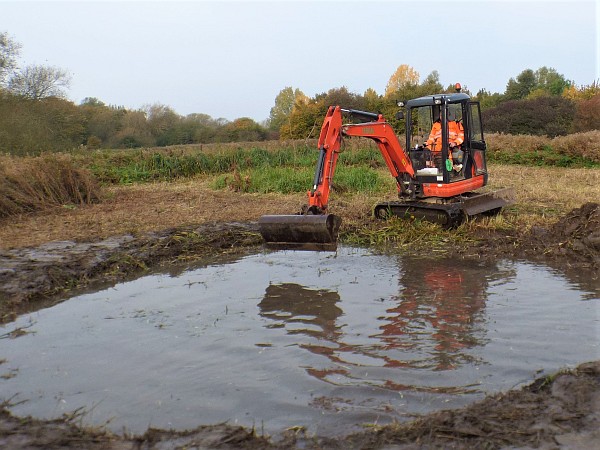 There were six ponds in the wetland area. Graham Bateman organised for two to be redug. He reported ‘On Monday morning (19 Oct), two of the Barton Fields ponds, which had become completely overgrown with vigorous Reed Sweet-grass (Glyceria maxima), were rejuvenated. We were ‘loaned’ a digger and driver by Fergal Construction Co Ltd, of Standlake, who have been working on the resurfacing of the Sustrans path running through Barton Fields. Ashley, the digger driver, was a delight to watch as he skilfully removed the top vegetation for stacking, then the roots and bottom mud that were delicately smoothed around the pond edges to allow any ‘creatures’ to return to water. We now have two ‘new’ ponds that would have been lost as manually they could never have been dug out.’ Graham says thankyou to Fergal and Ashley.
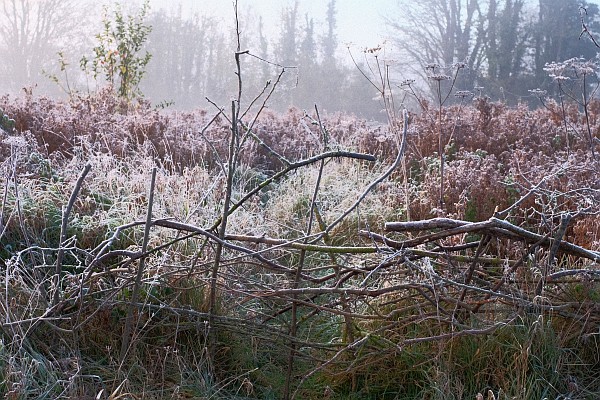
I returned this morning to see the progress of some other work. Whicker fences have been put up to try and protect some of the areas and so I only looked at them from a distance.
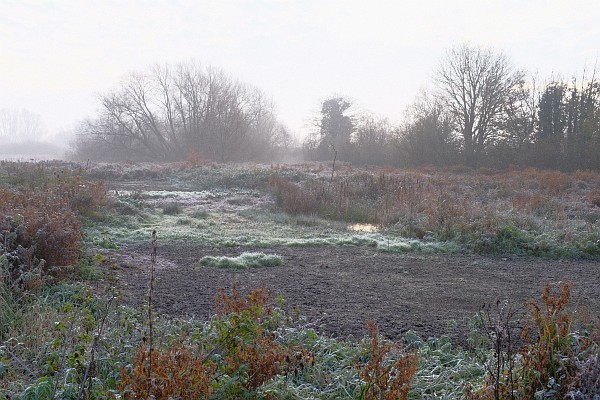 Near a pond that was originally made by the Freshwater Trust, Graham has also cleared a 300 sq m plot in the marshy, peaty area during Lock-down in which they have introduced 1000 Snake’s-head Fritillary bulbs and will be introducing other plants next year. This wetland meadow will be mowed each summer. This area also has Snipe.
In October, David showed me some of the remaining Cornfield Annuals in the Cornfield Annual Patch: Corn Marigold (yellow), Corncockle (pink flower, poisonous seeds), Corn Chamomile (white daisy flower), Cornflower (blue). This patch has since been rotovated for next year.
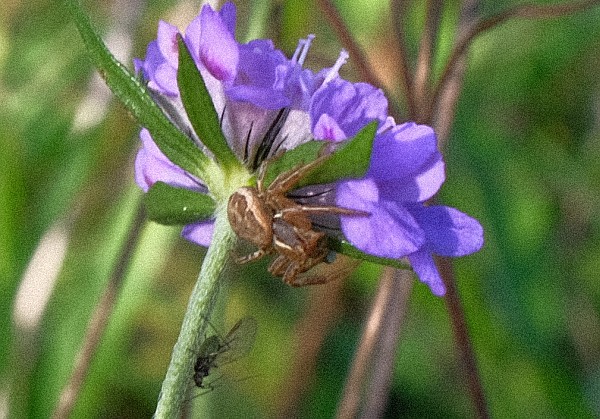
In October David did show me some common plants: Common Knapweed, Field Scabious, Common Toadflax, Yarrow (Achillea), Wild Carrot, Upright Hedge Parsley, Tufted Vetch, Meadow Crane’s-bill. He also showed me the rarer Small Scabious (finer leaf than Field Scabious).
Returning in November I did not see as many flowers but did see this Small Scabious with a spider and a fly.
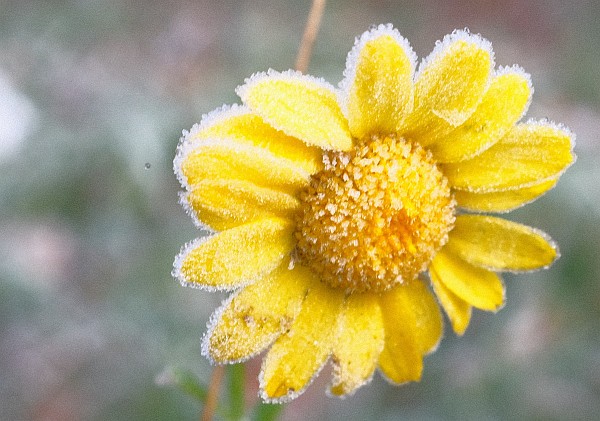
There was also this Corn Marigold.
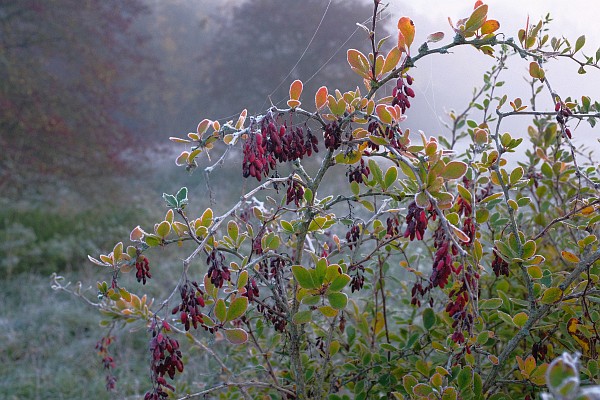
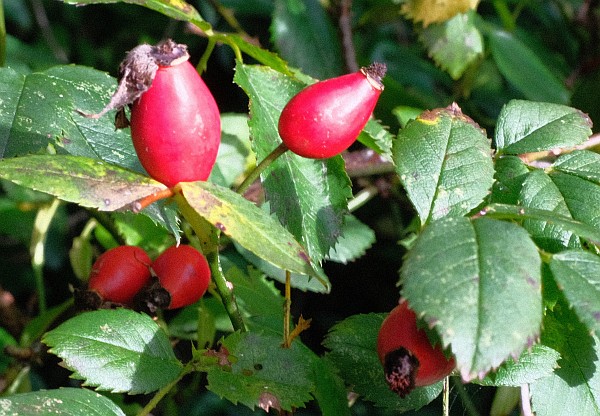
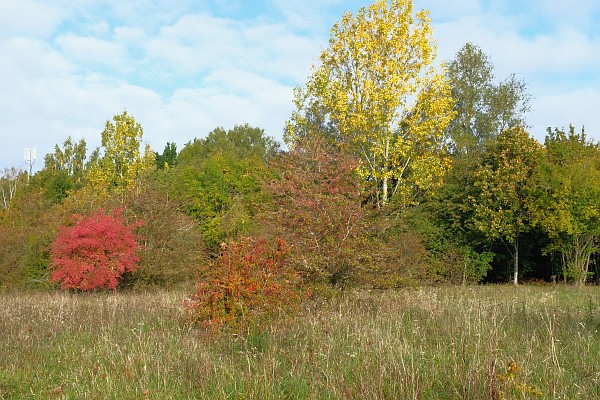
Among the bushes with berries are Barberry (or Berberis). This small bush has elongated red berries, and is said to harbour Ergot which can harm corn crops so is not popular with farmers. David said they planted it as a foodplant of the Barberry Carpet Moth (which they do not have yet).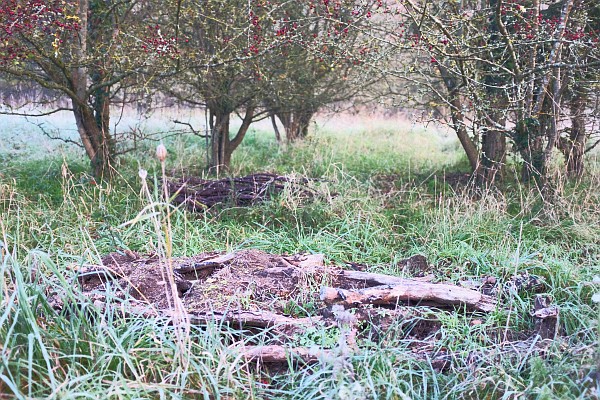
Regarding reptiles, Grass Snakes are common throughout the site and lay their eggs in the compost heaps. David frequently sees young ones. Last year they introduced 10 Slow Worms, five of which we have seen again this year. They have also seen a baby this year. Another 6 adults were donated and released this year. He also showed me the pits they have dug and covered with wood and soil as refuges for slow worms. Apparently last year the police were called to one of these in the copse because somebody reported a possible grave!
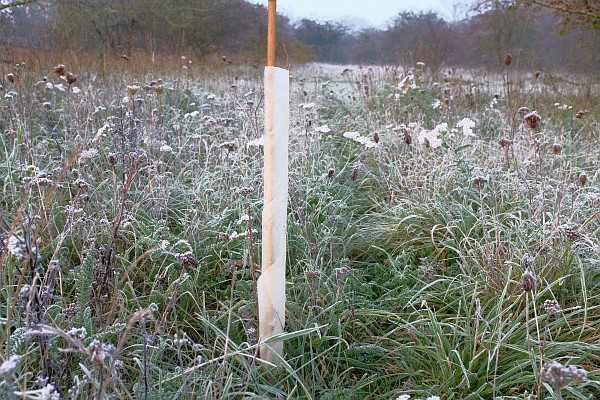
The Abingdon Naturalist’s are also introducing a shrub called Purging Buckthorne – the foodplant of the Brimstone butterfly.
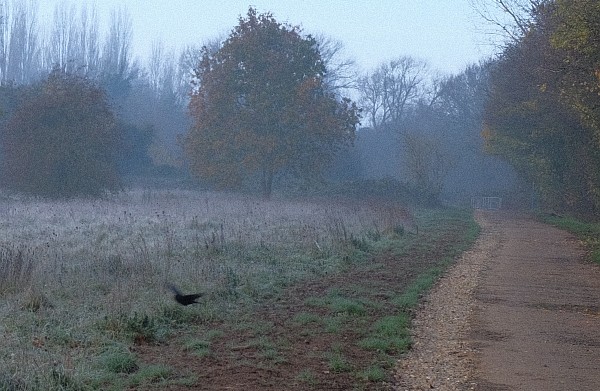
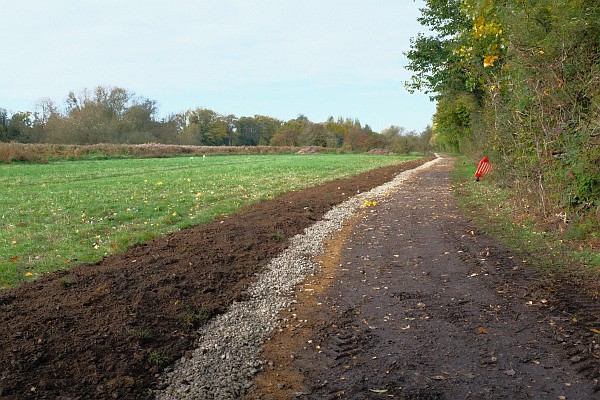
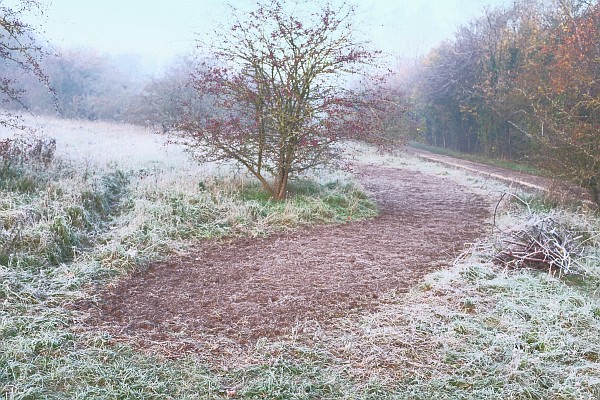
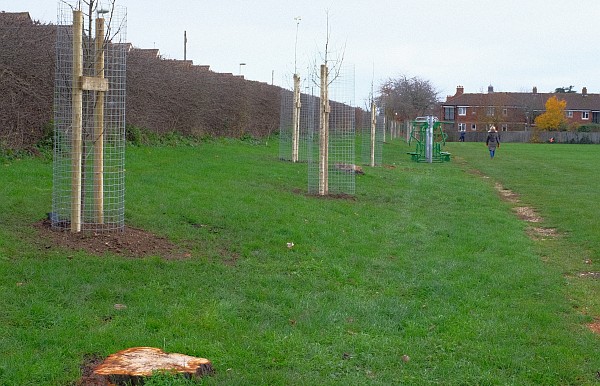
The work on the cycleway continues, and the contractors will be sowing wildflowers along the dug over margins beside the path.
Thankyou to David for the tour. Here are the links to the Abingdon Naturalists Group
http://www.abnats.org.uk/home.html
https://www.facebook.com/groups/abingdonnats

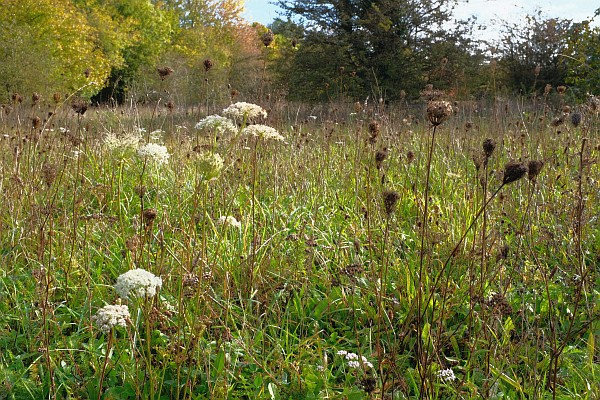 In There are some October flowers – but not a lot.