October 1925 saw Abingdon, filled with dances, fairs, football triumphs (and defeats), and a mystery death on the railway line.
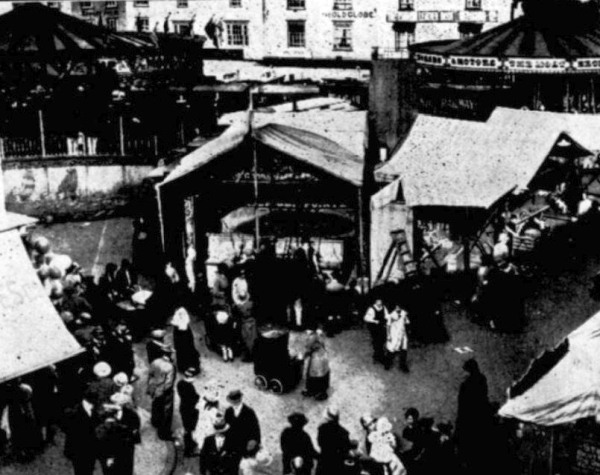
Michaelmas Fair fills the Square
The Michaelmas Fair drew large crowds on Monday and Tuesday, 5th and 6th October 1925. The Faringdon Advertiser reported that “the weather was brilliant, and the fair attracted many people,” with amusements filling the Square and adjoining streets.
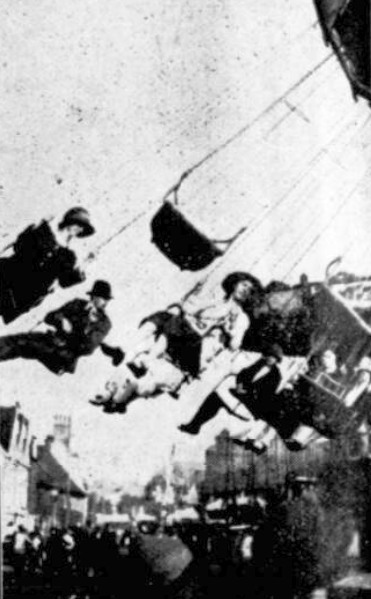
The Oxford Journal Illustrated photographers captured the scene: the fairground booths and rides on the Square and the chair-o-planes, which “had their usual large quota of patrons.”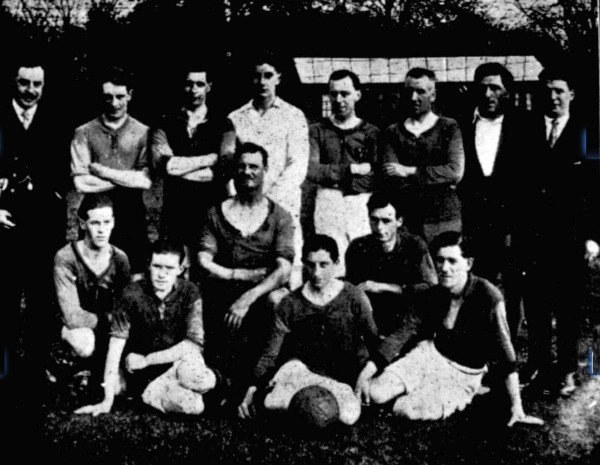
Football Fever
Abingdon’s footballers were busy throughout the month:
Abingdon Town opened October with a 3–3 draw away to Witney, then hit fine form, defeating Morris Motors 6–1.
Their Amateur Cup tie brought less success: a heavy 7–0 defeat to Windsor & Eton, whose “sharp-shooter Norris” scored four goals. The team was photographed above by Warland Andrew.
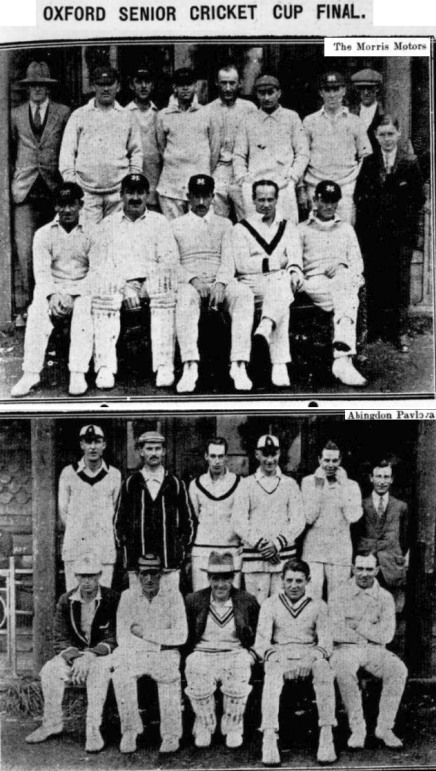
Abingdon Pavlova, the factory team, had mixed fortunes: a 1–0 win at Thatcham, a 1–1 draw with the R.A.O.C. (Royal Army Ordnance Corps), then a 2–0 defeat at Newbury.
Other local teams also featured in the North Berks League, with the Abingdon Liberals beating Sutton Courtenay Reserves 4–2. Abingdon Albion were heavily defeated by Hendred Reserves by 7—1 in the North Berks League.
Abingdon’s golfers travelled to Faringdon in stormy weather at the end of the month, winning narrowly 4½ – 3½. Here is the scorecard, which may mean something to golfers:
| Faringdon | Abingdon | ||
|---|---|---|---|
| S. M. Cadell | 0 | W. J. Garnett (1 up) | 1 |
| P. Healy (2 up) | 1 | C. Lodge | 0 |
| W. Tucker | 0 | H. Carter (4—2) | 1 |
| B. Haines | 0 | G. Matthews (5—4) | 1 |
| C. F. Jefferies | ½ | T. J. Lewington | ½ |
| O. Packerman (8—7) | 1 | W. M. Coxeter | 0 |
| R. Burton | 0 | W. Witham (2—1) | 1 |
| L. G. Gallaher (3—2) | 1 | J. E. Garnett | 0 |
Dancing in the Corn Exchange
The Corn Exchange appears as Abingdon’s social heart. The Young Liberals, Territorial Social Club, and Bowling Club each held dances there during October 1925, all with music by Rowlinson’s Dance Band.
Civic News and Elections
As the Borough Council elections approached, interest grew. Four councillors were retiring, and by the end of the month nine candidates were nominated, including Miss M. Etty, Miss L. M. Laying, and Mrs. E. C. Reynolds – an interesting moment, as women’s participation in local elections was relatively new.
The poll was set for Monday 2 November 1925. We shall find out in November how those women got on.
A Local Mystery
A darker story came with the report of the “Abingdon Mystery.” An inquest in Oxford heard how Donald Geoffrey Clarke, a Worcester College undergraduate and captain of the boat club, was found dead on the Steventon railway near Abingdon. Having arrived by motor cycle and booked a room at the Queen’s Hotel in Abingdon, he disappeared overnight, leaving his bed unslept in. His shoes were muddy, and his gown was found around his neck. The coroner recorded an open verdict, remarking that it would remain “a mystery how and why Clarke got to the railway line.”
Things Old and New
The Oxford Journal Illustrated of 7 October 1925 ran a feature entitled “Things Old and New.”
It recalled that it had been founded as Jackson’s Oxford Journal in 1753 by William Jackson, who edited it for forty years, and that its early pages often carried news from Abingdon, then still the county town of Berkshire. There followed some items which may have shocked and and amazed readers in 1925:
At the Berkshire Assizes, March 10, 1764, John Herbert, for obtaining goods under false pretences, was ordered to be whipped round the Market Place at Abingdon.
For larceny, at the Assizes, August 4, 1764, prisoner Hone was burnt in the hand; and in July 1769, for stealing tools and bedclothes, prisoners were sentenced to the pillory and seven years’ imprisonment. Six years afterwards, at the same Assizes, the sentence of death was passed on one man for stealing a grey mare, on another for stealing a hog, and on another for robbing a woman on the King’s highway of one shilling, some halfpence, and a metal ring.
Abingdon Races were held on Culham Heath until 1811, and from 1812 until 1875 on Abingdon Common. A steeplechase meeting was held in the meadows by the Thames near Sutton during the last quarter of the nineteenth century.
In 1767, the Abingdon race meeting lasted for three days, and a town purse of £50 was run for on the first day — the best of three heats, two miles to each heat. There were balls at the Council Chamber on the first and last nights.
Cockfights were a very popular diversion. Here is one referred to in the Journal of March 28, 1772: “A cock match at Abingdon between the gentlemen of Berkshire and of Warwickshire, to show 31 cocks on each side in the main, for ten guineas a battle and two hundred guineas the odd battle, and 15 cocks for bye-battles at four guineas a battle.”
There are many references to the distribution by the Member of Parliament for the Borough of sums of £50 and £100 for bread and beer, on account of the excessive high prices of all kinds of provisions. In October 1774, “John Mayor, Esq., the worthy Member of Parliament of the time, entertained at dinner in the Council Chamber the Corporation and 150 voters, at the same time returning them his warmest thanks for their independent, disinterested and affectionate support during the late very severe contest with the dissenters for a representative in Parliament.”
Thank You and Sources
This blog post draws on reports from the Faringdon Advertiser and Vale of the White Horse Gazette (issues of 3, 10, 17, 24 and 31 October 1925) and the Oxford Journal Illustrated (7 October 1925).
These newspapers are made available through the British Newspaper Archive, whose digitised pages allow Abingdon’s old stories to be rediscovered and shared here on the blog.
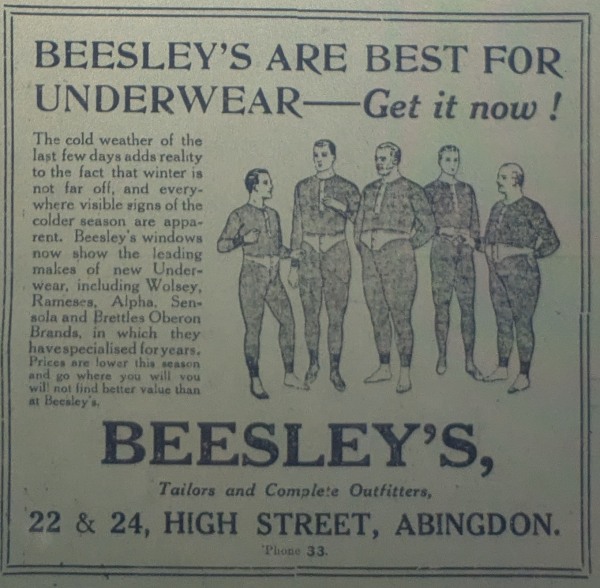
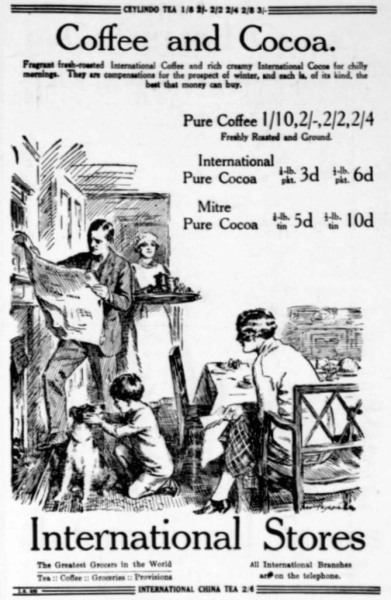
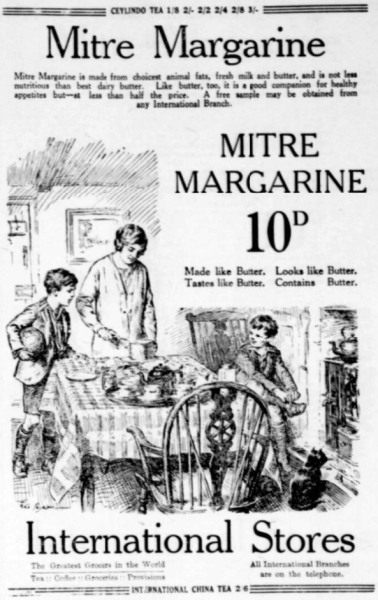
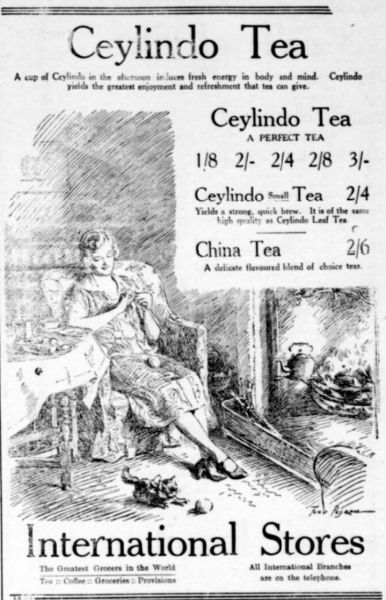
Photographs of the Michaelmas Fair, and Abingdon Town FC are reproduced from the Oxford Journal Illustrated, courtesy of the British Newspaper Archive. The three adverts for the International Stores, showing family life in 1925, are from the Faringdon Advertiser and appeared on the same page as the Abingdon news.