Category Archives: heritage

60 Years Ago On

60 years ago
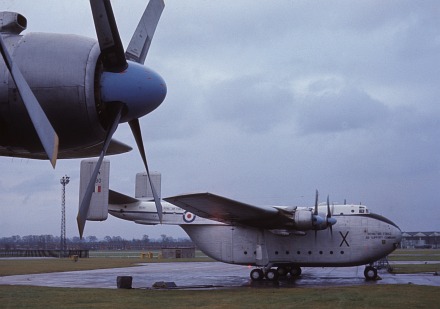
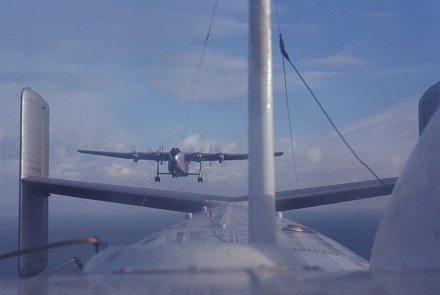
Two ground crew stationed at RAF Abingdon were charged, 60 years ago this week, in connection with the crash of the RAF Beverley at Sutton Wick, just outside Abingdon, on March 15th 1957. The accident resulted from a valve incorrectly fitted to the fuel system, and killed 15 RAF men on board, and two civilians on the ground. The accident occurred soon after the plane took off from RAF Abingdon, heading for the Middle East.
60 years ago
At Trinity Church there was a good gathering to watch excerpts from The Messiah on Palm Sunday. Easter was even later in 1957 than 2017.
60 years ago
People were reminded not to forget to get their chest X-Rayed as part of a mass national campaign to catch Tuberculosis early. Everyone X-Rayed received a badge as they queued up in Abingdon Market Place. Back then the badge was a prize worth having.
60 years ago
Anybody celebrating their Diamond Jubilee could have got their wedding gifts from Beadles in Ock Street. Has anybody still got any such gifts from Beadles?
60 years ago
And you could have gone to the Cinema and watched ‘Three Men in a Boat’ and tried to see if there were any views of Abingdon. It can still be watched on Youtube.

In Jerome K Jerome’s original book ‘THREE MEN IN A BOAT (to say nothing of the dog)’ it says …

Windsor and Abingdon are the only towns between London and Oxford that you can really see anything of from the stream. All the others hide round corners, and merely peep at the river down one street: my thanks to them for being so considerate, and leaving the river-banks to woods and fields and water-works.”

“At Abingdon, the river passes by the streets. Abingdon is a typical country town of the smaller order—quiet, eminently respectable, clean, and desperately dull. It prides itself on being old, but whether it can compare in this respect with Wallingford and Dorchester seems doubtful. A famous abbey stood here once, and within what is left of its sanctified walls they brew bitter ale nowadays.”

Thanks to the Herald microfiche from the library for the old adverts, and the BBC for a still from a news real of the crash.)

Also to mention that I finished by sixty sixties blog this Bank Holiday morning.

Turnagain Lane

Turn Again Lane
At the narrow entry to Turnagain Lane circus posters can be seen on the Cottage Imperial Blackboard. This is the first time that Circus Wonderland have been to Abingdon and they have made quite a splash with their colourful adverts.

Turnagain lane was once a cul-de-sac containing small stone cottages, crammed together round a small yard. When you reached the yard you had to ‘turn again’ and go back the way you came.
Turn Again Lane
These days the lane ends in a view onto the white front of the Old Gaol flats.

Queen Victoria

Queen Victoria
In 1887, the British Empire celebrated Victoria’s Golden Jubilee on 20th June 1887, and a statue of Queen Victoria was presented by Edwin Trendell, and unveiled in Abingdon by Lord Wantage two days earlier.

The pedestal, of Portland stone is about seven feet high; the statue of Sycilian marble, nearly eight feet high, making the monument about fifteen feet high.

On her head Queen Victoria has a small crown with a veil. In her right hand she holds a sceptre, and in the left, instead of the more usual globe, she holds a lotus blossom to signify the Imperial reign in India. She wears a heavy  velvet cloak with a lighter satin dress, and a sash as Sovereign of the Order of the Garter, a company of up to 24 Knights and lady companions.
Queen Victoria
The statue is to be found in the Abbey Gardens in Abingdon, about 50 yards from the original and more prominent position in the Market Place.

John Creemer Clarke’s Abingdon Monuments

John Creemer Clarke was a clothing manufacturer in Abingdon who went on to become Mayor of Abingdon from 1869-1870 and MP for Abingdon from 1874-1885. He was somebody who paid for some important Abingdon community buildings.
John Creemer Clarke
Trinity Church was built in 1875 thanks to his generosity, and was once called Clarke’s Chapel.
John Creemer Clarke
He lived at Waste Court, now part of Abingdon School.
John Creemer Clarke
He also paid for the Cottage Hospital to be built on Bath Street, nearby in 1885. As at Trinity four foundation stones were laid, and inscribed by people close to him.

The ground floor of the hospital contained two large, and two small wards, and a dispensary. Upstairs there was a convalescent room. There was also a south facing lawn where patients could sit out and convalesce. Back then the hospital would have been supported by voluntary contributions, and the Abingdon Herald listed every week who had given what in the way of help. ‘Abingdon Cottage Hospital thank Mrs Budgett for eggs, Mrs Hathaway for cakes & magazines, & Mr Townsend for illustrated papers.’

The Cottage Hospital was where Mercers’ Court, part of Abingdon School now stands – off Bath Street where you can see through railings and arches to a fountain.
John Creemer Clarke
John Creemer Clarke’s final stone monument is in the Old Cemetery in Abingdon and is dated 1895. It has the inscription ‘The memory of the just is blessed’.

It is a large monument with surrounding kerbstones, on which there are several inscriptions to family members, the most recent in the 1970s. I wonder whether he still has relatives living in Abingdon.