Category Archives: heritage

Abingdon 100 Years Ago – February 1925


A man in charge of some cows was proceeding in the direction of Oxford after Abingdon market on Monday when he happened to leave one of them behind without knowing it. On going back after discovering the fact, he observed two ‘knights of the road’ busily milking the cow, using their cans as receptacles. The driver of the cows, either amused or amazed, let them continue with their work.

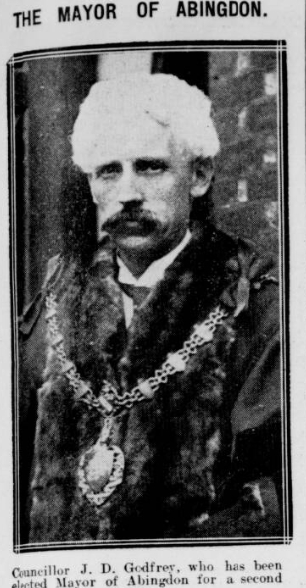
On Wednesday — before the Mayor (Mr. J. D. Godfrey) — two deserters from the Army, Privates James Taylor and Edward Beck, of the Duke of Wellington’s (West Riding) Regiment, were remanded to await an escort. P.S. Martin (Milton) said he saw the two men in uniform. On being asked for their passes, they stated that they were walking out from Oxford but later admitted they were deserters from Gosport.

The inmates of the Poor Institution spent an enjoyable evening on Monday when they were entertained by Mrs. A. H. Roberts, who brought over her school children from Dry Sandford. The programme was much enjoyed, and much credit is due to Mrs. Roberts for the way she had trained the children. The Master (Mr. R. D. Bushell) occupied the chair.

At the Fire Brigade’s annual meeting on Monday, the motor fire-pump fund was closed, with the Brigade making a final donation to cover the cost of the pump purchased in 1923. The total price of the new appliance was £725 13s. 4d., with over half raised by public subscription. The Abingdon Corporation contributed £200, and the Brigade itself covered about a fifth. The benefits of modern equipment were clear during the recent fire at Letcombe Regis, where the Abingdon Brigade arrived ahead of their Wantage colleagues, whose equipment was suited only for town use. Abingdon can take pride in its highly efficient Volunteer Brigade, which remains cost-effective to maintain.

Christopher John Pratley of The Abbey, Abingdon, was summoned for allowing his chimney to catch fire due to neglect. He denied the charge, explaining that the chimney’s awkward bend made sweeping impossible. The court dismissed the case but advised him to discuss repairs, to allow access for a chimney sweep, with his landlord to prevent a more serious fire.

A case of anthrax raised alarm in Abingdon after a local farmer’s heifer fell ill and died. Unaware of the danger, the farmer called a butcher to slaughter the animal, but by then, it was already dead. The spleen, significantly enlarged, was later examined by a veterinary surgeon, who confirmed it as a case of anthrax, prompting swift action from the authorities to prevent the infected meat from reaching the market. The case was referred to the Ministry of Agriculture for further investigation.

Thomas Beesley, a Tipperary native, was found rolling on the pavement in The Vineyard, claiming he had taken poison (strychnine and laudanum). A nearby medicine bottle added to the drama, but after a visit to Dr. Chalmers, an emetic revealed his true condition — intoxication. A known troublemaker, Beesley was sentenced to 14 days of hard labour.

Ann Barnet, a 72-year-old resident of the Almshouses of the Vineyard in Abingdon, died suddenly. An inquest was held, where her son, Harry Barnet, testified that she was active and had appeared well just days prior. The almshouse nurse, Elizabeth Franklin, explained that Ann had been under Dr. Scott’s care for rheumatism and bronchitis. On the morning of her death, Ann’s blinds were still drawn, and after gaining entry to her locked room, by a workman removing a window pane, she was found deceased. Dr. Scott attributed the death to acute indigestion combined with a weak heart.

John Harman appeared before the Borough Police Court on Monday, charged with being drunk and disorderly and assaulting a police officer. P.C. Couling found him intoxicated in the Market Place and advised him to go home, but Harman responded with foul language before striking the officer and tripping him up. With the help of a passerby, he was restrained, though more police were needed. Despite his otherwise good record as a Workhouse inmate, Harman was sentenced to 14 days in prison.
Miss Doris Minnie Williams of Stert Street married Mr. John Wilfred Drew at the Wesleyan Church. The bride, given away by her father, wore ivory crepe de chine with a lace veil and orange blossom. The bridesmaids, Miss Florence Williams (sister of the bride) and Miss Dorothy Faulkner, wore blue and orange shot taffeta dresses with black hats. They carried mauve and pink tulips and wore gold slave bangles, gifts from the bridegroom. A choral service was held, followed by a reception at the bride’s home.

Oxfordshire County Council sought to get legal counsel on Christ’s Hospital of Abingdon’s liability for maintaining roads and bridges, and are working with Berkshire authorities on legal action. Following a flood, part of Culham Bridge collapsed, but Christ’s Hospital refused to act. The county surveyor arranged emergency measures for public safety, and temporary road repairs were deemed necessary. The Governors of Christ’s Hospital were informed these actions did not affect liability. The committee put forward £600 for repair costs.

Past and present scholars of Roysse’s School competed in boat races on Culham Reach, with current students winning both first- and second-crew races. Past scholars included R. E. Eason, an Oxford rower from the previous year’s boat race.

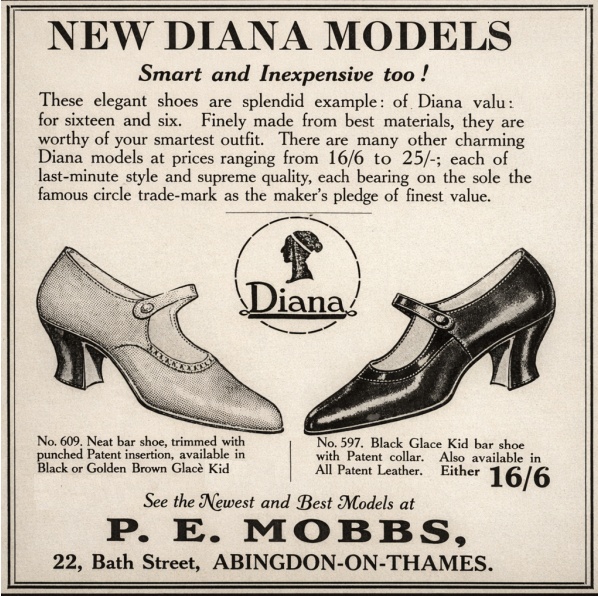
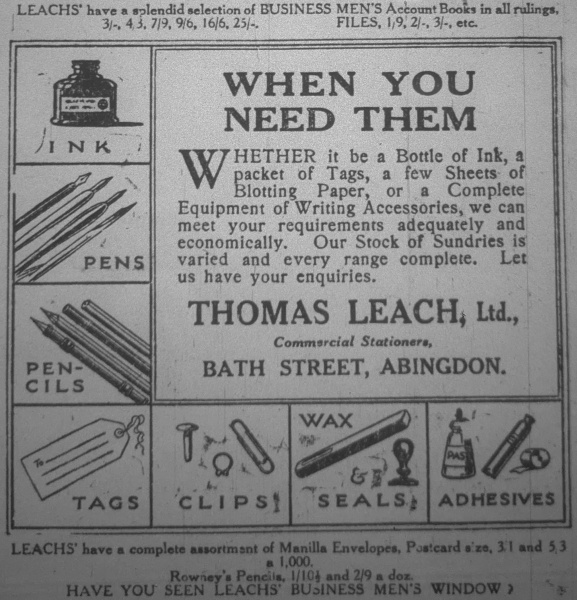
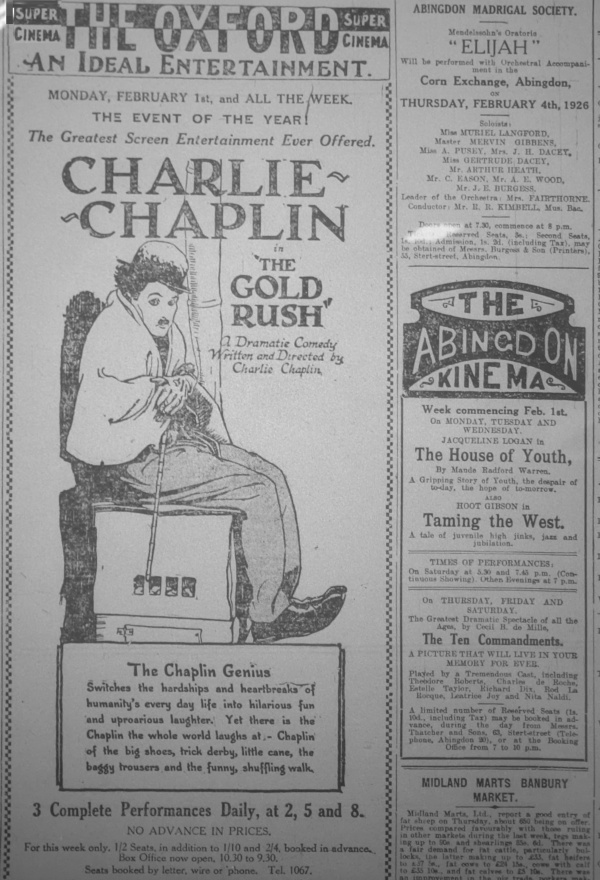
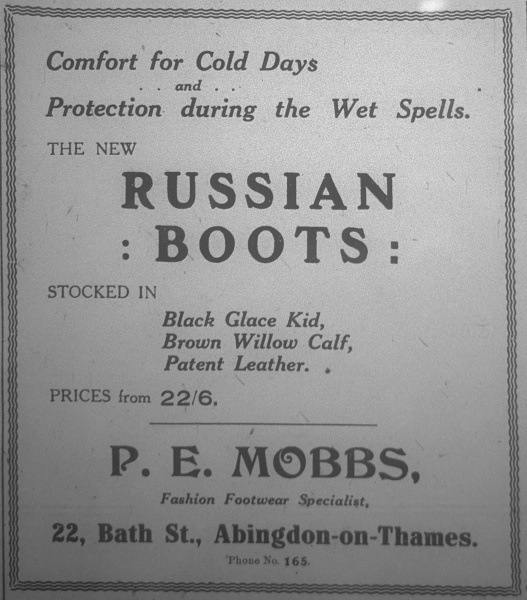
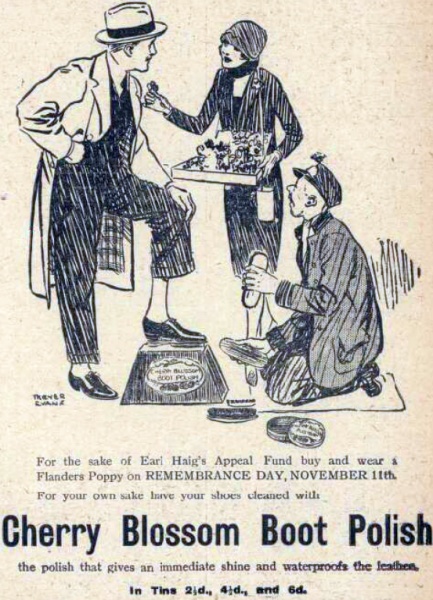
Thanks to the Oxford Chronicle and Reading Gazette and North Wilts Herald from the British Newspaper Archive and to the North Berks Herald microfilm in the library. The advert is from the North Berks Herald. The Fire Engine is from The Abingdon Fire Service by John Hooke. The Picture of Trinity is from a postcard in my collection. The sheet music is from Ebay. All Rights Reserved.

The Abingdon Sword: A Saxon Legacy in Oxford and Abingdon


In 865 AD, a Danish army arrived in Britain, sweeping through the north and leaving destruction in its wake. As they advanced south, Abingdon Abbey was burned to the ground. An artifact from around that time is a decorated Saxon sword known as the Abingdon Sword.

Currently displayed in the Ashmolean Museum in Oxford on Level 2 (Gallery 41: England 400–1600), among the late Saxon artifacts, the Abingdon Sword is a fine example of Anglo-Saxon craftsmanship. The label says:

100. Sword, iron and silver. c. 875, Abingdon, Oxfordshire. The blade of the ‘Abingdon Sword’ was produced through a process known as pattern welding, in which strips of iron were twisted together and welded into a pattern that gave the blade added strength. (AN1890.14)

The sword was discovered near Abingdon in 1874 and later acquired by the antiquarian Sir John Evans, who presented it to the Ashmolean in 1890. The Ashmolean holds many artifacts from Abingdon, though few are currently on display. They can be seen online through the museum’s digital collections. Just search ‘Abingdon’.

For those interested in seeing Anglo-Saxon history up close, a visit to Abingdon Museum is worth the climb if you’re able. A replica of the Abingdon Sword is on display. The museum also has a  display case, along with two drawers of Anglo-Saxon artifacts.

One of the most significant discoveries in Abingdon was the large Anglo-Saxon cemetery uncovered in 1934 during the construction of Saxton Road. This burial site revealed many inhumations and cremations, accompanied by grave goods such as weapons, tools, and jewellery.

Abingdon 100 Years Ago – January 1925


Deaths and Funerals
Mr. Frederick Knight Couldrey, aged 78, died at his residence, “Oak House,” Ock Street, Abingdon, on Monday. He was a long-time organist at St. Helen’s Church.

Tragic Incidents

Bridge Collapse: Shortly before nine o’clock on Sunday evening, about 30 feet of the balustrade of the stone bridge across the Thames backwater at Culham collapsed, blocking the road leading to Wallingford. The bridge, originally erected in 1416, has been affected by rising river levels. The road between Culham and Abingdon bridges has been underwater for some distance, with a depth reaching several inches. An Automobile Association patrol officer on duty at the Culham end of the bridge at the time of the collapse immediately informed the police and stopped traffic on the road.

Train’s Narrow Escape: Due to the rising Thames, the meadowland around Abingdon was submerged. During the gale on Thursday night, several trees were blown down. One tree was uprooted along the causeway of the Culham Road, blocking traffic until Saturday afternoon. Three trees fell across the Abingdon–Radley railway line, about a mile from Radley. The 8:40 a.m. train from Abingdon on Friday was proceeding slowly along the line when it struck the upper branches of the trees. The door handles along the sides of the train were bent, and a window was smashed. Luckily, no one was hurt.

Runaway Horse: Caleb Steance, a carter employed by the Abingdon Corporation, was driving a cart of manure when the horse suddenly became frightened. In its panic, the animal upset him from his seat, and the wheels of the cart passed over him. The inquest ruled his death accidental, attributing it to the horse being startled.

Seizure While Fishing: Albert Edward George Eggleton, formerly of an epileptic care home in Lingfield, Surrey, returned to his family home at 15 Court 3, West St Helen Street in Abingdon at his father’s request. Against his father’s wishes, and without his knowledge, Albert left the house to go fishing and was later found drowned in the river, likely having fallen in due to a seizure.

Community and Social Events
The Mayor of Abingdon, Mr. J. D. Godfrey, and members of the Corporation attended St. Helen’s Church, where Rev. C. S. Fleet preached.

The Pavlova Athletic Club held a poultry whist drive, with prizes awarded to winners: Mr. G. Denny and Miss Brown.

A New Year’s Eve whist drive and dance at the Corn Exchange saw Miss Patties win the fancy dress for her Victorian maid costume and Mr. W. Stone for “Football Results.”

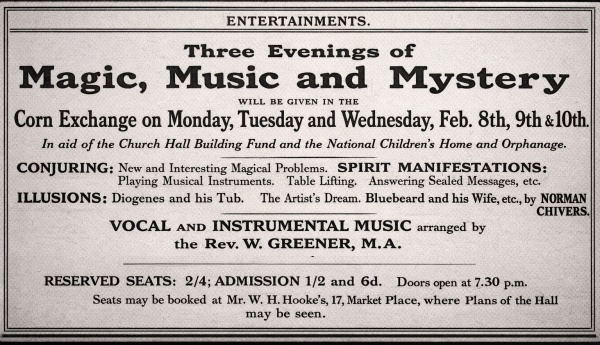
The Abingdon Polling District Liberal Association hosted a party for 300 children, featuring conjuring by Mr. Norman Chivers and dancing to Mrs. Graham’s band.

The Plasterers Arms Slate Club held its annual dinner, with 44 members attending and songs performed. Membership increased to 71 for the new year.

Legal and Court Proceedings
Children’s Court
An Abingdon lad was summoned for stealing a quantity of eggs, valued at 2s. 6d., the property of Arthur William Parrott of Tythe Farm Cottages, Sutton Wick, near Abingdon. Parrott said he kept his fowl in a meadow at the farmhouse and had an impression that he was losing his eggs from the henhouse, as the number he expected to get was about 14 a day, whereas he had only four or five. He communicated with the police. P.C. Hawes stated that he kept the henhouse under observation and saw the lad visit it and take the eggs. The defendant was bound over for twelve months in the sum of £5.

Borough Bench
Thomas Smith, of Oxford, was fined 7s. 6d., including damages and costs, for maliciously damaging a pane of glass valued at 5s., the property of the Corporation of Abingdon. Defendant pleaded guilty.

Henry Chapman, of Nuneham Courtenay, was summoned for riding a motorcycle with a sidecar without a rear light and fined 10s.

Reginald Claudius Murrell of Sunningwell was charged with breaking into Minnie Ada Hatton’s home and stealing cash, cheques, and goods. A warrant was issued for John Tate, his alleged accomplice.

Miscellaneous
Mrs. Daisy Elizabeth Parsons of the Plasterers’ Arms was granted an extension for a slate club dinner.

Mr. Basil Stuart Mayhead of the Lion Hotel received an extension for the Abingdon Bowling Club’s annual dinner.

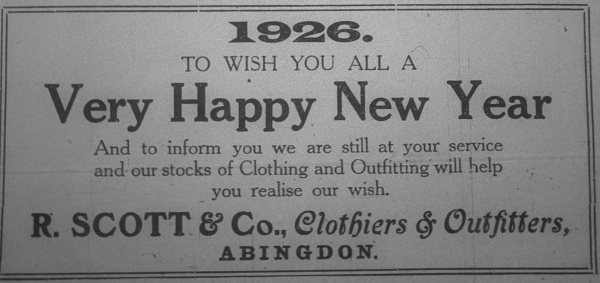
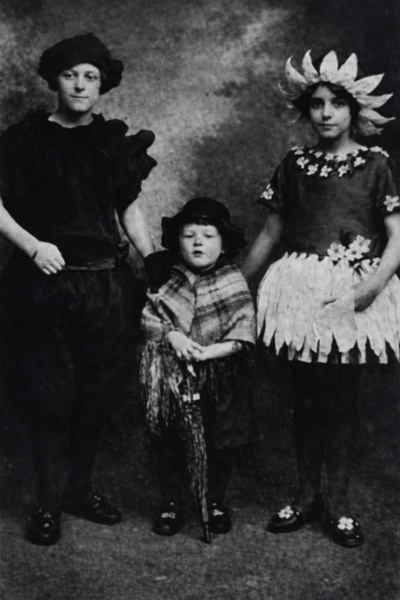
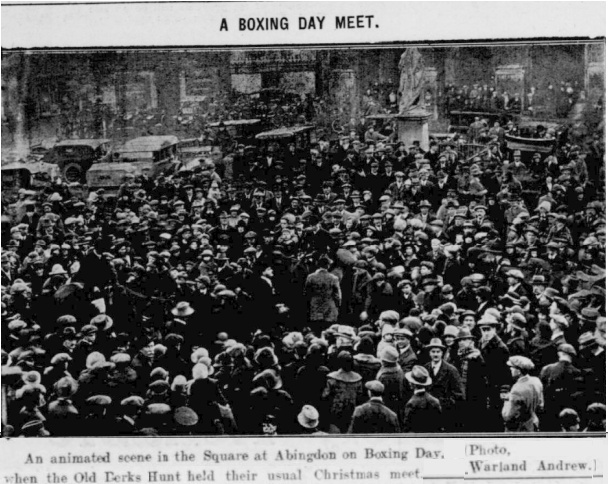
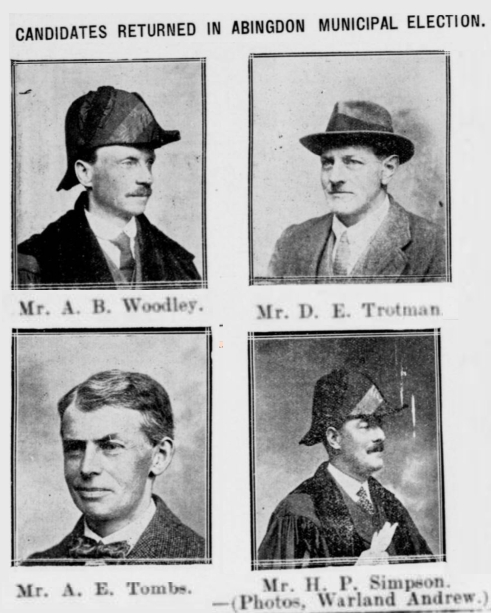
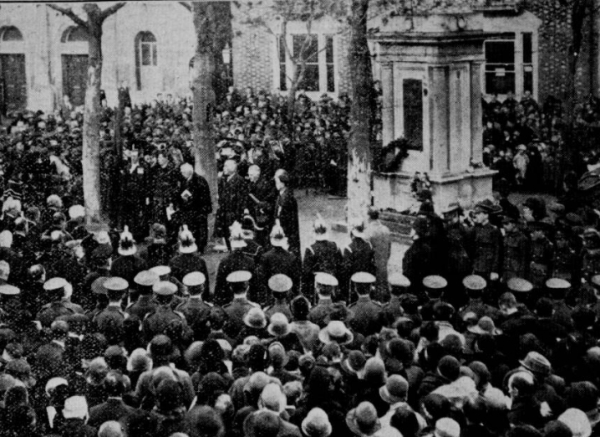
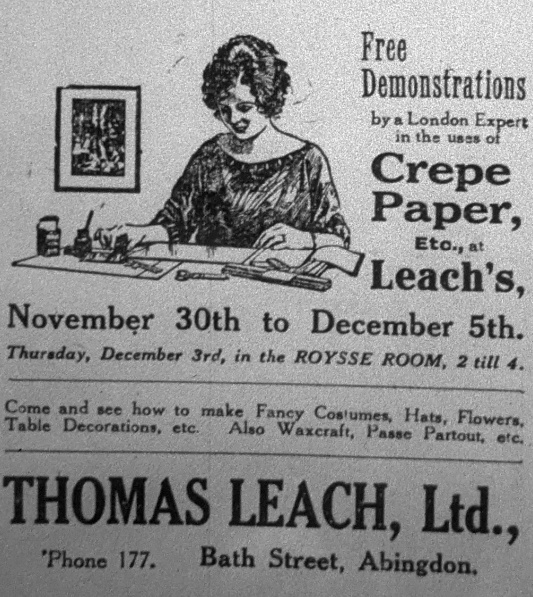
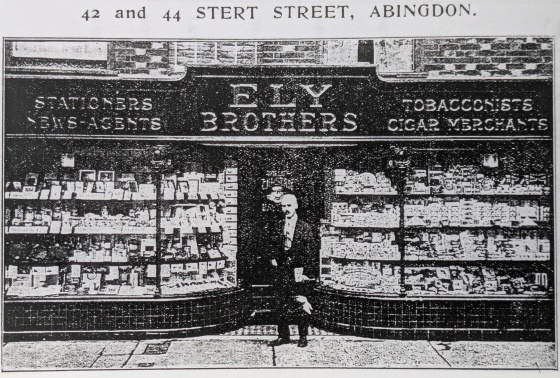
Thanks to the Oxford Chronicle and Reading Gazette, North Wilts Herald, Reading Standard, and Gloucestershire Echo from the British Newspaper Archive and to the North Berks Herald microfilm in the library. The photos are from the Reading Standard, and the adverts from the North Berks Herald. Also thanks to ChaptGPT for removing some errors from the text transcript copied from the British Newspaper Archive. (OpenAI. (2025). ChatGPT [Large language model]. https://chatgpt.com)

Thamesview Bridge, Abingdon


This is the bridge I referred to on New Year’s Day as ‘The Abingdon Sword Bridge’. It doesn’t resemble a sword in shape but has a connection to the Abingdon Sword.

The Abingdon Sword, discovered in the River Ock in Abingdon, is now held by the Ashmolean Museum in Oxford, with a replica on display at the Abingdon Museum. It’s a fine example of Anglo-Saxon craftsmanship, believed to have belonged to a prince or wealthy nobleman.

If you step back and view the bridge from the riverbank, you’ll notice its outer panels feature floral or leafy designs, copied from the handle of the sword. The artist Richard Farrington was commissioned to create these special panels when the bridge was erected in 2007 as part of the Thamesview development.

The inside panels of the bridge show creatures. On one side, the central panel shows the four surrounding panels in miniature. These are thought to represent the four gospel writers, traditionally symbolised as:
* Matthew: A man
* Mark: A lion
* Luke: A calf
* John: An eagle

See if you can see which is which.

On the opposite side are creatures (maybe serpents or dragons) intertwined in the knotty way often seen in Anglo Saxon craftwork.

You might also notice padlocks attached to the bridge cables — left as symbols of modern day romantic relationships. There were more padlocks, but some have been removed and new ones added.

This and other art works round Abingdon can be explored using The Abingdon Art Walk, just one of several walks available from the Friends of Abingdon Civic Society. Paper copies can be found in Abingdon Library and the Information Centre.