Monthly Archives: April 2012

Abingdon Links in London 6 – Alexander of Abingdon

Alexander of Abingdon
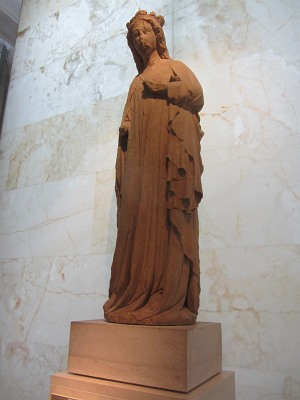
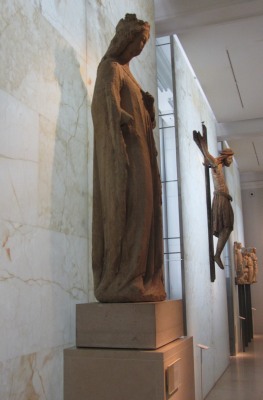
When Edward I brought the body of his dead Queen Eleanor of Castile from Harby, Nottinghamshire to be buried in Westminster Abbey in 1290, he had a cross erected at the place where the procession rested each night. Only three, of the original twelve remain, and the one at Waltham had a sculpture, of Queen Eleanor, by Alexander of Abingdon.
Alexander of Abingdon
To help protect her for the future, the original scuplture has been loaned by Hertfordshire  to the V&A and can be seen currently (April 2012) in Room 10 – Medieaval and Renaissance art.
Alexander of Abingdon
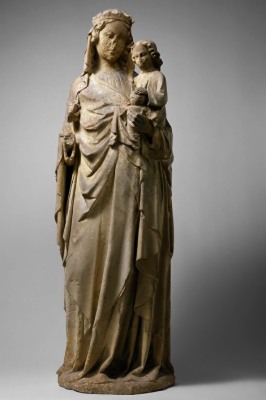
Another sculpture, Virgin and Child, attributed to Alexander of Abingdon is to be found in the Metropolitan Art Gallery in New York. It was found in Newbury very recently – in the 1980s.

Alexander could well have learned his craft at Abingdon Abbey, and in Oxford, before becoming a maker of images for the court of King Edward I.  So if you happen to see any sculpture of that style with heavy flowing drapery, perhaps an early work, it would be good to get the next one for the Town of Abingdon.
Experience Easter

Experience Easter
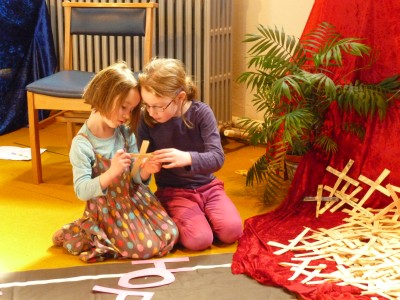
Between March 22nd – 25th, 500 people visited Trinity Church in Abingdon to Experience Easter. Along with a series of other activities, they wrote hopes and dreams on palm crosses.

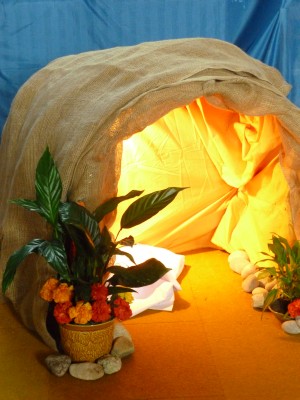
The 500 children and adults that came into the church were transported thousands of miles and thousands of years back to Jerusalem at Passover. The event was staffed by over thirty volunteers from churches all over Abingdon and run by TrinityLearning.
Experience Easter
I know one person who has not been eating chocolate during lent. Easter Sunday will  be the day she can finally break the fast.  Two days to go.

The Strangest Public Right of Way – Abingdon Footpath Number 1

Abingdon Footpath Number 1
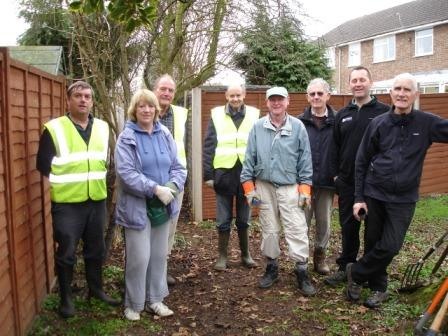
The Vale Path Volunteer group was formed to help clear and improve footpaths in the Vale area. They have undertaken two projects so far.
Abingdon Footpath Number 1
The second project was undertaken on 13th March 2012 and involved a footpath that starts near the electricity substation between Maberley Close and Nash Drive.

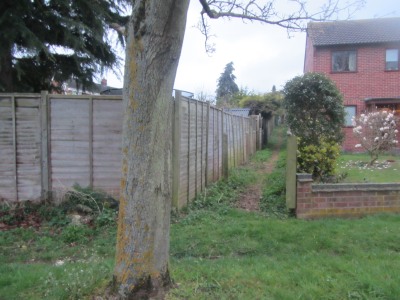
A month ago the path was full of vegetation but now it is an easy walk over woodchip between garden fences.  The path follows the path of the old Wilts and Berks canal and so has historical if not aesthetic interest.
Abingdon Footpath Number 1
The path has been completely blocked for a good ten or twelve years and along one section people have extended their gardens – that is until the Vale Path Volunteer group hacked their way through the trees and undergrowth to re-establish the footpath – which they call Abingdon No 1 Footpath.

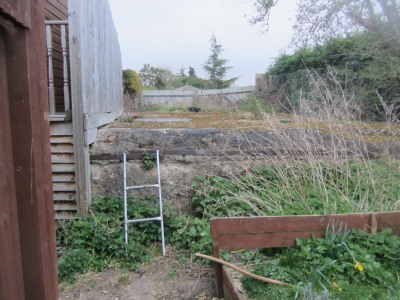
At one point the filled in remains of Drayton Lock (corrected thanks to Martin) has been partially built over with garden staging. At that point you can no longer follow round on the original path but must either clamber over the concrete base, using the unofficial steps, or go round through gardens.
Abingdon Footpath Number 1
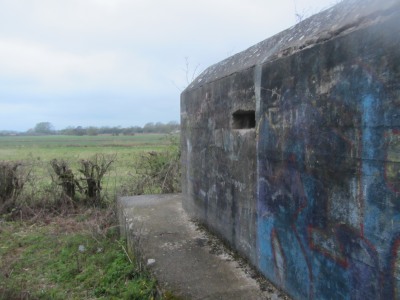
A little further on – beyond the houses and lap fences – is a more complete WWII bunker. The floor is covered with ashes from bundles of free newspapers that never got delivered back in the early 1990s. They were subsequently set alight.
Abingdon Footpath Number 1
The final stretch of this eccentric little footpath, following the path of the old canal, ends up half way along Mill Road. The final section is the most picturesque but will very soon get clogged up by brambles and nettles as May and June follow April.

Most dog walkers just walk through the field alongside, which has become quite permissive over recent years, with it’s own path by the River Ock, but I will walk along Footpath Number 1 once in a while to help keep the path clear. It may not be the most beautiful footpath in Abingdon but it is the strangest. Thanks to the Vale Path Volunteer group for their herculean effort in clearing what I thought had been lost for ever.

Boats moored on the Thames

Boats moored on the Thames
John sent me some pictures of boats moored on the Thames by Abingdon. He says “Seen tied up today. Nobody at home but I wonder does anyone know the stories of these boats, especially the Vrouwe Johanna of Amsterdam, dated, I think, 1899!
Boats moored on the Thames
He also sent pictures of Daisy D and two other similar traditional looking narrow boats – probably far more modern. They look compact on the outside for wending their way down narrow inland waterways and under low bridges but still afford plenty of living space inside.

Any interesting facts for John? Could Vrouwe Johanna cross the English Channel?  What are the advantages of a Dutch Barge (if it is such) v a Narrow Boat? And why do people want to live in boats anyway?

With Thanks to John for the pictures.